
In this guide 17 sections
A landing page and a full website serve different jobs. A landing page is typically focused on one campaign, offer or action. A business website provides a broader place to explain services, establish trust, answer questions and support discovery across multiple customer needs.
Quick answer: if you are testing one paid campaign with a specific offer, a focused landing page may be appropriate. If you need a durable online presence with multiple services, authentic proof, contact details and organic search visibility, a well-structured website is usually the stronger foundation. Many local service businesses benefit from both, connected rather than competing.
This guide compares the two approaches through practical examples, cost considerations, search visibility, advertising message match and measurement. It avoids claiming that either format guarantees more leads.
1. Understand the real difference
A landing page is designed around a specific visitor intent and next action. It may remove distractions, repeat an ad’s promise and present one relevant form. A full website offers navigation across services, projects, company information, articles and other customer questions.
Practical implementation
Write down the visitor source, what they already know and what decision they need to make. Choose the page format that gives them enough information without unnecessary detours.
Illustrative example
Hypothetical scenario: A search ad for emergency drain cleaning may lead to a focused page with coverage area, availability and a call option. Someone comparing plumbing companies may need the full website to review services, credentials and customer feedback.
2. Match the page to the traffic source
Paid search visitors often arrive with a narrow intent shaped by the keyword and ad. Referral visitors may already trust the business but need project details. Organic search visitors may be researching a service or problem rather than ready to request a quote.
Practical implementation
Map each important acquisition channel to its likely visitor question. Avoid sending every campaign to a generic homepage when a more relevant destination exists.
Illustrative example
Hypothetical scenario: A campaign advertising a free website homepage mockup should explain exactly what that offer includes. Sending visitors to a general services page without mentioning the mockup can create unnecessary confusion.
3. Know when a landing page is useful
A focused page can support a specific promotion, a defined service, a webinar, a consultation request or a geographically relevant campaign. Its value comes from relevance and clarity, not simply from removing the site header.
Practical implementation
Choose one primary action and include enough context for a responsible decision: offer terms, who qualifies, proof, privacy information and what happens after submission.
Illustrative example
Hypothetical scenario: A roofing company running a seasonal inspection campaign could use a dedicated page explaining the inspection process, genuine coverage and scheduling options while linking to company details when buyers want to verify legitimacy.

4. Know when a full website is essential
A full website is valuable when customers need to compare services, review case studies, learn about the team, understand ongoing support or find accurate business information. It also provides a home for useful organic content and internal links.
Practical implementation
Prioritize a strong homepage, real service pages, trust information and reliable contact paths. Expand only when each additional page answers a distinct customer question.
Illustrative example
Hypothetical scenario: A commercial cleaning company serving several property types may need separate service explanations, service areas, a company overview and a quote process. A single campaign page may not answer all those needs.
5. Compare navigation and focus
Landing pages usually emphasize one action, but visitors may still need links to privacy, terms, service details or company credentials. Websites provide broader navigation, which is helpful for exploration but can distract from a narrow campaign if poorly organized.
Practical implementation
Avoid removing essential trust or legal information in the name of conversion. Make the primary action prominent and ensure the visitor can verify who is offering the service.
Illustrative example
Hypothetical scenario: A visitor considering a high-value B2B engagement may need to inspect the provider’s portfolio before requesting a meeting. A page with no credible path to that evidence may undermine trust.
6. Plan SEO for each format
A full website can support multiple search intents through dedicated, useful pages. Landing pages may also rank when they contain relevant, original information, but thin duplicated campaign variants rarely provide lasting search value.
Practical implementation
Decide which URLs should be indexed and canonical. Avoid creating many near-identical city or keyword pages. Follow Google’s guidance on helpful content, crawlability and descriptive page titles.
Illustrative example
Hypothetical scenario: If five paid campaigns use nearly identical versions of the same offer, they do not automatically need five indexed SEO pages. Separate campaign tracking from organic content strategy.

7. Consider cost and maintenance realistically
A landing page may be faster to create than a complete website, but it still needs copy, design, responsive behavior, hosting, form delivery, analytics, accessibility and ongoing maintenance. A full website has a broader scope and more content responsibilities.
Practical implementation
Ask for an itemized quote. Clarify whether design, copywriting, integrations, testing, hosting, revisions and reporting are included. Avoid treating a page count as the only measure of project complexity.
Illustrative example
Hypothetical scenario: A campaign page that requires custom CRM routing, conditional qualification and booking logic may cost more to implement than several simple informational pages.
8. Build trust in both experiences
Local customers may check whether the business is real, operates in their area, has relevant experience and can be contacted reliably. A landing page that hides company details can create uncertainty.
Practical implementation
Show genuine proof, accurate service coverage, realistic availability and a clear explanation of the next step. Use authentic customer feedback only with permission and do not invent performance results.
Illustrative example
Hypothetical scenario: A pest-control landing page can include real licensing information where applicable, service scope and a link to the business’s broader company information. These details can matter more than flashy design.
9. Make forms appropriate to the offer
The right form depends on the service and urgency. A quick callback may need only a few fields, while a complex project quote may require a description of requirements. More fields are not automatically better or worse.
Practical implementation
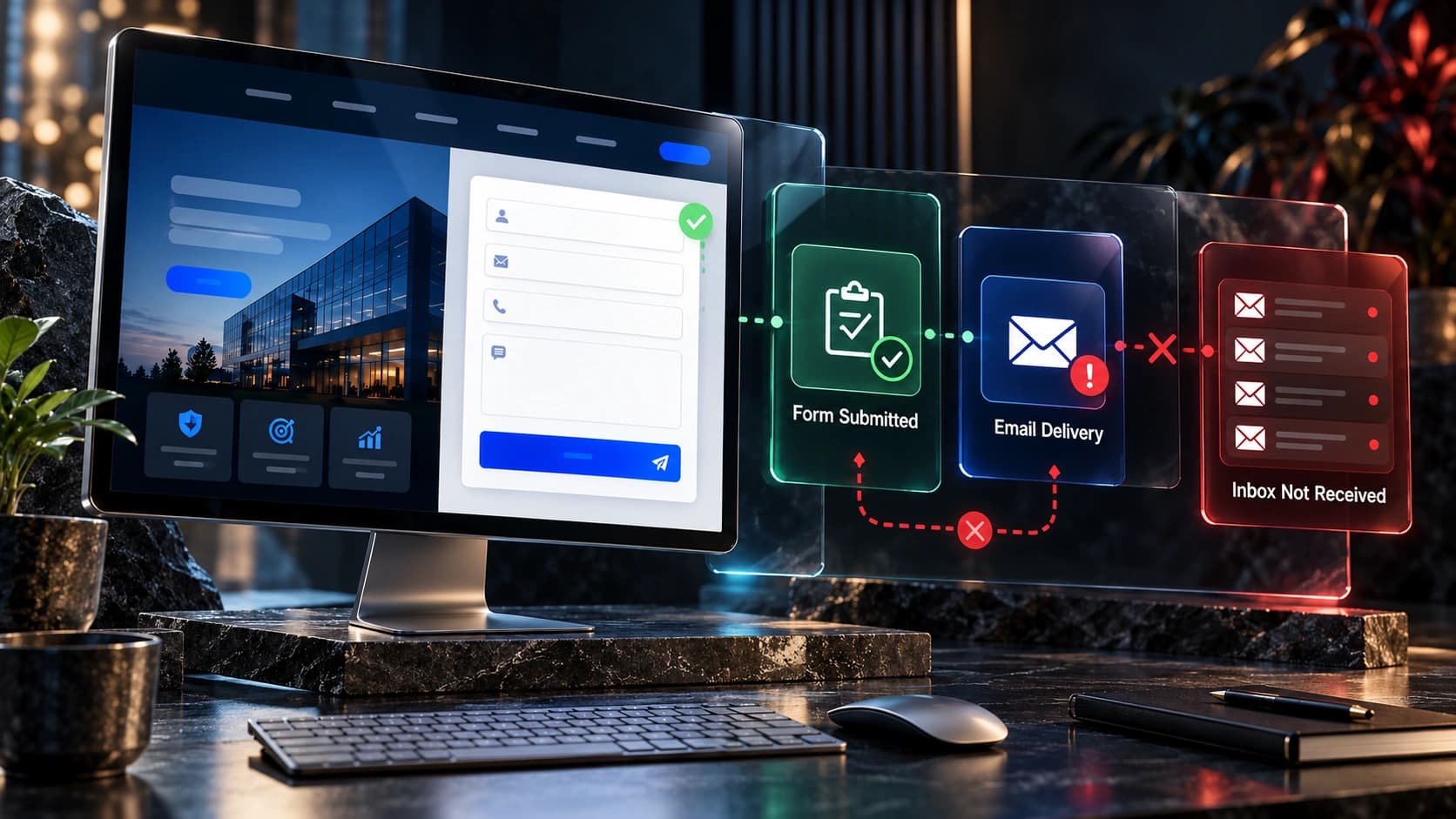
Ask only what is necessary for the next step and verify delivery to the responsible person or CRM. Track successful submissions rather than button clicks.
Illustrative example
Hypothetical scenario: A local cleaning quote form may reasonably ask about property type and location. A generic newsletter signup should not require the same level of detail.
10. Measure the right outcomes
A landing page can generate more form submissions without generating more qualified customers. A website may support sales through several visits and pages. Compare outcomes using consistent definitions and consider sales-cycle length.
Practical implementation
Measure completed enquiries, qualification, response, appointments and customers. Keep traffic source and campaign context where appropriate. Review lead quality alongside conversion rates.
Illustrative example
Hypothetical scenario: A focused page producing 30 irrelevant leads is not necessarily better than a service page producing 12 suitable enquiries. The actual value depends on business goals and costs.
11. Choose a combined architecture
Many businesses benefit from a primary website for trust and organic discovery plus targeted landing pages for specific campaigns. Both can share design patterns, tracking and a CRM without presenting contradictory offers.
Practical implementation
Keep service information consistent across the site and campaigns. Link to appropriate company details, use a shared form quality standard and maintain clear ownership for updates.
Illustrative example
Hypothetical scenario: A web-design agency might have a website redesign service page for general visitors and a separate free-mockup campaign page for people arriving from a specific advertisement.
12. Audit and improve after launch
Neither a landing page nor a full website is finished the day it goes live. Check actual user questions, form failures, device usability, traffic intent and downstream sales outcomes. Avoid drawing strong conclusions from tiny samples.
Practical implementation
Run end-to-end form tests, review mobile usability, inspect analytics and CRM records, and make changes based on specific problems. Keep a record of what changed and why.
Illustrative example
Hypothetical scenario: If a campaign page gets clicks but few qualified enquiries, review whether the ad promise, landing copy, service scope and follow-up are aligned before buying more traffic.

Implementation checklist
- Understand the real difference: Write down the visitor source, what they already know and what decision they need to make. Choose the page format that gives them enough information without unnecessary detours.
- Match the page to the traffic source: Map each important acquisition channel to its likely visitor question. Avoid sending every campaign to a generic homepage when a more relevant destination exists.
- Know when a landing page is useful: Choose one primary action and include enough context for a responsible decision: offer terms, who qualifies, proof, privacy information and what happens after submission.
- Know when a full website is essential: Prioritize a strong homepage, real service pages, trust information and reliable contact paths. Expand only when each additional page answers a distinct customer question.
- Compare navigation and focus: Avoid removing essential trust or legal information in the name of conversion. Make the primary action prominent and ensure the visitor can verify who is offering the service.
- Plan SEO for each format: Decide which URLs should be indexed and canonical. Avoid creating many near-identical city or keyword pages. Follow Google’s guidance on helpful content, crawlability and descriptive page titles.
- Consider cost and maintenance realistically: Ask for an itemized quote. Clarify whether design, copywriting, integrations, testing, hosting, revisions and reporting are included. Avoid treating a page count as the only measure of project complexity.
- Build trust in both experiences: Show genuine proof, accurate service coverage, realistic availability and a clear explanation of the next step. Use authentic customer feedback only with permission and do not invent performance results.
- Make forms appropriate to the offer: Ask only what is necessary for the next step and verify delivery to the responsible person or CRM. Track successful submissions rather than button clicks.
- Measure the right outcomes: Measure completed enquiries, qualification, response, appointments and customers. Keep traffic source and campaign context where appropriate. Review lead quality alongside conversion rates.
- Choose a combined architecture: Keep service information consistent across the site and campaigns. Link to appropriate company details, use a shared form quality standard and maintain clear ownership for updates.
- Audit and improve after launch: Run end-to-end form tests, review mobile usability, inspect analytics and CRM records, and make changes based on specific problems. Keep a record of what changed and why.
Related Avenzo Digital guides
These guides cover adjacent problems in greater detail:
- Google Ads landing page troubleshooting
- building a service business website
- creating a contact page
- converting enquiries into customers
Frequently asked questions
Is a landing page the same as a homepage?
No. A homepage introduces the business broadly; a landing page usually supports one specific offer or action.
Can a landing page rank on Google?
Yes, if it is useful, accessible and relevant. Thin or duplicated campaign pages are not a substitute for a helpful content strategy.
Should I remove navigation from a landing page?
Not automatically. Simplify distractions while preserving essential trust, accessibility and company information.
Do I need a website before running Google Ads?
You need a suitable destination that meets applicable platform requirements; a full multi-page website is not always necessary for every campaign.
Which converts better?
There is no universal winner. Relevance, offer, visitor intent, usability and lead quality determine outcomes.
Can I use my website service page as a landing page?
Often yes, especially when the page closely matches the campaign and provides a clear next step.
Should local businesses create a landing page for every city?
Only when each page serves a genuine distinct need with accurate, useful information. Avoid thin duplicated location pages.
How do I decide what to build first?
If you lack a credible basic online presence, establish that foundation. If you already have a good site and a focused campaign, a targeted landing page may be the next useful investment.
Conclusion: make the next decision easier
Start with the visitor’s actual problem, clarify the action you want them to take and verify that the business can respond properly. An effective website supports meaningful customer decisions rather than simply generating more clicks. Review the evidence, keep promises accurate and improve the experience through practical testing.
Avenzo Digital helps businesses with website design and development, website redesign and conversion-focused website improvements. Request a consultation and ask about a free homepage mockup to discuss your current website and the most useful next step. The offer is subject to an appropriate project discussion and does not guarantee sales results.