You can have the right keywords, a strong Google Ads campaign, and plenty of clicks, yet still get very few leads or sales. When that happens, the problem may not be your ads. Your Google Ads…

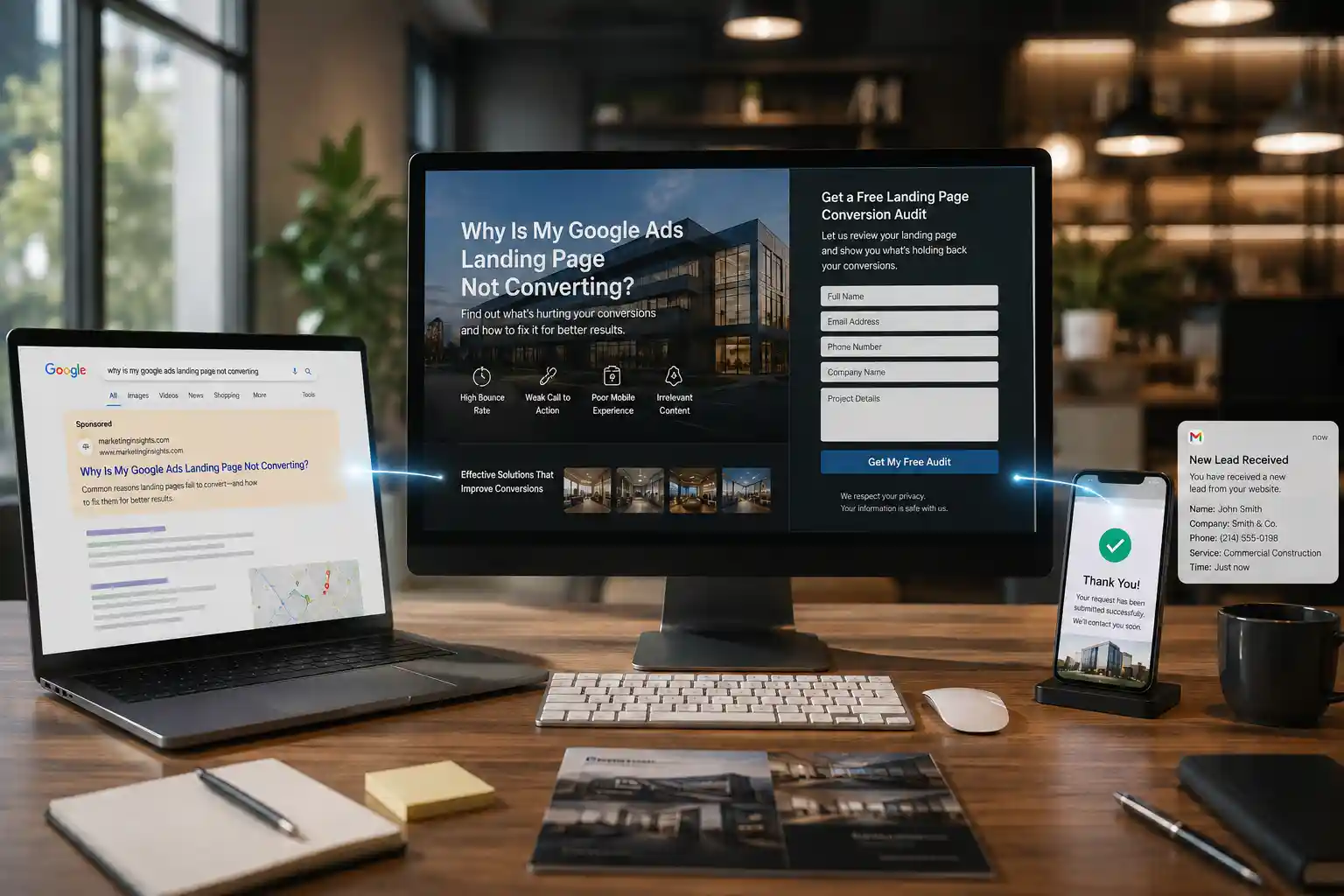
You can have the right keywords, a strong Google Ads campaign, and plenty of clicks, yet still get very few leads or sales. When that happens, the problem may not be your ads. Your Google Ads landing page not converting is often a sign that something breaks down after the visitor clicks.
A landing page has one important job: move a qualified visitor toward a specific action. That action could be submitting a form, requesting a quote, booking a consultation, calling a business, purchasing a product, or starting a free trial.
If visitors arrive and leave without taking that action, something in the post-click experience needs attention. The problem could be weak messaging, poor ad-to-page relevance, a confusing call to action, a slow mobile experience, too many form fields, weak trust signals, poor design, technical problems, or simply an offer that does not match what the visitor expected from the advertisement.
This guide explains why a Google Ads landing page not converting is common, how to identify the actual problem, and what you can change to turn more paid traffic into valuable business results.
What Does It Mean When a Google Ads Landing Page Is Not Converting?
A Google Ads landing page is not converting when people click an advertisement and reach the landing page but fail to complete the intended action at a rate that makes the campaign profitable or effective. A low conversion rate does not automatically mean the landing page is bad. Traffic quality, keyword intent, pricing, competition, offer strength, campaign settings, and the sales process after the form submission can all affect results.
The first step is therefore to identify where the problem occurs. The landing page should be evaluated as part of the entire advertising funnel rather than in isolation.
For example, if an advertisement receives very few clicks, the issue may be the ad or targeting. If the ad receives clicks but visitors leave immediately, the landing page experience may be the problem. If visitors complete the form but sales do not follow, the issue may be lead quality, qualification, follow-up, or the offer itself.
Why Is My Google Ads Landing Page Not Converting?
The most common reason is a mismatch between what the visitor expects and what the landing page provides. Someone searches for a specific service, sees an advertisement promising a particular solution, clicks the ad, and lands on a page that gives them something different.
The visitor then has to figure out what the page is about, search for the promised information, or determine whether the company actually provides the service they wanted. Many visitors will simply leave. A successful landing page creates continuity between the search query, advertisement, landing page headline, offer, supporting content, and call to action. The visitor should immediately feel that they are in the right place.
1. Your Landing Page Does Not Match the Google Ad
One of the first things to check is message match. Message match means the landing page reflects the promise and intent established by the advertisement.
Suppose your Google Ad says:
Emergency HVAC Repair in Austin
But the visitor lands on a generic HVAC homepage containing several unrelated services. The visitor now has to search for emergency repair information. That creates unnecessary friction. A stronger landing page would immediately explain the emergency repair service, location, availability, relevant benefits, and next action.
The same principle applies to keywords. If someone searches for “commercial roof repair,” sending them to a generic roofing homepage is usually less relevant than sending them to a dedicated commercial roof repair landing page. Your landing page should continue the conversation that started in the search results.
2. Your Headline Is Too Generic
The headline is one of the first things visitors notice. A weak headline may say:
Quality Services for Your Business
That does not tell the visitor much. A stronger headline identifies the service, audience, problem, or outcome. For example:
Commercial Roof Repair for Businesses in Dallas
This immediately communicates what the company does and who the service is for. The headline does not need to be clever. It needs to be clear. A visitor who arrived through a paid search ad should not have to spend several seconds figuring out whether the page is relevant. When a Google Ads landing page not converting problem occurs, review the headline before changing smaller design elements.
3. The Page Has Too Many Distractions
A landing page is different from a normal website page. A standard website may need extensive navigation because visitors can explore multiple areas of the business. A dedicated advertising landing page usually has a narrower purpose. If the page contains a large navigation menu, multiple competing calls to action, unrelated service links, social media links, long company history sections, and several unrelated offers, visitors may lose focus.
This does not mean every landing page must remove every navigation element. The right structure depends on the campaign and business. The important question is whether each element helps the visitor make the intended decision. If it does not, consider removing it or moving it lower on the page.
4. Your Offer Is Not Strong Enough
A technically well-designed landing page cannot compensate for an unclear or unattractive offer. The visitor needs a reason to take action now. For a service business, the offer could be a consultation, quote, inspection, estimate, assessment, or appointment. For an ecommerce company, it could be a product offer, free shipping, bundle, promotion, or another legitimate purchasing incentive.
For a professional service company, it could be a discovery call or initial consultation.The offer should also be specific. “Contact Us” is vague.
“Request a Free Project Estimate” tells the visitor exactly what happens when they click. The offer should reflect the actual value the business can provide. Do not create artificial urgency or promises simply to increase conversions.
5. Your Call to Action Is Weak
A landing page should make the next step obvious. The visitor should not have to decide what to do. A strong CTA tells them exactly what action they can take.
Examples include:
- Request a Free Estimate
- Schedule a Consultation
- Get a Project Quote
- Book an Appointment
- Request a Website Audit
- Start Your Free Trial
The best CTA depends on the offer and the visitor’s intent. A CTA should also be repeated logically throughout a longer page. The visitor should be able to act when they have enough information to make a decision. However, repeating the same CTA does not mean placing several competing buttons with different messages throughout the page. Keep the primary conversion action consistent.
6. Your Landing Page Has Too Much Text
Long-form content is not automatically bad. The problem is unstructured content. A visitor evaluating an expensive service may need substantial information before submitting a form. A simple local service may require much less explanation. The amount of content should match the complexity of the decision.
Instead of asking whether your landing page is “too long,” ask whether every section answers a question that affects the purchase decision. A strong page usually addresses the visitor’s problem, explains the solution, establishes credibility, handles objections, describes what happens next, and provides an obvious way to take action. Long pages can convert well when the information is relevant. Short pages can fail when they leave important questions unanswered.
7. The Landing Page Loads Too Slowly
Speed matters because paid traffic costs money. You are paying to bring visitors to the page, so losing them because the page takes too long to load is especially costly. Large images, excessive scripts, tracking tools, animation, poorly optimized code, third-party widgets, and weak hosting can all affect performance.
Mobile users may experience the problem even more strongly. A visitor who clicks an ad expects the page to load quickly and display the relevant content without unnecessary delays. If you suspect performance is contributing to a Google Ads landing page not converting, review the page using performance testing tools and examine both mobile and desktop experiences.
Avenzo Digital provides website speed optimization and Core Web Vitals optimization services for businesses that need to improve website performance.
8. Your Landing Page Is Poor on Mobile
A large portion of paid search traffic can come from mobile devices, depending on the campaign and industry. A landing page that looks good on a desktop screen can still perform poorly on a phone. Common mobile problems include tiny text, buttons that are difficult to tap, forms that are uncomfortable to complete, oversized images, excessive scrolling, horizontal layout issues, and slow loading.
The mobile visitor should be able to understand the offer and take action without fighting the interface. A good responsive design adapts content, spacing, navigation, forms, buttons, images, and layout to smaller screens. Avenzo Digital provides responsive website design as part of its development services.

9. Your Form Is Asking for Too Much Information
Every additional form field can create friction. That does not mean you should always use a two-field form. The right number of fields depends on the business and the sales process. A B2B company selling a complex service may need information that helps its team qualify the inquiry.
A local service business may only need a name, phone number, email address, and brief description. Before adding a field, ask whether the information is genuinely necessary at that stage. If the sales team can collect the information later, removing the field may make the initial conversion easier.
10. Your Form Is Broken
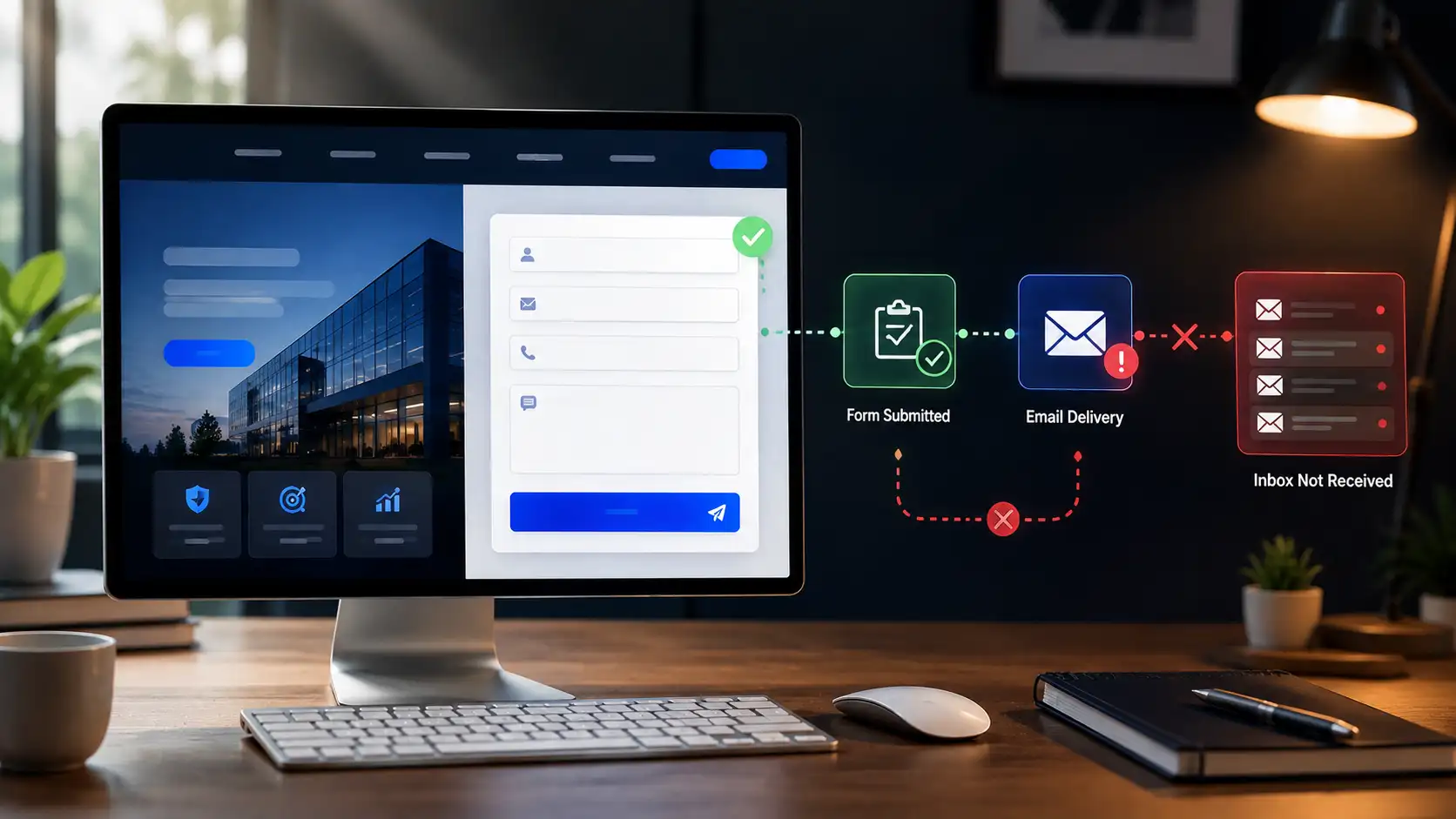
Sometimes the problem is not persuasion. It is technology. A form can appear to work while failing to send submissions correctly.
Possible issues include email delivery failures, incorrect form configuration, JavaScript conflicts, CAPTCHA problems, validation errors, CRM integration failures, mobile form issues, thank-you page problems, and tracking configuration errors. This is why conversion tracking and form testing should be part of every landing page launch.
Submit the form yourself. Test it on different devices. Check whether the submission reaches the correct email address or CRM. Confirm that the conversion is recorded in the analytics or advertising platform. A page cannot convert if visitors cannot successfully complete the action.
11. Your Page Does Not Build Enough Trust
Visitors may hesitate to submit a form because they do not know whether the company is credible. Trust is especially important when the service is expensive, technical, unfamiliar, or involves sharing personal information. A landing page can establish trust through relevant evidence such as customer reviews, recognizable certifications, project examples, guarantees that the business can genuinely honor, team credentials, transparent information, and clear company details.
Do not add trust elements simply as decoration. Place them where they address real objections. For example, if visitors are concerned about experience, place relevant project evidence near the service explanation. If visitors are worried about what happens after submitting a form, explain the next steps.
12. Your Landing Page Does Not Explain the Benefits
A list of features does not necessarily explain why the visitor should care.
For example:
Our service includes:
Responsive design, analytics integration, custom forms, technical setup, and reporting. That tells the visitor what is included. A benefit-focused explanation tells them what those features accomplish. The visitor needs to understand how the service can solve the problem they came to address. This does not mean making exaggerated claims. It means connecting the service to a meaningful business outcome.
13. Your Page Does Not Address Objections
Potential customers rarely arrive with zero concerns. They may wonder about price, timeline, process, qualifications, guarantees, support, contracts, compatibility, or what happens after contacting the company. A strong landing page anticipates those concerns.
For example, a website development landing page could explain the development process, expected project stages, content requirements, technology options, support arrangements, and what the client needs to provide.
An HVAC service page may explain service areas, appointment availability, warranties, or what happens during an inspection. The specific objections depend on the industry. The best source for these questions is your sales and customer service team.
14. Your Landing Page Targets the Wrong Search Intent
Not every click is equally valuable. A person searching for “what is SEO” has a different intent from someone searching for “SEO agency near me.” If your Google Ads campaign targets broad or poorly qualified queries, you can send plenty of traffic to the landing page without generating good leads. This can create the impression that the page is failing when the real problem is traffic quality.
Review the actual search terms triggering your ads. Look at whether the queries reflect the service you are selling. Then consider improving keyword targeting, negative keywords, match types, ad copy, and landing page relevance. The landing page and campaign should be evaluated together.
15. Your Ad and Landing Page Have Different Expectations
Imagine an advertisement says:
The visitor clicks and reaches a page asking them to purchase a package before receiving any audit. That creates a serious expectation gap. The visitor thought they were going to receive information about a free audit. Instead, they encounter a completely different offer. The landing page should fulfill the promise made in the advertisement. This is one of the most important principles when diagnosing a Google Ads landing page not converting.
16. Your Page Looks Like a Generic Website Page
A dedicated PPC landing page should usually have a clear relationship to the campaign that sends traffic to it. That does not mean it needs a completely different visual identity. It should still look like the company’s website and brand. But the content should be focused.
A generic homepage may contain company information, multiple services, blog posts, navigation options, and many different CTAs. A campaign landing page should usually narrow the visitor’s choices and provide information specifically related to the advertisement. Avenzo Digital provides Google Ads landing page design focused on creating dedicated experiences for paid campaigns.
17. Your Landing Page Does Not Have a Clear Visual Hierarchy
Visitors do not read every landing page word for word. They scan. The visual hierarchy should make the most important information easy to identify. The headline should stand out. The value proposition should be clear. The primary CTA should be visible. Supporting proof should be easy to find. Important sections should have enough spacing to separate them. If every element has equal visual importance, nothing feels important. Good design guides attention without forcing the visitor to work out where to look next.
18. You Are Sending All Google Ads Traffic to One Landing Page
Different campaigns can have different audiences and search intent. Sending every visitor to the same page may reduce relevance. For example, a company offering several services could have separate landing pages for different campaigns. A visitor searching for one specific service should ideally see a page dedicated to that service rather than a generic page covering everything.
This can improve message relevance and give the visitor information that matches their intent. The right number of landing pages depends on the campaign structure and available search volume. You do not need hundreds of pages. You need the right pages for meaningful segments of traffic.
19. Your Landing Page Has No Clear Conversion Path
A landing page should lead visitors toward an action. The path might look like:
Problem → Solution → Benefits → Proof → Offer → CTA
The exact structure will vary, but the visitor should understand what the company offers and why they should take the next step. If the page jumps from a headline to a company history, then a list of unrelated services, then a blog section, then a contact form, the conversion path may be unclear.
Think about the sequence from the visitor’s perspective.
What question would they ask first?
What would they need to know next?
What objection would come after that?
What evidence would make them comfortable?
What action should they take?
The page should answer those questions in a logical order.
20. Your Landing Page Is Not Being Properly Tracked
You cannot optimize what you cannot measure. A campaign may appear to have a conversion problem because tracking is incomplete. For example, your form may generate leads, but the conversion event is not firing.
Phone calls may be happening, but they are not included in your reporting. A thank-you page may load, but the actual conversion is not being recorded. Before redesigning the page, verify the measurement setup. At minimum, determine which actions matter and whether they are being recorded consistently.
For lead generation campaigns, that may include form submissions, phone calls, booked appointments, quote requests, and other meaningful actions. Do not treat every button click as a valuable conversion. The objective is to measure actions that contribute to business results.
How to Diagnose a Google Ads Landing Page Not Converting
If your page is receiving clicks but few conversions, avoid changing everything at once. A structured review makes it easier to identify the actual problem. Start by reviewing the campaign and search terms. Determine whether the traffic is relevant and has commercial intent.
Next, compare the advertisement with the landing page. Look for differences in the service, audience, location, offer, and terminology. Then review the first screen of the page. Ask whether a new visitor can understand the offer without scrolling. After that, test the complete conversion process yourself. Submit the form, test the CTA, check mobile behavior, and confirm that the conversion is recorded.
Finally, review user behavior and conversion data to determine where visitors are dropping off.This process helps separate traffic problems from landing page problems.
What Should a High-Converting Google Ads Landing Page Include?
A high-converting landing page does not follow one universal template, but most successful pages make several things clear. The visitor should quickly understand what is being offered, who it is for, why it is relevant, and what action they can take. The page should also provide enough information to overcome reasonable objections.
For a service business, a practical structure could be:
Headline → Supporting value proposition → CTA → Problem → Solution → Benefits → Process → Proof → FAQs → CTA
The exact order can change based on the offer. A high-ticket B2B service may need more evidence and explanation than a simple appointment-based service.
How to Improve Your Google Ads Landing Page Conversion Rate
Once you identify the problem, prioritize changes according to their likely impact. Do not redesign the entire page simply because one section looks outdated. Start with the elements closest to the conversion decision. Review the headline, offer, CTA, form, message match, trust signals, mobile experience, speed, and conversion tracking. Then test changes systematically.
For example, you could compare two headlines that communicate the same service but emphasize different benefits.
You could test a shorter form against a longer form. You could test different CTA wording. You could also compare a generic landing page with a campaign-specific page. The purpose of testing is not to guess which design looks better. It is to determine which experience produces better business outcomes.
Should You Redesign the Landing Page or Fix It?
Not every low-converting landing page needs a complete redesign. If the page has a good structure but weak copy, rewriting the messaging may be enough. If the offer is strong but the form is difficult to use, form improvements may have a bigger impact. If the page is slow and poorly optimized, performance work may be more valuable than a visual redesign.
A redesign becomes more appropriate when multiple issues exist across structure, content, UX, mobile performance, branding, and conversion flow. Avenzo Digital provides landing pages and conversion services for businesses that need a more structured approach to paid traffic and conversion-focused website experiences.
Google Ads Landing Page vs. Homepage
A homepage and a Google Ads landing page serve different purposes. A homepage introduces the broader business. A Google Ads landing page is usually designed around a particular campaign, audience, offer, or conversion goal. For example, a company might have one homepage but separate landing pages for commercial roofing, residential roofing, emergency repairs, and roof inspections.
This allows each advertising campaign to have a more relevant post-click experience. Sending all traffic to the homepage is not always wrong, but it should be a deliberate decision based on campaign intent and page relevance.
When Should You Hire a Landing Page Specialist?
Professional assistance becomes more useful when you have enough traffic to identify a meaningful conversion problem but cannot determine what is causing it. It can also help when several parts of the funnel need attention at the same time.
For example, a business may need help with campaign-to-page relevance, landing page design, copy structure, form optimization, mobile UX, technical performance, analytics, and conversion testing.
Avenzo Digital combines landing page design, website development, conversion optimization, and digital marketing services, allowing the landing page to be evaluated as part of the broader acquisition process. The goal is not simply to make a page look better. The goal is to create a more effective path between the paid click and the business outcome.
Landing Page Conversion Problems to Check First
If you need a quick starting point, review these areas before making major changes. Check the message match to ensure the page delivers what the advertisement promised. Review the headline to make sure visitors can understand the offer immediately. Evaluate the CTA to determine whether the next action is obvious and relevant.
Check the form to see whether it is simple enough for the visitor to complete. Review the mobile experience to ensure the page works smoothly on a phone. Check the speed to determine whether the page loads quickly enough for paid visitors. Finally, evaluate trust to ensure the page provides credible reasons to choose the business. These seven areas cover many of the most common problems that prevent paid traffic from becoming leads.

Request a Free Website Audit
If your advertising campaign is generating clicks but the results are disappointing, the next step should be diagnosis rather than guesswork. A landing page audit can examine the relationship between your ads, keywords, page content, design, offer, CTA, forms, mobile experience, performance, and conversion tracking.
Avenzo Digital can review your current landing page and identify practical opportunities to improve its conversion path.
A useful audit may focus on:
- Landing page messaging and ad relevance
- User experience and page structure
- Conversion opportunities
- Mobile usability
- Page speed
- Forms and calls to action
- Technical issues
- Tracking and measurement
- Content and trust signals
You can request a consultation to discuss your landing page, advertising goals, and the problems you are seeing.
Conclusion
When a Google Ads landing page not converting problem appears, the answer is rarely as simple as changing a button color or adding another headline. The entire post-click experience needs to be considered. Visitors should receive what the advertisement promised, understand the offer quickly, see a clear path toward action, and have enough evidence to feel comfortable taking that action.
Campaign targeting also matters. If the traffic is irrelevant, even an excellent landing page will struggle to produce valuable leads. Start by checking message match, search intent, headline clarity, offer strength, CTA placement, forms, trust signals, mobile usability, page speed, and conversion tracking. Then prioritize the changes most likely to affect the business outcome.
A dedicated Google Ads landing page can be much more effective than sending every paid visitor to a generic homepage, particularly when the campaign targets a specific service or offer. If you have enough traffic but your landing page is not producing the expected results, a structured audit can help identify where visitors are dropping out and what should be improved first.
The goal is not simply to increase the number of conversions. It is to create a landing page that turns relevant paid traffic into qualified business opportunities. For businesses that need help with landing page strategy, UX/UI design, development, or conversion optimization, Avenzo Digital can evaluate the complete experience and recommend practical improvements based on the campaign and business goals.
Frequently Asked Questions
Why is my Google Ads landing page not converting?
A Google Ads landing page may not convert because of poor message match, weak offers, unclear CTAs, slow loading, poor mobile UX, complicated forms, weak trust signals, irrelevant traffic, technical problems, or incomplete conversion tracking.
What is a good landing page conversion rate for Google Ads?
There is no single conversion rate that is good for every Google Ads campaign. Results vary by industry, offer, traffic quality, device, keyword intent, price, and conversion action. Compare performance against your own qualified traffic, lead quality, and business goals.
Should I send Google Ads traffic to my homepage?
A homepage can work for some campaigns, but a dedicated landing page is often more relevant when the advertisement targets a specific service, audience, location, or offer. The decision should be based on search intent and message match.
How can I improve my Google Ads landing page?
Start by improving message match, headline clarity, offer strength, CTA visibility, form usability, trust signals, mobile experience, speed, and conversion tracking. Test changes systematically rather than changing everything at once.
Does landing page speed affect Google Ads conversions?
Yes. Slow pages can create friction, particularly for mobile visitors. Performance should be monitored alongside conversion data because visitors cannot convert if they leave before the page becomes usable.
Should a Google Ads landing page have navigation?
It depends on the campaign. Removing unnecessary navigation can reduce distractions, but some businesses may benefit from limited navigation when visitors need additional trust or company information before converting.
How many form fields should a landing page have?
There is no universal number. Use the minimum information needed to process or qualify the lead effectively. If a field is not necessary at the initial stage, consider collecting that information later.
Can a landing page have too much information?
Yes, but a long page is not automatically ineffective. The real problem is irrelevant or poorly organized information. Complex or expensive services often require more content because visitors have more questions before converting.
Should I create a separate landing page for every Google Ads campaign?
Not necessarily. Separate pages are useful when campaigns target substantially different services, audiences, locations, or offers. Creating unnecessary pages can make campaigns harder to manage without improving relevance.
When should I redesign my Google Ads landing page?
Consider a redesign when problems extend beyond copy or one isolated element and involve structure, UX, mobile performance, branding, speed, forms, and conversion flow. If only one element is underperforming, a targeted improvement may be more appropriate.