
In this guide 22 sections
Before signing a website development contract, ask about the exact scope, ownership, platform, SEO protection, forms, mobile testing, payment milestones and post-launch support. A professional proposal should explain what you will receive, what you must supply, who owns the finished assets and how the website will be tested before launch.
These questions help service-business owners compare developers without relying only on portfolio screenshots or the cheapest quote. They are not a substitute for legal advice about a contract, but they reveal practical gaps before those gaps become expensive.
1. What exactly is included in the quoted scope?
Ask for an itemized description of the deliverables, not a promise to create a “professional website.” The proposal should identify page templates, content entry, design rounds, integrations, responsive layouts, analytics, forms, basic search setup and launch support. Confirm which tasks are excluded, including copywriting, photography, branding, paid plugins, hosting, maintenance and post-launch changes. Ask how additional work will be priced and approved. A fixed-price quote is only useful when the scope is sufficiently clear. If the project includes a website redesign, specify whether existing URLs, redirects and content migration are part of the agreement. Request examples of what a completed deliverable looks like, such as an approved homepage template and working contact form. Document assumptions about what the client must supply and when.
2. Who owns the website, code, design and accounts?
Ownership is not the same as being able to log into a dashboard. Ask who will own the domain, hosting account, repository, design files, original content and relevant licenses after payment. Confirm whether the developer is using third-party templates or plugins with separate license terms. If custom code is being written, the contract should explain intellectual property rights and any reusable libraries the developer retains. Do not assume a website built on a hosted platform can be exported without restrictions. Make sure business-critical accounts are created under an appropriate business-controlled identity and that staff can recover access. A handover should include credentials or an approved access transfer, documentation and a list of services that require renewal. Legal wording varies by jurisdiction, so review material ownership clauses with qualified counsel when the project is substantial.
3. What platform are you recommending, and why?
A good developer should connect the technology choice to the business requirements. WordPress can be suitable for content-heavy websites managed by nontechnical staff. Next.js and a headless CMS may suit custom interfaces or integrations, but can introduce additional deployment and maintenance responsibilities. Website builders may be practical for simpler needs with limited custom requirements. Ask what the business can edit independently, which skills are needed for future changes, and how updates will be deployed. Discuss expected traffic, integrations, multilingual content, performance and budget. Avoid selecting a platform solely because it is trendy or because a developer prefers it. Request a clear explanation of trade-offs, including vendor dependence and the cost of future ownership. The best solution is one the business can operate reliably.

4. Can you show comparable completed work?
Ask to see websites with similar service complexity, content needs and business goals. A beautiful ecommerce storefront is not necessarily evidence of experience with a B2B service website or local lead-generation process. Review actual page functionality, mobile usability, navigation and forms rather than only screenshots. Ask what the developer personally delivered: design, frontend implementation, CMS setup, copywriting, integrations or maintenance. Some portfolios show collaborative projects, and that is fine when responsibilities are described accurately. If the agency presents performance results, ask how they were measured and over what period. Do not require confidential client data, but look for a credible explanation of the challenge and implementation. A useful reference can help establish how the team communicates and handles problems.
5. How will you plan the content and site structure?
The developer should explain how the site’s pages will be organized around actual services and customer questions. Ask whether they will inventory existing content, identify primary navigation, map internal links and decide which pages require unique templates. A service-business homepage should help visitors understand the offer quickly, while dedicated service pages provide details and appropriate next steps. Clarify who writes and approves the copy, provides photographs, and checks technical accuracy. If SEO is important, ask how search intent and existing page performance influence the structure. Avoid creating dozens of repetitive location pages that merely swap city names. A clear content plan prevents expensive redesigns late in development and reduces the risk of publishing placeholder text.
6. How will mobile usability and accessibility be tested?
Responsive design should be demonstrated through actual interactions, not asserted because a page shrinks on a small screen. Ask which mobile devices and viewport sizes will be tested, how navigation behaves, and whether forms work with mobile keyboards. Review text contrast, visible focus indicators, labels, error messages, keyboard access and reduced-motion preferences. The W3C Web Content Accessibility Guidelines offer a useful reference for accessibility expectations. Ask who is responsible for fixing issues found during testing and whether accessibility review is included in the quote. For service businesses, pay special attention to click-to-call controls, booking widgets and sticky contact buttons that can cover form fields. A practical acceptance test is to complete the main customer journey from landing page to successful enquiry on a real phone.

7. What performance targets and testing methods will you use?
Ask how the developer will test loading performance on representative mobile connections and devices. Performance depends on images, scripts, hosting, caching, fonts and the complexity of the interface. Google Core Web Vitals can help assess loading, responsiveness and layout stability, but a high score alone does not prove that a website is useful or that forms work. Request an explanation of how large media, animations and third-party widgets will be handled. Confirm whether performance testing occurs before launch and after deployment, when real hosting and integrations are active. Avoid accepting promises of a perfect score without discussing measurement conditions. Agree on practical acceptance criteria, such as no major layout shifts or unusable form interactions, and document exceptions for essential third-party services.
8. How will existing SEO and URLs be protected?
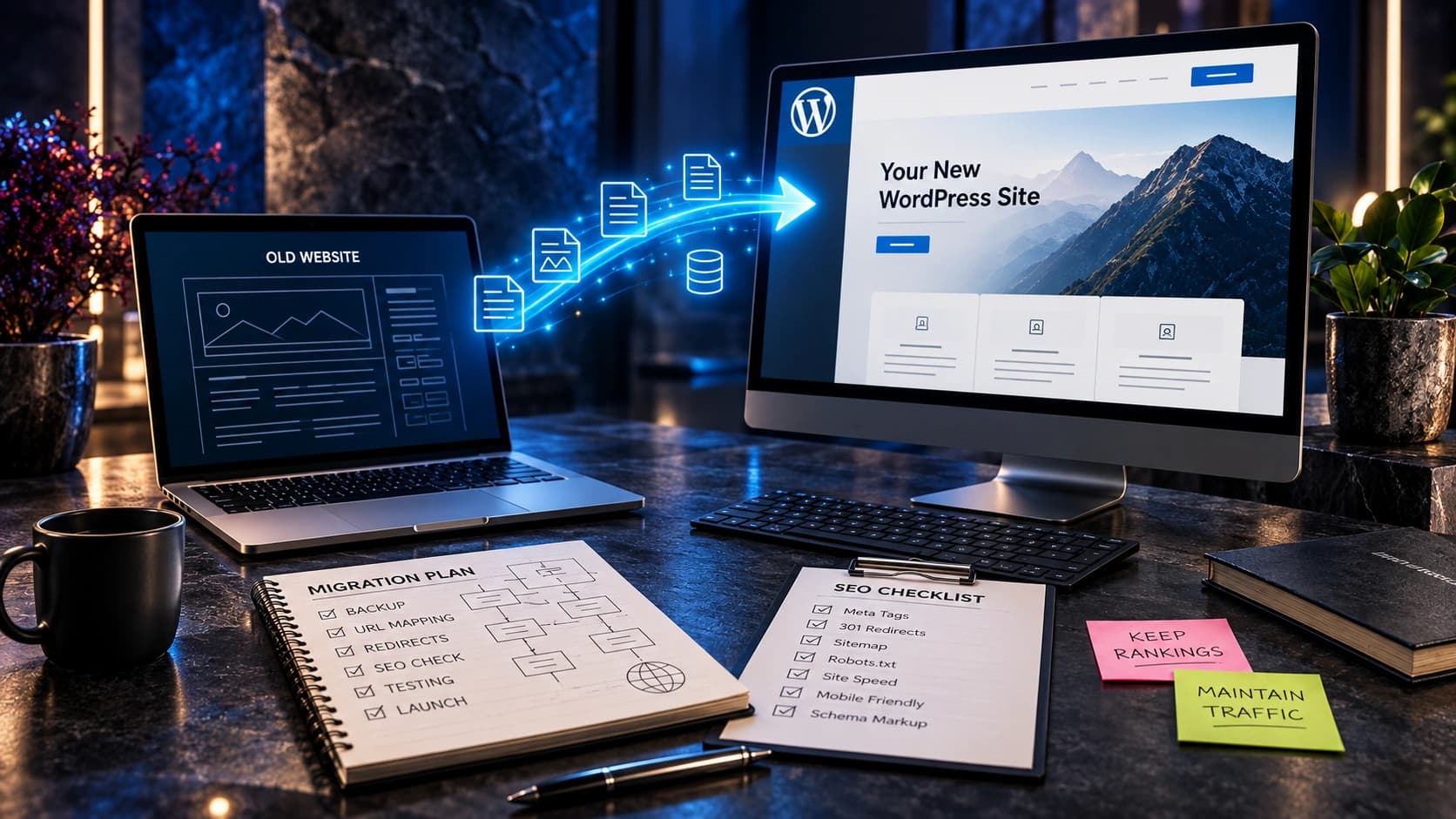
If replacing an existing website, request a URL inventory and redirect plan before the old site is changed. Ask whether important titles, content, internal links, canonical URLs and structured data will be preserved or deliberately revised. The team should check indexability, XML sitemaps, robots directives and broken links during launch QA. Confirm who monitors Google Search Console afterward and how issues will be handled. Redirects are especially important when page paths change, but not every old URL needs to point to the homepage. The destination should be relevant to the previous page’s purpose. Search performance can fluctuate during migrations, so avoid guaranteed ranking promises. Google’s site-move documentation provides a useful technical reference for planning.
9. What happens when someone submits a contact form?
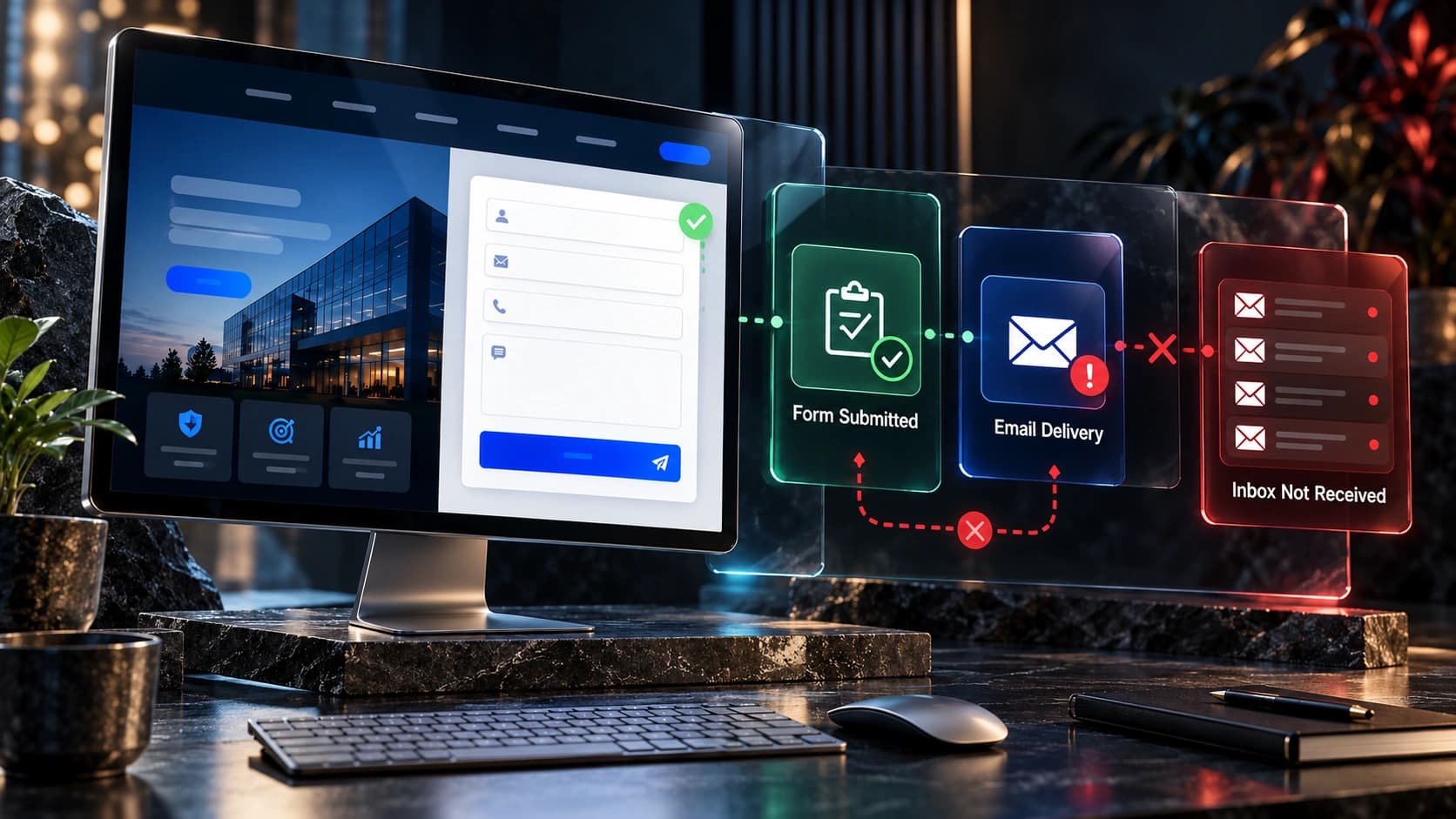
Ask the developer to describe the full lead path: browser submission, validation, storage, notification, CRM routing and acknowledgement. A thank-you screen is not sufficient proof that the enquiry reached the sales team. Specify which email addresses receive notifications, how spam is handled, and who can view stored enquiries. If the business uses a CRM, ask whether duplicate records, failed integrations and lead ownership are addressed. Confirm what data is sent to analytics and how personal information is protected. Before launch, run real test submissions on desktop and mobile, then inspect the CRM record and notification. A reliable enquiry system is often more valuable than a visually elaborate animation that distracts from the service.
10. How will revisions and approvals work?
Ask how many design revisions are included, what counts as a revision, and when a change becomes additional scope. Request a milestone-based approval process for sitemap, wireframes, visual design, development and final QA. The client should know when feedback is due and who has authority to approve work. A single consolidated feedback document can reduce contradictory instructions from multiple stakeholders. Clarify whether fixing a bug is treated differently from requesting a new feature. The contract should describe how disputed acceptance items are resolved and whether approved milestones can be revisited. An orderly review process protects both parties and helps prevent a project from becoming an indefinite cycle of untracked changes.

11. Who is responsible for security, backups and updates?
Security responsibilities differ depending on the platform and hosting arrangement. Ask who configures access permissions, updates plugins or dependencies, manages backups and monitors failures. Confirm whether the developer uses separate development and production environments and how changes are deployed. For WordPress, discuss plugin maintenance and backup restoration. For a headless site, ask about CMS access, environment variables, dependency updates and deployment permissions. The agreement should state what happens after the initial support period ends. Do not assume that paying for hosting includes active website maintenance. Ask for a recovery procedure and whether backups have been tested. Sensitive credentials should be shared through an appropriate secure method rather than pasted into ordinary project messages.
12. What does the payment schedule cover?
A transparent agreement should identify the total price, deposit, milestone payments, payment triggers and any recurring fees. Ask whether revisions, premium plugins, photography, copywriting, hosting, domains and ongoing support are included. Clarify what happens if the project is paused, cancelled or materially changes scope. Payment milestones should correspond to observable deliverables rather than vague progress statements. Confirm who pays third-party vendors and who retains ownership of those accounts. For international projects, discuss currency, applicable taxes and transaction costs before signing. A low headline quote can become expensive if important necessities are excluded. Compare proposals using a consistent checklist of scope, deliverables, ownership and support rather than only the final number.
13. What will you hand over at launch?
Request a documented handover checklist. It may include administrator access, domain and hosting ownership, repository permissions, design source files where agreed, CMS training, backup instructions, integration details and an inventory of paid services. Ask whether the developer will provide a short walkthrough showing how to edit pages, publish articles and inspect form submissions. Confirm whether documentation is written for nontechnical staff and whether support requests have a defined contact channel. The team should explain how to roll back a faulty deployment and what the client must do to maintain the site. A launch is not complete merely because the homepage loads; the business needs to operate the website after the developer leaves.

14. What post-launch support is included?
Ask how long the developer will fix defects discovered after launch and what qualifies as a defect versus a new feature. Confirm expected response channels, business hours and whether urgent issues receive priority. If the business wants ongoing SEO, content updates, analytics review or maintenance, request a separate description of those services. Discuss ownership of backups, plugin licenses and access if the maintenance relationship ends. Post-launch monitoring should include forms, broken links, search indexing and major performance issues. Avoid assuming an unlimited support commitment when the quote covers only initial development. A realistic support plan can prevent small issues from becoming prolonged business disruptions.
15. How will we decide whether the website is successful?
Agree on outcomes before design work begins. A service business might prioritize reliable qualified enquiries, easier navigation, faster mobile interactions, accurate service information or a manageable CMS. Choose measurable indicators and define how they will be collected. Website traffic alone is not proof of success, and a conversion increase cannot be promised without understanding traffic and the sales process. Ask which events will be tracked, how testing will be performed and whether there will be a post-launch review. For a redesign, preserve a baseline of existing search traffic and enquiry behavior so changes can be evaluated responsibly. Success should reflect what the website needs to accomplish for the business, not simply whether it looks different.
Website developer comparison worksheet
| Area | Ask for written evidence |
|---|---|
| Scope | Page and feature deliverables, exclusions and change process |
| Ownership | Domain, hosting, repository, design assets and license rights |
| Design | Wireframes, review milestones and responsive templates |
| SEO | URL inventory, redirects, canonical tags and launch checks |
| Lead generation | Form tests, CRM routing and notification ownership |
| Quality assurance | Device testing, accessibility and performance checks |
| Handover | Access, documentation, training and backup procedures |
| Support | Warranty period, response process and maintenance options |
Red flags when comparing website proposals
Be cautious when a developer cannot explain what is included, refuses to identify third-party costs, promises guaranteed search rankings, or cannot describe how leads will reach your business. A vague contract that says only “build five pages” may leave the most important details unresolved. Equally, a long technical proposal is not automatically better if the client cannot understand what is being delivered. Ask for plain-language explanations and evidence of comparable work. A reputable developer should be comfortable clarifying assumptions, ownership and acceptance criteria before payment.
Do not confuse a developer’s use of a template with poor quality. A suitable template can be an efficient starting point when it meets the requirements. Conversely, a custom build can be justified by unusual workflows or design needs. The important question is whether the solution supports your business and remains maintainable.
How to compare two proposals fairly
First, write down your essential business needs and mark them as required or optional. Next, compare each proposal against the same criteria: functionality, content responsibility, mobile design, SEO migration, integrations, ownership, QA and support. Request clarification for missing items rather than assuming they are included. Then compare realistic total cost, including ongoing services and expected changes. Ask the proposed project lead to walk through a hypothetical issue, such as a form that stops sending enquiries after launch. Their answer can reveal how responsibilities and support actually work.
For an established site, the cost of disrupting current leads or search traffic may be more significant than a modest difference in development fees. Make sure the project has a rollback or recovery plan before replacing the live site. The final choice should balance competence, communication, scope and operational fit.
Frequently asked questions
Should I pay a deposit before development starts?
Deposits are common, but the agreement should explain what the payment covers, when milestones are due and what happens if work is cancelled.
Should the developer own my domain?
Your business should generally retain appropriate control over its domain and critical accounts. Agree on access and management responsibilities in writing.
Is WordPress better than a custom website?
Neither is universally better. Choose based on editing needs, integrations, performance, maintenance capacity and budget.
How many revisions should a contract include?
There is no universal number. Define the review stages, what constitutes a revision and how new scope will be priced.
Do website developers provide SEO?
Some include technical SEO basics; others provide separate strategy and ongoing services. Ask exactly what is included.
What happens if the contact form fails?
The agreement should identify testing, notification monitoring, post-launch support and a process for correcting defects.
Should I ask for the source code?
For custom development, clarify code ownership, repository access and licensing. Hosted builders and third-party products have different restrictions.
What if the project takes longer than expected?
Request milestones, client dependencies, change procedures and a clear process for discussing schedule changes.
How do I verify the website is finished?
Use agreed acceptance tests for pages, mobile behavior, forms, SEO settings, accessibility and handover rather than relying on appearance alone.
Helpful reading before hiring
Compare the template versus custom design decision, understand website redesign timelines, review redesign budgeting, learn how to protect SEO during a redesign, and use the maintenance checklist when discussing post-launch responsibilities.
Make the contract as clear as the website you want
Before you sign, make sure the proposal tells you what will be built, who will do the work, how you will approve it, and what happens afterward. Clear answers reduce misunderstandings and help you choose a development partner on more than price alone.
Avenzo Digital works on website design, development and redesign for service businesses. Request a consultation to discuss your project requirements and ask about our free homepage mockup offer.