
If your business not showing up on Google has become a recurring frustration, you're not alone. Every day, business owners wonder why competitors appear in search results while their own website or Google Business Profile is…

If your business not showing up on Google has become a recurring frustration, you’re not alone. Every day, business owners wonder why competitors appear in search results while their own website or Google Business Profile is difficult—or impossible—to find.
The good news is that Google rarely hides legitimate businesses without a reason. In most cases, visibility problems are caused by technical issues, incomplete business information, poor SEO practices, weak local optimization, or simply because Google hasn’t developed enough trust in your website yet.
Understanding the root cause is the first step toward fixing it.
In this guide, you’ll learn why businesses disappear from Google Search and Google Maps, how to identify the specific issue affecting your business, and the practical steps you can take to improve your online visibility. You’ll also discover when professional SEO support can help resolve problems that are difficult to identify on your own.
What Does It Mean When Your Business Is Not Showing Up on Google?
A business may fail to appear on Google in several different ways, and each situation has a different solution.
For example, you may notice that your website does not appear when someone searches for your business name, your Google Business Profile is missing from Google Maps, your business ranks for very few keywords, competitors appear for important searches while your website remains invisible, or your website was previously visible but has recently disappeared from search results.
These scenarios often point to different technical or SEO issues. Identifying which one applies to your business makes troubleshooting much easier.
A business not appearing on Google usually indicates one of three problems: Google cannot find your website, Google has not indexed it properly, or Google does not consider it relevant enough to rank for the searches you’re targeting.
Why Google Doesn’t Show Every Business
Many business owners assume that launching a website automatically guarantees visibility in Google Search. A professionally built website using modern website design services provides a stronger foundation for long-term SEO success. Unfortunately, that’s not how search engines work.
Google evaluates millions of websites using hundreds of ranking signals before deciding which pages deserve to appear for a particular search.
Some of the most important factors include website quality, technical SEO health, content relevance, local optimization, user experience, page speed, mobile usability, website authority, trust signals, and backlink quality.
If several of these areas are weak, Google may struggle to understand your website or choose competitors instead. Businesses with outdated websites often benefit from a strategic website redesign that improves usability, performance, and search visibility
Think of Google as a recommendation engine. It wants to display websites that provide the most helpful, accurate, and trustworthy answers to users’ questions.
Common Reasons Your Business Is Not Showing Up on Google
Most visibility problems fall into a handful of categories. Let’s examine each one in detail.
Your Website Has Not Been Indexed
One of the most common reasons businesses remain invisible is that Google has never indexed the website. Indexing simply means Google has discovered your pages and stored them in its search database. If your website isn’t indexed, it cannot appear in search results. Google’s crawlers also need websites to meet modern accessibility standards, making website accessibility improvements beneficial for both users and search engines.
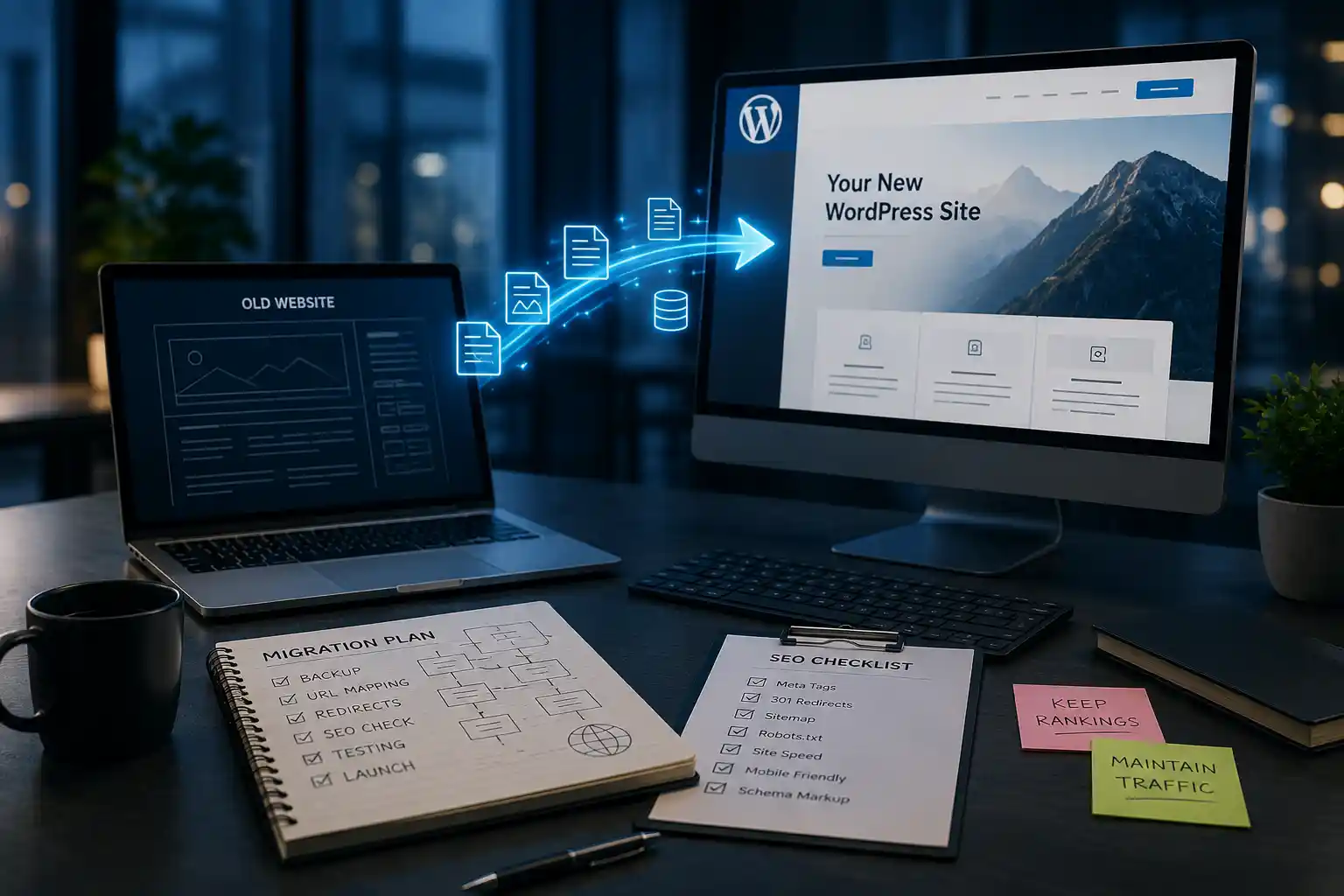
Several issues can prevent indexing, including a brand-new website, no sitemap being submitted, robots.txt blocking search engines, important pages marked as “noindex,” poor internal linking, or Google not yet discovering the site. During a website launch or redesign, proper website migration planning helps preserve search rankings and prevents indexing problems.
If Google has not indexed your website, improving rankings is impossible because Google cannot rank pages it does not know exist.

Your Google Business Profile Is Incomplete
For local businesses, Google Business Profile plays a major role in local visibility. An incomplete profile can significantly reduce your chances of appearing in Google Maps or local search results.
Common problems include missing business categories, an incorrect address, the wrong phone number, a missing website URL, no business description, no business hours, a lack of customer reviews, and few or no business photos.
Google prefers businesses with complete, accurate, and consistently maintained profiles.
Your Website Has Technical SEO Problems
Technical SEO creates the foundation that allows search engines to crawl, understand, and rank your website. Even excellent content may struggle if technical issues exist.
Common technical SEO problems include broken internal links, crawl errors, duplicate content, incorrect canonical tags, slow loading pages, poor Core Web Vitals, mobile usability issues, redirect chains, broken structured data, and HTTPS problems.
Many of these issues are invisible to visitors but have a significant impact on search performance.
Businesses that regularly invest in technical SEO often experience more stable rankings because search engines can access and interpret their websites more efficiently.
Your Website Is Too New
A newly launched website usually needs time before Google begins ranking it competitively.
Google first needs to discover your pages, crawl your website, evaluate your content, understand your business, assess website quality, measure user engagement, and build trust over time.
This process varies depending on your industry, competition, and website quality. New websites often require consistent optimization before they begin earning meaningful organic traffic.
You’re Targeting Extremely Competitive Keywords
Many businesses try to rank immediately for broad, highly competitive phrases.
For example, a local roofing company attempting to rank nationally for “roof repair,” a new law firm trying to rank for “personal injury lawyer,” or a startup ecommerce store targeting “running shoes.” These keywords are often dominated by large brands with years of authority.
A smarter strategy focuses on local keywords, service-specific keywords, long-tail searches, industry-specific questions, and buyer-focused search intent. This approach typically generates qualified traffic much faster.
Poor Local SEO Is Limiting Your Visibility
Local SEO determines whether nearby customers can discover your business. Google considers several local ranking factors before deciding which businesses appear in the Local Pack and Google Maps.
Important signals include consistent business information across directories, Google Business Profile optimization, customer reviews, local citations, local backlinks, service area relevance, geographic content, and business proximity.
Even businesses offering excellent services may struggle if these signals are weak.
For companies serving specific cities or regions, improving local SEO often produces faster results than targeting highly competitive national keywords. Investing in professional local SEO services can improve your visibility in Google Maps, local search results, and location-based searches.
This is why many businesses invest in professional local SEO services to strengthen their visibility in local search results.
Your Website Doesn’t Match Search Intent
One of the most overlooked ranking factors is search intent. Google wants to display pages that directly answer what users are looking for.
For example: Someone searching “emergency plumber near me” expects immediate contact information—not a 3,000-word article about plumbing history.
Someone searching “website redesign services” wants service information, pricing considerations, examples, and reasons to hire a professional.
If your content doesn’t align with user expectations, Google may rank another website instead. Creating content around actual customer questions, problems, and decision-making stages helps improve relevance over time.
Search intent refers to the reason behind a user’s search. Pages that closely satisfy that intent are more likely to rank higher than pages covering unrelated or overly broad information.
Low-Quality or Thin Content
Content quality remains one of Google’s strongest ranking signals. Many small business websites contain only a few short service pages with minimal information. Examples include “We provide roofing,” “Call today,” and “We have great customer service.”
Although these statements describe the business, they don’t help Google understand why the company deserves to rank. Strong SEO content explains what you do, who you help, how your service works, common customer questions, the problems your service solves, why customers choose your business, and what makes your approach different.
Comprehensive, original content builds topical authority and increases the number of relevant keywords your website can rank for.
Weak Website Authority
Google also evaluates the credibility of your website.
Authority develops gradually through consistent quality signals, including helpful content, relevant backlinks, positive brand mentions, customer reviews, industry recognition, strong user engagement, and consistent publishing.
Businesses with stronger authority often outperform competitors even when offering similar services. Building authority is a long-term strategy rather than a one-time SEO task.
Website Performance Can Affect Rankings
A slow website frustrates users and creates additional challenges for search engines.
If pages load slowly, visitors often leave before interacting with the website. Google interprets these signals as poor user experience.
Website performance improvements commonly include image optimization, code minification, browser caching, faster hosting, content delivery networks (CDNs), lazy loading, database optimization, and Core Web Vitals improvements. Professional website speed optimization ensures these improvements are implemented correctly while maintaining website functionality.
Many businesses notice higher engagement after improving website speed, which can contribute to stronger long-term SEO performance.
If speed issues are severe, working with specialists in website speed optimization and Core Web Vitals optimization can help resolve technical bottlenecks that standard website builders often overlook.
Website Security Issues Can Reduce Trust
Google wants to recommend websites that are safe for users. If your website has security issues, outdated software, or malware, it may lose visibility in search results or even display security warnings that discourage visitors from clicking. Common website security problems include outdated plugins, weak passwords, expired SSL certificates, and vulnerable website themes.
Regular software updates, malware monitoring, backups, and security audits help protect both your website and your search performance. Businesses using WordPress should pay particular attention to plugin updates and security best practices to reduce unnecessary risks.
If your website hasn’t been maintained for several months, investing in professional website maintenance and website security services can prevent small technical issues from becoming major SEO problems.
Your Website Is Not Mobile Friendly
More than half of Google searches happen on mobile devices. Google primarily evaluates the mobile version of your website when determining rankings. A poor mobile experience can negatively affect both user satisfaction and search visibility.
Some common mobile usability issues include text that is difficult to read without zooming, buttons placed too close together, slow loading pages, images that extend beyond the screen, navigation that is difficult to use on smaller devices, and forms that are hard to complete on smartphones.
A responsive website improves usability for visitors while helping Google better evaluate your site’s quality. Investing in responsive website design ensures your website performs well across desktops, tablets, and smartphones.
Google May Have Applied a Manual Action
Although uncommon, Google sometimes removes or limits a website’s visibility after identifying serious violations of its Search Essentials guidelines.
Manual actions are typically caused by practices such as buying low-quality backlinks, publishing spam content, hidden text or keyword stuffing, cloaking content, hacked websites, and large-scale duplicate content.
If a manual action has been applied, Google Search Console will usually provide a notification explaining the issue. Resolving the problem and submitting a reconsideration request may be necessary before rankings recover.
How to Diagnose Why Your Business Is Not Showing Up on Google
Before making changes, determine exactly where the problem exists.
Start by checking the following:
- Search your business name in Google.
- Search using site:yourdomain.com to see whether Google has indexed your pages.
- Review Google Search Console for indexing, crawl, and performance issues.
- Verify your Google Business Profile.
- Test your website on mobile devices.
- Review Core Web Vitals and page speed.
- Check whether important pages are blocked from indexing.
- Compare your website with competitors that rank well for your target keywords.
A structured review helps you identify the underlying issue instead of relying on guesswork.
A Step-by-Step Plan to Improve Your Google Visibility
Improving your search visibility requires consistent effort rather than a single quick fix.
Step 1: Ensure Google Can Crawl and Index Your Website
Confirm that your sitemap has been submitted through Google Search Console and that important pages are not blocked by robots.txt or noindex tags.
Every valuable service page should be accessible to search engines.
Step 2: Improve Your Google Business Profile
Complete every available section of your profile. Add accurate business information, upload professional photos, select appropriate business categories, maintain updated hours, and encourage satisfied customers to leave honest reviews.
An optimized Google Business Profile increases your chances of appearing in local search results.
Step 3: Publish Helpful Content
Google rewards websites that consistently answer customer questions. Instead of publishing content solely for search engines, focus on solving real problems your customers experience before purchasing your services.
Educational blogs, service pages, buying guides, and frequently asked questions all contribute to stronger topical authority.
Businesses investing in long-term content marketing often experience steady growth in organic traffic because Google gains confidence in their expertise over time.
Step 4: Improve Technical SEO
Technical SEO ensures your website performs efficiently behind the scenes. Areas that deserve regular attention include crawlability, website architecture, structured data, canonical tags, XML sitemaps, internal linking, page speed, mobile optimization, and Core Web Vitals.
Technical improvements help search engines understand your website more effectively while creating a better experience for visitors. Modern website improvement services focus on building fast, secure, scalable websites that support long-term SEO performance.
Step 5: Build Authority Naturally
Google values businesses that earn trust over time.
Authority can grow through publishing original, helpful content, earning relevant backlinks from reputable websites, receiving positive customer reviews, maintaining consistent business information across online directories, and building a recognizable brand within your industry.
While authority takes time to develop, it often produces lasting improvements in search visibility.
Common Mistakes That Keep Businesses Hidden on Google
Many businesses unknowingly repeat the same SEO mistakes.
Avoid these common issues:
- Ignoring Google Search Console
- Publishing very little website content
- Creating duplicate service pages
- Neglecting technical SEO
- Using outdated website software
- Expecting immediate SEO results
- Ignoring mobile usability
- Targeting unrealistic keywords
- Failing to optimize Google Business Profile
- Not monitoring website performance
Correcting these problems can significantly improve your long-term visibility.
When Professional SEO Services Make Sense
Some SEO issues are straightforward, while others require technical expertise and specialized tools.

Professional assistance is often worthwhile if:
- Your website has experienced a significant traffic decline.
- Google has deindexed important pages.
- Your competitors consistently outrank you.
- Technical SEO issues continue despite repeated fixes.
- Your Google Business Profile struggles to appear in local searches.
- Your website generates very few qualified leads.
An experienced SEO team can perform a comprehensive Free Website Audit, identify hidden technical issues, prioritize improvements, and develop a strategy based on your business goals rather than generic recommendations.
For many growing businesses, combining technical SEO, content optimization, website performance improvements, and local SEO produces better long-term results than focusing on only one area.
Request a Free Website Audit
If your business not showing up on Google is affecting leads and revenue, identifying the underlying issue should be your first priority.
A professional website audit can uncover technical problems, indexing issues, local SEO weaknesses, content gaps, and performance bottlenecks that may be limiting your visibility.
At Avenzo Digital, we help businesses improve their online presence through technical SEO, local SEO, website optimization, content strategy, and conversion-focused website development.
If you’re unsure why your business isn’t appearing in Google Search or Google Maps, request a Free Website Audit, receive a customized marketing strategy, or book a discovery call with our team to discuss practical solutions based on your business goals.
Conclusion
Contact Avenzo Digital to request your Free Website Audit or book a discovery call with our SEO specialists. If your business not showing up on Google, don’t assume the problem is random. In most cases, there is a specific reason behind the lack of visibility, whether it’s an indexing issue, weak local SEO, technical errors, poor content, slow website performance, or limited website authority.
The good news is that these challenges can be addressed with a structured SEO strategy and ongoing optimization. By improving your website’s technical health, creating valuable content, strengthening your Google Business Profile, and providing a better user experience, you increase your chances of earning stronger rankings over time.
SEO is a long-term investment, but consistent improvements lead to greater visibility, more qualified traffic, and increased business opportunities. If you need expert guidance, Avenzo Digital can help you identify obstacles, prioritize the right improvements, and build a strategy designed for sustainable growth.
Frequently Asked Questions
Why is my business not showing up on Google?
Your business may not appear because your website is not indexed, your Google Business Profile is incomplete, technical SEO issues exist, or your competitors have stronger relevance and authority.
How long does it take for a new business to appear on Google?
Google may discover a new website within a few days, but achieving meaningful rankings often takes several weeks or months depending on competition, website quality, and ongoing SEO efforts.
How do I know if Google has indexed my website?
Search for site:yourdomain.com in Google. If pages appear, your website has been indexed. You can also verify indexing status using Google Search Console.
Can a Google Business Profile improve local rankings?
Yes. A complete and well-maintained Google Business Profile helps businesses appear more frequently in Google Maps and local search results when combined with strong local SEO practices.
Does website speed affect Google rankings?
Yes. Website speed is part of Google’s page experience evaluation. Faster websites generally provide a better user experience and may perform better in search results.
Why does my competitor rank higher than my business?
Competitors may have stronger content, better technical SEO, higher website authority, more customer reviews, stronger local optimization, or a better overall user experience.
Can technical SEO prevent my website from ranking?
Yes. Crawl errors, indexing problems, duplicate content, broken structured data, poor Core Web Vitals, and other technical issues can limit Google’s ability to understand and rank your website.
Is local SEO different from traditional SEO?
Yes. Local SEO focuses on improving visibility in location-based searches by optimizing Google Business Profile, local citations, reviews, and geographically relevant content.
Should I hire an SEO agency if my business is not showing up on Google?
If you’ve already addressed basic issues and your website still isn’t gaining visibility, working with an experienced SEO agency can help identify technical problems and build a long-term strategy for sustainable growth.
How often should I update my website for SEO?
Regular updates are recommended. Publishing new content, maintaining technical health, improving existing pages, and monitoring performance help keep your website competitive in search results.