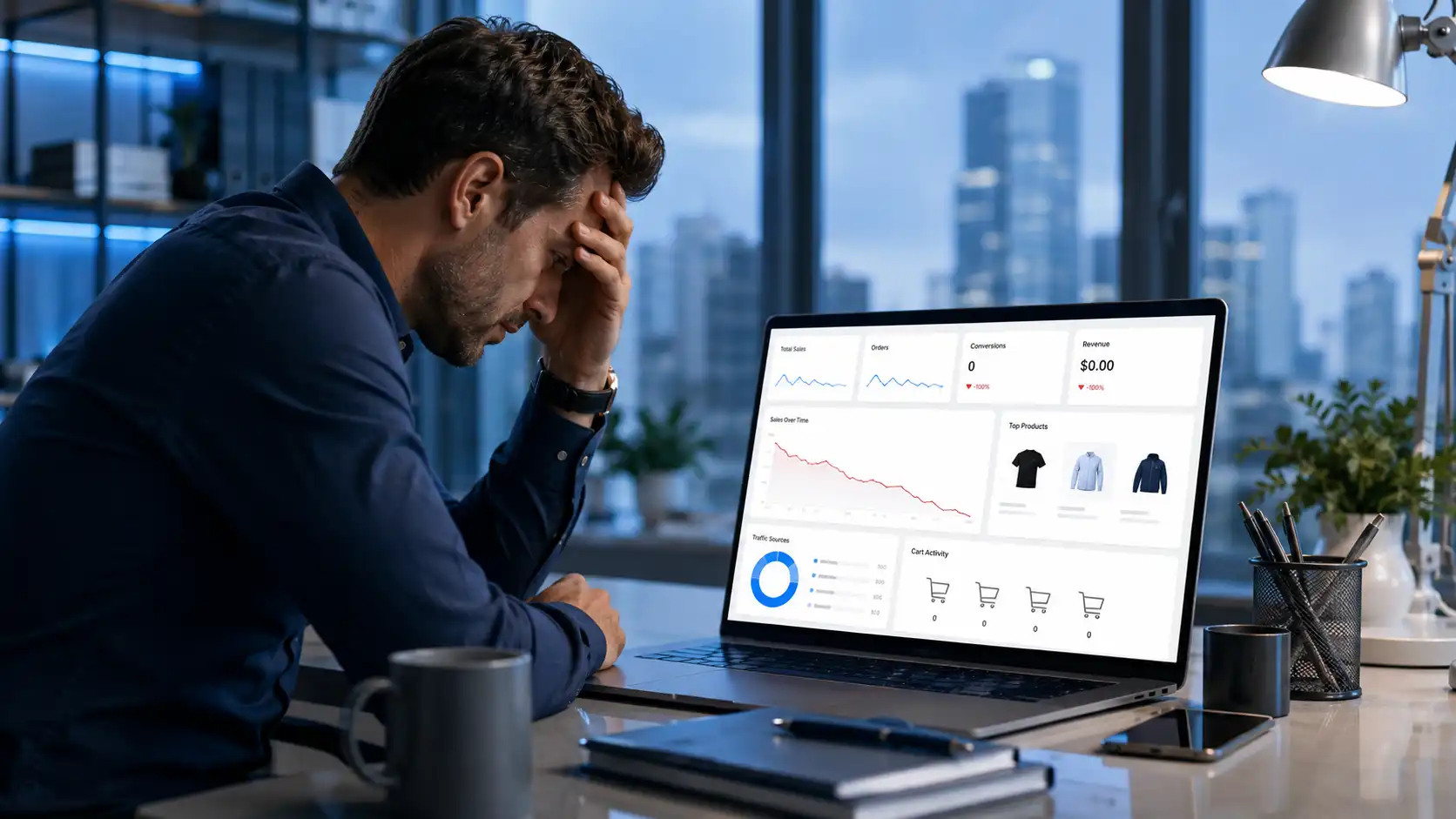
Launching an ecommerce website is an exciting milestone, but seeing little or no revenue after launch can quickly become frustrating. Many business owners assume that simply having a professional-looking online store will automatically generate sales. Unfortunately,…
Launching an ecommerce website is an exciting milestone, but seeing little or no revenue after launch can quickly become frustrating. Many business owners assume that simply having a professional-looking online store will automatically generate sales. Unfortunately, that rarely happens.
If your online store not getting sales is becoming a growing concern, you’re not alone. Thousands of ecommerce businesses experience the same challenge every year. In many cases, the problem isn’t the product itself. Instead, it comes down to a combination of website usability, customer trust, search visibility, marketing strategy, and conversion optimization.
The good news is that these issues are usually fixable. Small improvements across multiple areas often produce significant increases in conversions and revenue over time.
In this guide, you’ll learn the most common reasons online stores struggle to generate sales, how to identify what’s holding your business back, and the practical steps you can take to create a shopping experience that encourages visitors to become customers.
Understanding Why an Online Store Fails to Convert Visitors
An ecommerce website succeeds when it attracts the right audience and provides a smooth, trustworthy buying experience. If either part of that equation is missing, sales begin to suffer.
An online store that receives visitors but generates few or no purchases usually has problems with traffic quality, user experience, trust, pricing, product presentation, or the checkout process. Identifying the weakest areas allows businesses to improve conversions more effectively.
Many store owners focus heavily on attracting more visitors before understanding why existing visitors leave without making a purchase. Increasing traffic alone rarely solves conversion problems. Instead, businesses should evaluate the entire customer journey, from discovering the website to completing the checkout.
Some common warning signs include:
- Visitors leave within a few seconds.
- Product pages receive traffic but very few purchases.
- Shopping carts are abandoned before payment.
- Customers spend time browsing but never add products.
- Returning visitors still do not convert.
These behaviors often indicate that something within the buying process is discouraging potential customers.
Your Website Is Attracting the Wrong Audience
Traffic is valuable only when it comes from people who are genuinely interested in your products.
Many online stores invest in advertising or SEO campaigns that drive large numbers of visitors without considering whether those visitors actually intend to buy. A website may receive thousands of monthly visits while generating very few orders because the audience doesn’t match the products being offered.
For example, someone searching for free product information is very different from someone searching for a product ready to purchase today.
Before increasing marketing efforts, ask questions such as whether your keywords are focused on buyers, your advertising targets the correct audience, visitors are coming from relevant locations, product pages match user expectations, and your messaging is consistent with customer intent.
Businesses often benefit from combining ecommerce marketing with Technical SEO, keyword research, and landing page optimization to ensure qualified visitors reach the right products instead of generic informational pages.
Your Product Pages Don’t Build Enough Confidence
Product pages act as your digital sales representatives. If they fail to answer customer questions or inspire confidence, shoppers are unlikely to complete a purchase.
Many ecommerce websites use supplier descriptions copied from manufacturers. These descriptions rarely address customer concerns or explain the product’s value.
A strong product page should include clear, helpful information that supports buying decisions.
Essential elements include high-quality product images from multiple angles, original product descriptions, clear pricing, product specifications, shipping information, return policy, frequently asked questions, customer reviews, stock availability, and trust badges where appropriate.
Customers cannot physically examine products online. Every detail you provide helps reduce uncertainty and increases confidence.
Product descriptions should focus on solving customer problems rather than simply listing technical specifications.
Your Website Loads Too Slowly
Website speed directly affects user satisfaction and sales.
Research consistently shows that visitors become impatient when pages take too long to load. Even a delay of a few seconds can significantly reduce conversions because customers have many alternative stores available.
A slow ecommerce website increases bounce rates, reduces customer satisfaction, and lowers conversion rates. Faster websites provide a better shopping experience and encourage more visitors to complete purchases.
Several factors commonly slow ecommerce websites, including oversized product images, unoptimized JavaScript and CSS files, excessive plugins, poor hosting infrastructure, a lack of browser caching, and large third-party scripts.
Improving website performance isn’t only about creating a better customer experience. Search engines also consider page speed when evaluating website quality.
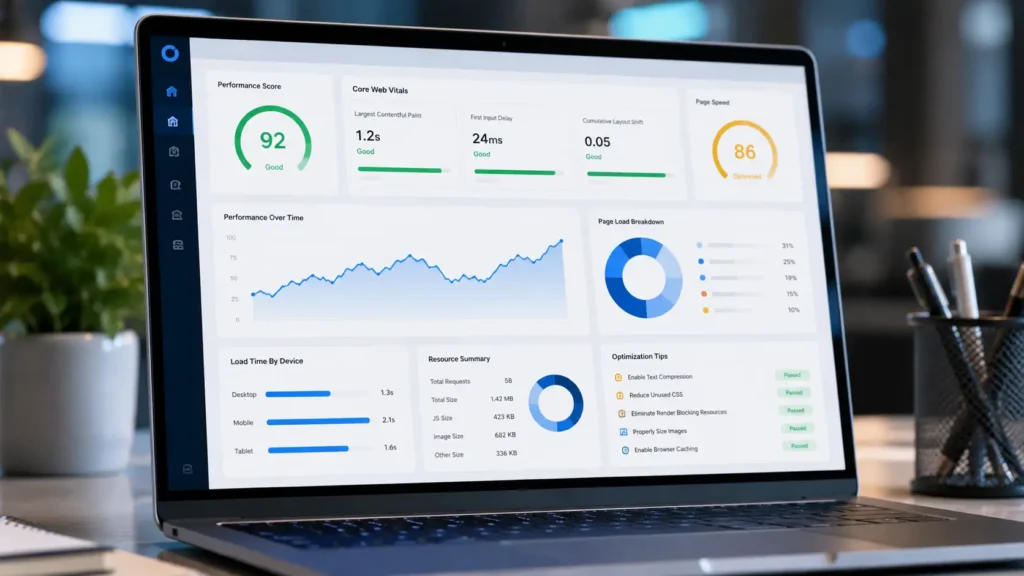
Regular performance testing and Core Web Vitals optimization help identify technical issues that impact both rankings and conversions.
Poor Mobile Experience Is Driving Customers Away
More than half of ecommerce traffic now comes from smartphones. A desktop website that looks excellent but performs poorly on mobile devices can lose a significant percentage of potential customers.
Mobile shoppers expect a fast, simple, and intuitive experience. If buttons are difficult to tap, product images don’t display correctly, or forms are frustrating to complete, many users simply leave.
Common mobile usability problems include small text that is difficult to read, buttons placed too closely together, slow page loading, complicated navigation, pop-ups covering important content, and checkout forms requiring excessive typing.
Responsive website design should adapt naturally to every screen size while maintaining usability.
Businesses planning an ecommerce redesign often prioritize mobile-first design because mobile optimization directly affects both conversions and customer satisfaction.
Your Store Doesn’t Look Trustworthy
Trust is one of the biggest factors influencing online purchases.
Unlike physical stores, online shoppers cannot meet the seller or inspect products before buying. They rely entirely on visual cues and business credibility.
Visitors quickly evaluate whether a business appears legitimate. Even small design issues can create doubt.
Signs that reduce trust include outdated website design, inconsistent branding, spelling mistakes, missing policies, broken pages, and unsecured connections.
To establish credibility, every ecommerce website should clearly display a secure HTTPS connection, contact information, a business address where appropriate, a privacy policy, a refund policy, a shipping policy, terms and conditions, customer reviews, frequently asked questions, and professional branding.
Professional ecommerce website design isn’t just about aesthetics. It helps reassure visitors that they are purchasing from a legitimate business that values customer satisfaction.
Your Checkout Process Is Too Complicated
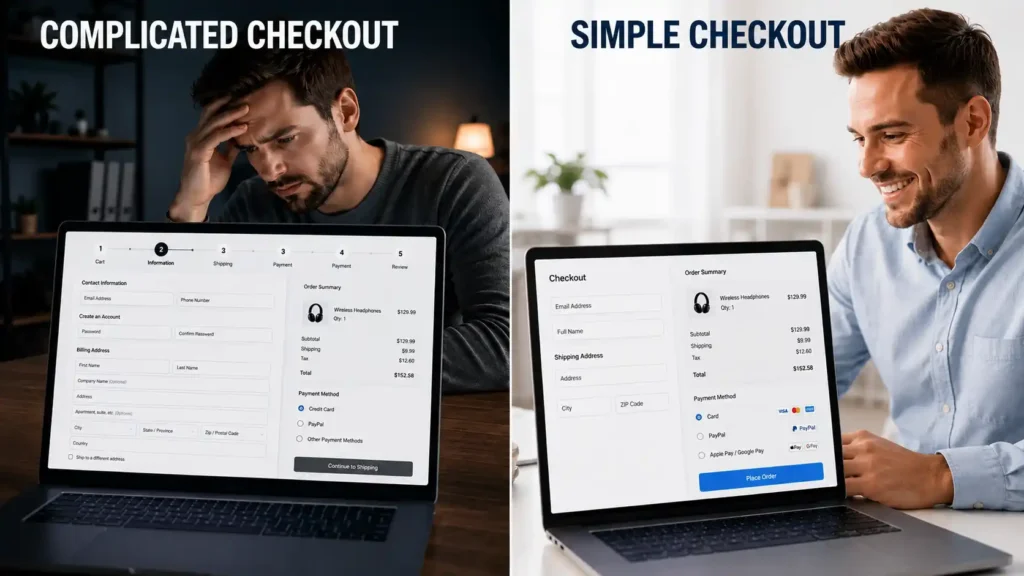
Many online stores successfully convince customers to add products to their cart but lose them during checkout. This stage is one of the most common reasons an online store not getting sales continues to struggle despite receiving healthy traffic.
Every additional step introduces another opportunity for customers to abandon their purchase.A streamlined checkout should minimize friction while making the buying process feel simple and secure.
Consider evaluating questions such as:
- Is guest checkout available?
- How many pages are required to complete a purchase?
- Are shipping costs displayed early?
- Are multiple payment methods offered?
- Does the checkout work smoothly on mobile devices?
- Are unnecessary form fields removed?
Reducing checkout complexity often leads to immediate improvements in conversion rates without increasing marketing spend.
Your Pricing Doesn’t Match Customer Expectations
Price is rarely the only reason customers choose not to buy, but it plays an important role in their decision-making process.
If your products appear significantly more expensive than similar alternatives, shoppers will naturally compare competitors before committing to a purchase. On the other hand, pricing products unusually low can also create concerns about quality or authenticity.
Customers evaluate pricing based on the overall value they receive. Factors such as product quality, shipping speed, return policies, customer support, warranties, and brand reputation all influence whether a price feels justified.
Instead of competing solely on cost, focus on communicating value. Clearly explain what makes your products different, highlight benefits rather than just features, and make it easy for customers to understand why your offering is worth the investment.
A well-designed ecommerce website that combines persuasive product content, transparent pricing, and a trustworthy shopping experience often outperforms competitors even when its prices are not the lowest.
Your Product Images and Descriptions Aren’t Persuasive
Customers cannot pick up, examine, or test products online. Your product page must replace that in-store experience by providing enough information to help them make a confident decision.
Many ecommerce stores lose sales because they rely on low-quality images, generic supplier descriptions, or incomplete product information. These pages fail to answer the questions shoppers typically ask before making a purchase.
High-converting product pages usually include multiple high-resolution images from different angles, lifestyle photos showing the product in use, original descriptions that explain benefits as well as features, size guides or specifications where relevant, product videos or demonstrations, frequently asked questions related to the product, and clear shipping and return information.
Instead of simply describing what a product is, explain how it solves a problem or improves the customer’s experience.
Your Store Isn’t Visible in Search Results
Even the best online store won’t generate consistent sales if potential customers can’t find it.
Search engine optimization plays a critical role in attracting qualified buyers who are actively searching for products. Many ecommerce websites overlook technical SEO Audit, category optimization, product schema, and internal linking, making it difficult for search engines to understand and rank their content.
Ecommerce SEO improves your store’s visibility in search engines, helping qualified shoppers discover your products through organic search instead of relying entirely on paid advertising.
Common SEO issues include missing title tags and meta descriptions, duplicate product content, poor internal linking, broken links, slow-loading pages, missing structured data, thin category pages, and poor keyword targeting.
An effective ecommerce SEO strategy combines technical improvements with high-quality content, optimized product pages, and ongoing performance monitoring.
Your Marketing Strategy Isn’t Consistent
Many store owners expect sales immediately after launching their website without investing in ongoing digital marketing. While a professionally designed store provides the foundation, customers still need a reason to discover your business.
Successful ecommerce brands usually combine multiple marketing channels rather than relying on just one source of traffic.
A balanced strategy may include content marketing, organic SEO, email campaigns, social media, paid advertising, remarketing, and local search optimization where appropriate.
Businesses should also evaluate where their highest-converting customers originate and allocate more resources toward those channels instead of spreading budgets too thin.
You’re Ignoring Shopping Cart Abandonment
Cart abandonment is one of the biggest challenges in ecommerce. Many shoppers add products to their cart but leave before completing payment.
This doesn’t always mean they have changed their mind. They may simply be comparing prices, waiting until payday, or encountering friction during checkout.
Some effective ways to reduce cart abandonment include displaying shipping costs early, offering guest checkout, providing multiple payment options, sending abandoned cart reminder emails, clearly communicating return policies, removing unnecessary checkout steps, and displaying trust badges during checkout.
Even modest improvements to the checkout experience can recover a significant number of otherwise lost sales.
You Aren’t Using Customer Reviews and Social Proof
People naturally look for reassurance before making an online purchase. Reviews, testimonials, ratings, and user-generated content help reduce uncertainty and build confidence.
A product with dozens of genuine reviews often outperforms an identical product with none, even if the price is slightly higher.
Encourage satisfied customers to leave honest feedback after their purchase. Display reviews prominently on product pages and avoid hiding both positive and constructive feedback. Authenticity builds trust.
Other forms of social proof include verified customer testimonials, before-and-after photos, case studies where appropriate, media mentions, awards or certifications, and user-generated content from social platforms.
Your Website Doesn’t Clearly Communicate Value
Visitors often decide within seconds whether to continue browsing. If your homepage, category pages, or product pages don’t clearly explain why someone should buy from you, potential customers may leave.
Ask yourself whether your products are different, why customers should choose your business instead of a competitor, whether your headlines immediately explain your value, whether shipping, returns, and support are easy to find, and whether your messaging is consistent throughout the website.
Strong value propositions focus on customer benefits rather than business claims.
You Aren’t Measuring the Right Metrics
Improving ecommerce performance starts with understanding how visitors interact with your website.
Instead of focusing only on total traffic, monitor metrics that reveal where customers leave the buying journey.
Important ecommerce metrics include conversion rate, cart abandonment rate, average order value, product page engagement, checkout completion rate, returning customer rate, organic traffic growth, and revenue by traffic source.
Analytics tools help identify bottlenecks so improvements are based on real customer behavior rather than assumptions.
Why Professional Ecommerce Development Can Make a Difference
Many sales problems originate from technical issues that are difficult to identify without experience.
For example, a slow checkout, poorly optimized mobile experience, weak product architecture, or inefficient navigation may seem minor individually but collectively have a significant impact on conversions.
Professional ecommerce development goes beyond creating an attractive website. It focuses on building a fast, secure, scalable platform designed to support long-term business growth.
Depending on your platform and business goals, improvements may include custom website development, Shopify development, WooCommerce development, responsive website design, website speed optimization, technical SEO, conversion rate optimization, CRM integration, or ongoing website maintenance.
Businesses planning long-term growth often benefit from periodic website audits that uncover technical issues before they begin affecting sales.
Best Practices for Increasing Ecommerce Sales
The most successful online stores continually test, refine, and improve the customer experience rather than assuming the initial website is finished.
Some proven best practices include:
- Continuously optimize product pages based on customer behavior.
- Improve website speed and Core Web Vitals.
- Simplify navigation and checkout.
- Invest in SEO to generate long-term organic traffic.
- Build customer trust through transparent policies and reviews.
- Test headlines, images, and calls to action.
- Monitor analytics and make data-driven improvements.
- Keep your website secure, updated, and mobile-friendly.
Small improvements across multiple areas often produce better long-term results than making one major change.
Common Mistakes That Prevent Online Stores From Growing
Many ecommerce businesses unknowingly limit their own growth by repeating avoidable mistakes.
Some of the most common include launching without an SEO strategy, using copied manufacturer descriptions, ignoring mobile users, having slow-loading pages, making checkout unnecessarily complicated, not collecting customer reviews, running advertisements without conversion optimization, neglecting website maintenance, failing to analyze user behavior, and assuming more traffic automatically means more sales.
Recognizing these issues early makes it easier to improve overall performance and create a better customer experience.
Request a Free Website Audit
If your online store attracts visitors but struggles to generate consistent revenue, a professional website audit can identify the obstacles preventing customers from completing purchases.
Avenzo Digital helps businesses improve ecommerce performance through website development, technical SEO, conversion rate optimization, website speed optimization, UX improvements, and ongoing ecommerce support.
Whether you’re planning a new ecommerce website or improving an existing Shopify, WooCommerce, or custom platform, understanding what’s limiting conversions is the first step toward sustainable growth.
Contact Avenzo Digital to request a Free Website Audit, discuss your business goals, receive a custom digital marketing strategy, or book a discovery call with our team.
Conclusion
If your online store not getting sales, the solution is rarely a single change. Successful ecommerce businesses combine high-quality products with excellent user experience, strong search visibility, trustworthy branding, effective marketing, and continuous optimization.
Start by understanding how visitors interact with your website. Evaluate your traffic quality, product pages, mobile experience, checkout process, and website performance before investing more money in advertising.
The businesses that consistently increase online sales are those that regularly improve every stage of the customer journey. By making strategic, data-driven improvements and addressing technical issues early, your ecommerce website can become a reliable source of long-term growth and customer acquisition.
Frequently Asked Questions
Why is my online store not getting sales?
An online store may struggle to generate sales because of poor traffic quality, weak product pages, slow website performance, complicated checkout, lack of trust signals, ineffective SEO, or an inconsistent marketing strategy.
How can I improve my ecommerce conversion rate?
Improve conversions by optimizing product pages, simplifying checkout, increasing website speed, adding customer reviews, strengthening calls to action, and regularly analyzing visitor behavior.
Does website speed affect ecommerce sales?
Yes. Slow-loading websites increase bounce rates and reduce customer satisfaction, leading to fewer completed purchases and lower conversion rates.
Is SEO important for ecommerce websites?
Yes. SEO helps attract qualified visitors who are actively searching for your products, reducing reliance on paid advertising while supporting long-term business growth.
How important are customer reviews?
Customer reviews build trust, reduce uncertainty, and provide social proof, making shoppers more confident about completing a purchase.
Should I redesign my ecommerce website?
If your website looks outdated, performs poorly on mobile devices, loads slowly, or has a complicated user experience, a redesign may significantly improve conversions.
What’s the best ecommerce platform for small businesses?
The ideal platform depends on your goals, budget, and technical requirements. Shopify, WooCommerce, and custom ecommerce solutions each offer different advantages.
How do I know if my checkout process is hurting sales?
Monitor cart abandonment rates, user recordings, analytics, and customer feedback. High abandonment often indicates unnecessary friction during checkout.
Can professional ecommerce development increase online sales?
Yes. Professional ecommerce development improves website performance, user experience, technical SEO, security, and conversion optimization, all of which contribute to higher sales.
How long does it take to fix an online store not getting sales?
The timeline depends on the underlying issues. Some improvements, such as simplifying checkout or improving page speed, can produce faster results, while SEO and content optimization generally require several months to show significant growth.