
Choosing the right ecommerce platform is one of the most important decisions for any growing online business. The platform you select today will influence your website's performance, scalability, search visibility, customer experience, and long-term operating costs.…

Choosing the right ecommerce platform is one of the most important decisions for any growing online business. The platform you select today will influence your website’s performance, scalability, search visibility, customer experience, and long-term operating costs. A professionally developed ecommerce website provides the foundation needed to support long-term online growth.
Many business owners compare Shopify vs WooCommerce for growing business because both platforms dominate the ecommerce market, yet they serve different business needs. While each platform can support successful online stores, the better choice depends on your growth plans, technical requirements, budget, and desired level of flexibility.
Selecting a platform isn’t simply about launching an online store. It’s about choosing technology that can continue supporting your business as product catalogs expand, customer expectations increase, and marketing strategies become more advanced.
This guide compares Shopify and WooCommerce across the factors that matter most to growing ecommerce businesses, helping you make a confident decision based on your business goals rather than marketing claims.
What Is Shopify?
Shopify is a fully hosted ecommerce platform that allows businesses to build, manage, and grow online stores without maintaining their own hosting infrastructure. The platform provides website hosting, security, payment processing integrations, inventory management, order management, and numerous built-in ecommerce features through a subscription model.
Business owners can launch stores quickly while Shopify manages server maintenance, software updates, and much of the technical infrastructure. Professional Shopify development can further improve store performance, customization, and long-term scalability.
Shopify is a hosted ecommerce platform that provides everything businesses need to sell products online, including hosting, security, payments, and store management tools.
What Is WooCommerce?
WooCommerce is an open-source ecommerce plugin built specifically for WordPress websites. Unlike Shopify, WooCommerce gives businesses complete control over their website, hosting environment, design, functionality, and custom development. Many businesses also invest in custom WooCommerce development to support unique workflows and advanced ecommerce functionality.
Although WooCommerce requires more technical management, it offers significantly greater flexibility for businesses that need custom features, advanced SEO capabilities, and complete ownership of their ecommerce platform.
WooCommerce is an open-source ecommerce solution for WordPress that gives businesses full control over their website, customization, and online store functionality.
Shopify vs WooCommerce for Growing Business: Quick Comparison
Both platforms can support successful ecommerce businesses, but they excel in different areas. Shopify focuses on simplicity, reliability, and ease of management. WooCommerce emphasizes flexibility, customization, scalability, and complete ownership.
Businesses planning rapid growth should evaluate more than startup costs. Long-term scalability, marketing capabilities, integrations, customization options, and ongoing operating expenses often become more important as an online store expands.
Ease of Setup and Day-to-Day Management
For many new ecommerce businesses, simplicity matters. Shopify offers one of the fastest setup experiences available. Hosting, SSL certificates, software updates, and security are managed automatically, allowing business owners to focus on selling products instead of maintaining servers.
WooCommerce requires additional setup because businesses must select hosting, install WordPress, configure WooCommerce, manage updates, and handle security independently.
Although WooCommerce requires more initial configuration, experienced developers can tailor every aspect of the website to meet specific business requirements. Businesses without technical resources often prefer Shopify, while companies seeking complete customization usually favor WooCommerce.

Website Customization and Design Flexibility
Customization becomes increasingly important as businesses grow. Many successful ecommerce brands eventually outgrow standard templates and require unique customer experiences.
WooCommerce provides virtually unlimited customization because businesses have full access to the website’s codebase. Custom checkout experiences, membership systems, advanced product configurators, customer portals, and unique workflows can all be developed without the restrictions commonly associated with hosted platforms.
Shopify also supports customization through themes and applications, but certain advanced modifications may require Shopify Plus or custom app development.
For businesses expecting highly customized ecommerce experiences, WooCommerce generally provides greater long-term flexibility. A custom ecommerce website can also integrate booking features, customer portals, and persona
Which Platform Offers Better SEO?
Search engine visibility plays a significant role in long-term ecommerce growth. WooCommerce benefits from the extensive SEO capabilities available within the WordPress ecosystem. Businesses gain greater control over URL structures, schema markup, metadata, internal linking, content architecture, redirects, and technical SEO implementation.
This flexibility makes WooCommerce particularly attractive for businesses investing heavily in organic search. Shopify includes many built-in SEO features and performs well for most ecommerce stores. However, some technical SEO limitations remain, particularly regarding URL structure and certain platform-level customizations.
Businesses comparing Shopify vs WooCommerce for growing business often appreciate the additional SEO flexibility offered by WooCommerce.
WooCommerce generally provides greater SEO flexibility through WordPress, while Shopify offers strong built-in SEO features with less technical customization.
Scalability for Growing Ecommerce Businesses
Scalability involves far more than handling additional website traffic. Businesses evaluating Shopify vs WooCommerce for growing business should consider platforms capable of supporting larger product catalogs, increasing order volumes, expanding marketing campaigns, multiple sales channels, international customers, and evolving business processes.
Shopify’s hosted infrastructure makes scaling relatively straightforward. The platform automatically manages server performance, uptime, and much of the technical maintenance required during periods of rapid growth. WooCommerce also scales exceptionally well when paired with high-quality hosting and proper optimization.
Because businesses control the hosting environment, they can upgrade server resources, optimize databases, improve caching, and fine-tune performance as traffic increases. Both platforms scale successfully, but WooCommerce offers greater control over how that growth is managed.
Total Cost of Ownership
When comparing Shopify vs WooCommerce for growing business, many businesses focus only on monthly subscription costs. Unfortunately, this provides an incomplete picture. Shopify combines hosting, software maintenance, and ecommerce functionality into one predictable monthly payment. Additional expenses may include premium themes, paid applications, payment processing fees, and advanced subscription plans.
WooCommerce itself is free. However, businesses should also consider hosting, premium plugins, security tools, backups, maintenance, performance optimization, and developer support when calculating total ownership costs. Over several years, the overall investment depends largely on customization requirements rather than the platform itself.
App Ecosystem and Third-Party Integrations
Growing ecommerce businesses rarely rely on one platform alone. Modern online stores often integrate payment gateways, shipping providers, CRMs, accounting software, inventory management systems, marketing automation platforms, email marketing tools, analytics platforms, and customer support solutions.
Shopify provides a large marketplace of professionally supported applications that simplify integrations for non-technical users. WooCommerce offers an equally extensive ecosystem through WordPress plugins while also supporting highly customized API integrations for businesses requiring specialized functionality. Businesses expecting complex integrations often appreciate WooCommerce’s development flexibility.
Performance and Website Speed
Website performance directly affects user experience, conversion rates, and search visibility. Shopify manages much of its performance infrastructure automatically. Content delivery, server optimization, caching, and hosting are built into the platform.
WooCommerce performance depends largely on hosting quality, theme optimization, plugin selection, database management, and ongoing website maintenance. Improving Core Web Vitals can also increase page speed, user satisfaction, and search visibility for growing ecommerce stores.
When properly optimized, WooCommerce websites can achieve outstanding performance while providing greater flexibility for advanced optimization techniques. The better platform is often determined not by software alone, but by how well the website is built and maintained.
Security and Ongoing Maintenance
Protecting customer information is essential for every ecommerce business. Shopify handles much of the security management automatically. SSL certificates, server security, software updates, and PCI compliance are included within the platform, reducing the technical responsibilities of store owners.
WooCommerce gives businesses complete control over website security. This flexibility allows companies to choose their own hosting provider, security plugins, firewall solutions, backup systems, and monitoring tools. However, it also means regular maintenance becomes part of managing the website.
Businesses with experienced technical teams often appreciate this level of control, while those seeking a hands-off approach may prefer Shopify’s managed environment.
Marketing Features and Growth Opportunities

As an online store grows, marketing capabilities become just as important as product management. Both Shopify and WooCommerce support email marketing, social media selling, paid advertising, customer segmentation, and analytics. The difference lies in flexibility.
WooCommerce integrates naturally with WordPress, making it an excellent platform for businesses that rely on content marketing, blogging, and long-term SEO. It provides complete control over landing pages, category pages, blog content, and conversion-focused website experiences.
Shopify focuses on simplicity by offering built-in marketing features and a large app marketplace that allows businesses to expand functionality without extensive development.
Regardless of your decision in the Shopify vs WooCommerce for growing business comparison, a well-planned digital marketing strategy is essential for driving qualified traffic and increasing online sales.
Which Platform Is Better for SEO and Content Marketing?
Businesses researching Shopify vs WooCommerce for growing business often prioritize organic traffic because it provides long-term value. Content marketing, technical SEO, product optimization, and category page improvements all contribute to stronger search visibility over time.
WooCommerce offers greater control over every aspect of on-page SEO. Businesses can customize URL structures, metadata, schema markup, internal linking, image optimization, and content organization with very few platform limitations.
Shopify also supports ecommerce SEO, but some technical elements remain less customizable because the platform is fully hosted. For businesses planning to publish extensive buying guides, educational blogs, comparison pages, and category content, WooCommerce often provides greater long-term flexibility.
WooCommerce is generally the better choice for businesses prioritizing advanced SEO and content marketing, while Shopify provides strong built-in SEO with simplified management.
Shopify vs WooCommerce Based on Business Size
The right choice in the Shopify vs WooCommerce for growing business comparison depends on where your business is today and where you expect it to be in the future.
Shopify is often a good choice for:
- Businesses launching their first online store.
- Companies without an in-house technical team.
- Brands that want predictable monthly costs.
- Retailers focused on quick deployment.
- Businesses preferring managed hosting and maintenance.
WooCommerce is often a better choice for:
- Businesses requiring custom functionality.
- Companies investing heavily in SEO.
- Stores with complex product catalogs.
- Brands planning custom integrations.
- Organizations wanting complete ownership of their website.
Neither platform is universally better. The right decision depends on your business strategy, operational needs, and long-term growth plans.
Common Mistakes Businesses Make When Choosing an Ecommerce Platform
Businesses comparing Shopify vs WooCommerce for growing business often focus on immediate convenience instead of long-term growth requirements.
Some of the most common mistakes include:
- Choosing a platform based only on monthly pricing.
- Ignoring future scalability.
- Overlooking SEO requirements.
- Selecting a platform without considering integrations.
- Failing to estimate ongoing maintenance costs.
- Choosing themes based only on appearance.
- Installing unnecessary plugins or apps.
- Planning only for today’s business needs.
Avoiding these mistakes helps reduce expensive platform migrations later.
When Should You Choose Shopify?
Shopify is an excellent solution when simplicity, reliability, and speed are the highest priorities. Businesses that want a fully managed ecommerce environment often benefit from Shopify’s hosted infrastructure.
It is particularly suitable for retailers who prefer focusing on products, sales, and marketing rather than server management or technical maintenance. Companies with limited development resources can launch quickly while still accessing a wide range of ecommerce features.
When Should You Choose WooCommerce?
WooCommerce becomes especially valuable when flexibility is a competitive advantage. Businesses that require advanced SEO, custom workflows, unique customer experiences, specialized integrations, or complete control over their website often find WooCommerce to be the stronger long-term investment.
It also supports businesses planning extensive content marketing strategies or expecting significant customization as operations grow. While WooCommerce requires more technical management, it provides greater freedom to build an ecommerce platform around the business instead of adapting the business to fit the platform.
Can You Migrate Between Shopify and WooCommerce Later?
Many growing businesses eventually migrate from one ecommerce platform to another. Some businesses outgrow Shopify because they require more customization, while others move from WooCommerce to Shopify to simplify website management.
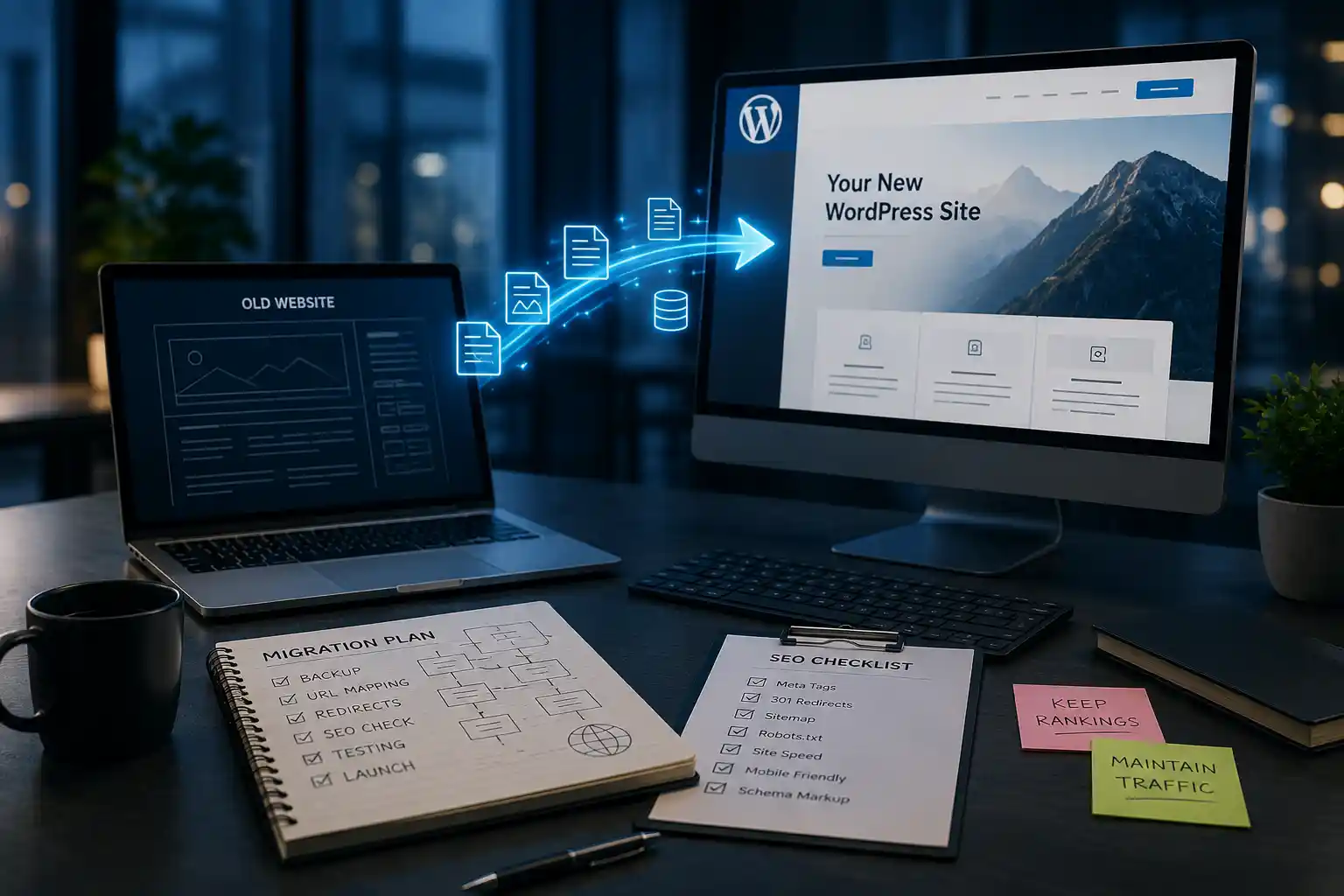
A successful migration requires careful planning to preserve product data, customer accounts, search rankings, URLs, and overall website performance. Without a structured migration process, businesses risk losing valuable organic traffic and creating unnecessary disruptions for customers. Planning the migration carefully helps maintain business continuity while supporting future growth.
Request a Free Ecommerce Website Audit
Choosing between Shopify vs WooCommerce for growing business is only one part of building a successful ecommerce strategy. The real success comes from selecting the right platform, optimizing it for search engines, creating a strong user experience, and implementing digital marketing strategies that attract qualified customers.
At Avenzo Digital, we help ecommerce businesses build, optimize, and grow online stores through professional ecommerce development, technical SEO, conversion optimization, and long-term digital marketing support. Request a Free Ecommerce Website Audit to discover which platform best supports your business goals and identify opportunities to improve performance, conversions, and long-term growth.
Our audit includes:
- Ecommerce website performance review.
- SEO and technical analysis.
- Conversion optimization recommendations.
- Platform scalability assessment.
- Digital marketing growth opportunities.
Conclusion
The decision between Shopify vs WooCommerce for growing business depends less on which platform is more popular and more on which platform aligns with your long-term goals. Shopify provides an easy-to-manage, fully hosted solution that allows businesses to launch and scale quickly with minimal technical involvement.
WooCommerce offers greater flexibility, customization, and SEO control for businesses planning advanced ecommerce strategies and long-term growth.
By evaluating your technical resources, marketing plans, customization needs, and future scalability, you can select a platform that continues supporting your business as it grows.
Frequently Asked Questions
Which is better, Shopify or WooCommerce for a growing business?
The answer depends on your priorities. Shopify is easier to manage, while WooCommerce offers greater flexibility, customization, and SEO control.
Is WooCommerce better for SEO than Shopify?
WooCommerce generally provides more advanced SEO customization because it runs on WordPress, although Shopify also includes strong built-in SEO features.
Is Shopify easier for beginners?
Yes. Shopify handles hosting, security, updates, and much of the technical maintenance, making it easier for business owners with limited technical experience.
Which platform costs less over time?
Costs vary based on customization, hosting, premium apps, plugins, and development requirements. Businesses should evaluate total ownership costs rather than subscription fees alone.
Can WooCommerce handle large ecommerce stores?
Yes. With quality hosting and proper optimization, WooCommerce can support very large product catalogs and high traffic volumes.
Does Shopify support content marketing?
Yes. Shopify includes blogging features, although WooCommerce generally offers greater flexibility for businesses relying heavily on content marketing.
Can I migrate from Shopify to WooCommerce later?
Yes. Businesses can migrate between platforms, but careful planning is required to preserve SEO rankings, product data, and customer information.
Which platform offers more customization?
WooCommerce provides significantly greater customization because businesses have full access to the website’s code and hosting environment.
Is Shopify vs WooCommerce for growing business a common comparison?
Yes. It is one of the most common ecommerce platform comparisons because both solutions support growing online stores but serve different business requirements.
Should I hire professionals to build my ecommerce website?
Professional developers can help you select the right platform, optimize website performance, improve SEO, and build a scalable ecommerce solution that supports long-term business growth.
Related Avenzo Service
If you need hands-on store development, explore Avenzo’s eCommerce development services across Shopify, WooCommerce, redesign, performance, and conversion-focused implementation.
eCommerce Development →