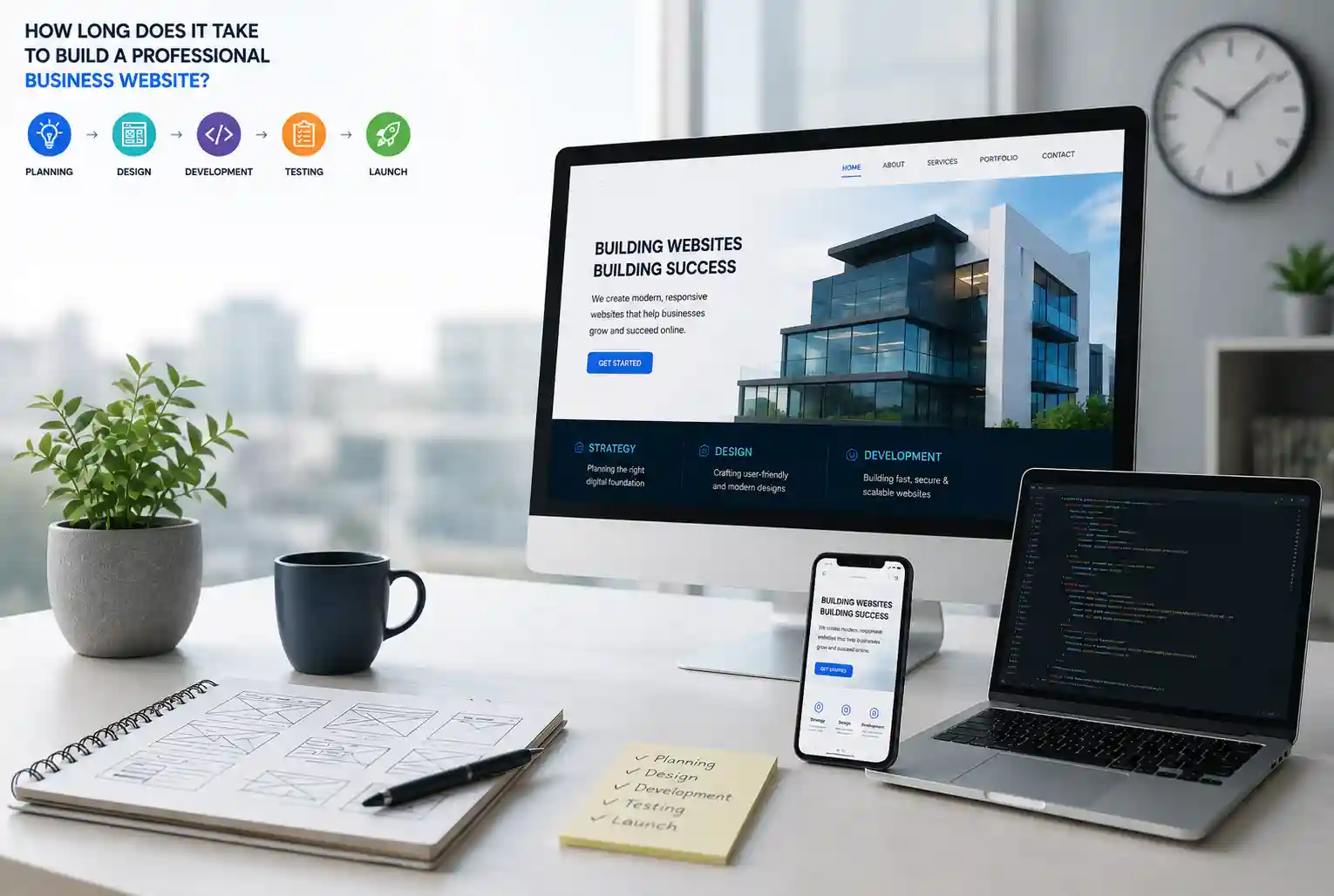
If you are planning a new website, one of the first questions you will ask is, "How long does it take to build a business website?" The answer depends on several factors, including your business goals,…
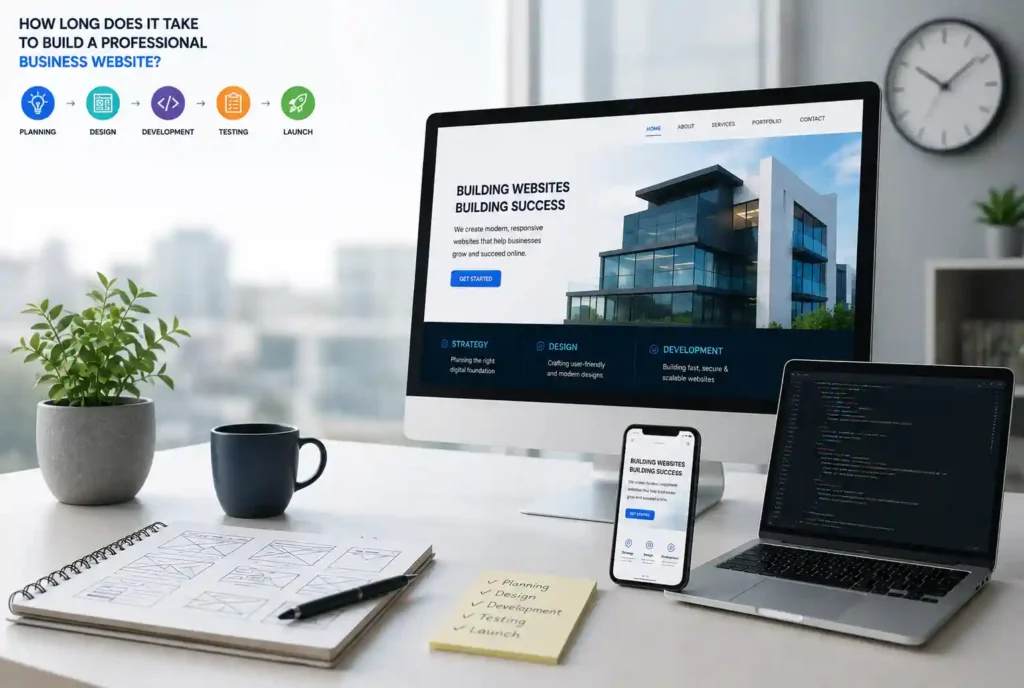
If you are planning a new website, one of the first questions you will ask is, “How long does it take to build a business website?” The answer depends on several factors, including your business goals, website size, design requirements, content readiness, and the complexity of the features you need. While some businesses expect a complete website within a week, professional websites that generate leads and support long-term growth require proper planning, strategy, and testing. Understanding the complete website development process helps you set realistic expectations, avoid costly delays, and launch a website that delivers measurable business results.
Why There Is No One Size Fits All Timeline
Many business owners search for a simple answer, but every website project is unique. A basic informational website and a large service-based business website have very different requirements. Likewise, an online store with hundreds of products takes significantly longer than a local company’s five-page website.
Over the years, we have seen businesses underestimate the planning stage and focus only on the design. In reality, strategy, content, technical development, and testing often require more time than creating the visual layout. Skipping these stages may shorten the timeline initially, but it often leads to revisions, poor user experience, lower search visibility, and reduced conversions after launch.
Instead of asking only how quickly a website can be completed, businesses should ask whether the final product will support their long-term goals. A professional website is an investment, and choosing experienced website design and development services helps generate leads and build trust long after launch.
Average Timeline for a Professional Business Website
Although every project differs, most professional business websites follow a fairly consistent timeline.
| Website Type | Estimated Timeline |
|---|---|
| Basic Landing Page | 1–2 weeks |
| Small Business Website (5–10 Pages) | 3–5 weeks |
| Professional Service Website (10–20 Pages) | 5–8 weeks |
| Corporate Website | 8–12 weeks |
| Ecommerce Website | 8–16+ weeks |
| Custom Web Application | 3–6+ months |
These timelines assume that the client provides timely feedback, content is available when needed, and the project scope remains stable throughout development. One important point that many businesses overlook is that delays are often caused by approvals rather than development itself. Waiting several days to review designs or provide website copy can quickly extend the project schedule. Businesses planning a simple service website can benefit from a dedicated small business website design approach before expanding their online presence.
The Complete Website Development Process

Understanding each phase of website development helps explain why professional websites require time and careful planning.
Discovery and Business Planning
Every successful website starts with understanding the business rather than selecting colors or fonts. This phase includes:
- Learning about business goals
- Identifying the target audience
- Understanding customer pain points
- Reviewing competitors
- Defining website objectives
- Planning the site structure
We always recommend investing enough time in discovery because it influences every decision that follows. Businesses that skip this step often request major changes during development, increasing both cost and project duration. For example, a local service company focused on lead generation requires a completely different strategy than a manufacturer showcasing products or a law firm building authority. Establishing these goals early prevents unnecessary revisions later.
Website Strategy and Sitemap Creation
Creating a sitemap usually works alongside website prototyping and wireframing to ensure a logical user journey. Once the business objectives are clear, the next step is organizing the website.
A sitemap determines:
- Main navigation
- Service pages
- Industry pages
- Location pages
- Contact pages
- Blog structure
- Internal linking opportunities
This stage creates a logical structure that benefits both visitors and search engines. A poorly planned sitemap often results in duplicate pages, confusing navigation, and missed opportunities to rank for important keywords. We’ve worked with businesses that redesigned entire websites simply because the original structure made it difficult for customers to find information or complete an inquiry.
Content Planning and Copywriting
Content is one of the biggest reasons website projects take longer than expected. Many businesses assume they can write website copy after the design is complete. In practice, professional content should be developed alongside the design process because both influence each other.
Quality website content should:
- Address customer questions
- Explain services clearly
- Build trust
- Highlight business experience
- Include natural calls to action
- Support SEO without keyword stuffing
Professional copywriting also considers the buyer journey. A first-time visitor usually needs educational information before making contact, while a returning visitor may be ready to request a quote immediately. When content is delayed, designers often have to use placeholder text. This frequently leads to layout adjustments once the real copy is added, extending the overall timeline.
Wireframing and User Experience Planning
Before visual design begins, many agencies create wireframes. Wireframes focus on structure rather than appearance. They determine where important elements will be placed, including:
- Headlines
- Service descriptions
- Contact forms
- Testimonials
- Call-to-action buttons
- Images
- Trust signals
This step helps ensure that every page guides visitors toward taking action instead of simply presenting information. From our experience, investing time in user experience planning reduces revisions later because stakeholders can review the page structure before detailed design work begins. Professional UI/UX design services help transform wireframes into intuitive digital experiences that improve engagement.
Custom Website Design

Once the website structure and content plan are approved, designers begin creating the visual identity of the website. This is where the brand starts to come to life through layouts, colors, typography, imagery, and interactive elements. Professional website design is much more than making a website look attractive. Every design decision should support usability and encourage visitors to take action. A well-designed business website should:
- Reflect the company’s brand identity
- Make important information easy to find
- Build trust within the first few seconds
- Guide users toward contact forms or service pages
- Maintain consistency across every page
We have seen businesses choose trendy designs that look impressive but make navigation confusing. While visually appealing websites may attract attention, they rarely perform well if visitors struggle to find the information they need. The best designs balance aesthetics with functionality. Depending on the number of pages and the complexity of the design, this stage usually takes one to three weeks.
Many growing businesses choose custom website design and development when they require functionality beyond standard templates.
Website Development Begins
After the design receives approval, developers begin turning the approved layouts into a fully functional website. This stage includes writing clean, responsive code and building every feature required for the project. Depending on the platform, development may involve WordPress, a custom CMS, or another website framework. During development, the team typically works on:
- Building page layouts
- Creating navigation menus
- Developing contact forms
- Setting up service pages
- Adding image galleries
- Configuring blog functionality
- Integrating third-party tools
- Implementing security features
Unlike the design phase, much of this work happens behind the scenes. While progress may not always be visible to clients every day, developers are building the foundation that ensures the website functions reliably. For a standard business website, development often takes between two and four weeks, depending on the required functionality.
Content Integration and Page Building
With development underway, the approved website content is added to each page.
This includes:
- Headlines
- Service descriptions
- Images
- Team information
- Testimonials
- Calls to action
- Frequently asked questions
This stage is more than simply copying and pasting text. Every page should be formatted for readability, making good use of headings, spacing, visuals, and clear navigation. Content formatting also affects user engagement. Large blocks of text can overwhelm visitors, while well-structured pages encourage them to continue reading and eventually contact the business. We often advise businesses to review every page from the perspective of a potential customer. Ask yourself whether the page answers common questions, builds confidence, and clearly explains the next step.
Mobile Responsiveness Is No Longer Optional
Today, a significant portion of website traffic comes from smartphones and tablets. A website that performs well only on desktop devices is likely to lose potential customers before they even explore the services. Professional developers test websites across multiple screen sizes to ensure:
- Navigation remains easy to use
- Text is readable without zooming
- Buttons are easy to tap
- Forms work correctly
- Images scale properly
- Pages load smoothly
Responsive design also supports search engine optimization because search engines prioritize websites that provide a positive mobile experience. Investing in responsive website design ensures visitors enjoy a seamless experience across every device. We have seen businesses invest heavily in advertising only to discover that their contact forms were difficult to use on mobile devices. Fixing these issues before launch saves both time and marketing costs.
Search Engine Optimization During Development
Many people believe SEO starts after a website goes live. In reality, professional SEO begins during development. Building SEO services into the website from the beginning creates a stronger foundation for future growth. During development, an SEO-focused website typically includes:
- Clean URL structures
- Proper heading hierarchy
- Optimized title tags
- Meta descriptions
- Image optimization
- Internal linking
- Schema markup where appropriate
- XML sitemap creation
- Fast-loading pages
- Mobile-friendly design
Adding SEO later often requires additional revisions that could have been avoided through proper planning. From our experience, websites that are built with SEO in mind tend to perform better over time because technical issues are addressed before launch rather than after search engines begin indexing the site.
Website Speed and Performance Optimization

Website speed optimization plays a direct role in user experience, lead generation, and search visibility. Visitors expect pages to load quickly. Even a few extra seconds can increase bounce rates and reduce conversions. Performance optimization usually includes:
- Compressing images
- Reducing unnecessary code
- Browser caching
- File minification
- Lazy loading images
- Optimizing server performance
- Improving Core Web Vitals
We have worked with businesses that experienced noticeable improvements in inquiry rates after reducing page load times. Faster websites create smoother browsing experiences, helping visitors stay engaged and complete important actions such as requesting a quote or scheduling a consultation.
Quality Assurance and Testing
Before a professional website is launched, it should go through a comprehensive testing process. This phase ensures that every feature functions correctly and that visitors receive a consistent experience regardless of the device or browser they use. Quality assurance commonly includes testing:
- Contact forms
- Navigation menus
- Internal links
- External links
- Images
- Mobile responsiveness
- Browser compatibility
- Website speed
- Security features
- User experience
Developers also check for formatting inconsistencies, broken pages, spelling errors, and technical issues that could affect visitors after launch. Although testing may seem like a small part of the project, it often prevents costly problems that could damage a company’s credibility.
Why Website Projects Sometimes Take Longer Than Expected
Even well-managed projects can experience delays. In most cases, the reasons have little to do with development itself. Some of the most common causes include:
Delayed Content
Businesses often postpone writing website copy until the design is nearly complete. This creates bottlenecks because developers cannot finish pages without final content.
Frequent Scope Changes
Adding new pages, requesting additional features, or changing the website structure midway through the project naturally increases development time.
Slow Client Feedback
Every approval stage depends on timely communication. Waiting several days or weeks to review designs or provide feedback can significantly extend the project timeline.
Third-Party Integrations
Payment gateways, booking systems, CRM platforms, and other external tools sometimes require additional configuration or troubleshooting that adds extra time.
Custom Functionality
Features such as customer portals, advanced calculators, custom dashboards, or membership systems require more planning, development, and testing than standard business websites.
Understanding these challenges helps businesses set realistic expectations and collaborate more effectively with their development team.
How to Speed Up the Website Development Process
While every professional website requires careful planning, there are several ways to keep the project moving efficiently without sacrificing quality.
Prepare Your Content Early
One of the biggest time-saving steps is preparing your website content before design begins. This includes service descriptions, company information, team profiles, testimonials, FAQs, and high-quality images. When content is ready in advance, designers can create layouts around the final copy instead of using placeholder text. This reduces revisions and helps developers complete pages more efficiently. If professional copywriting is part of the project, involving the content team early keeps the entire timeline on track.
Define the Project Scope Clearly
Many website delays occur because project requirements change after development has already started. Before work begins, define:
- Number of pages
- Required features
- Design preferences
- Integrations
- Target audience
- Business goals
A detailed project scope gives everyone a clear direction and minimizes unexpected changes later.
Assign a Decision Maker
We’ve seen projects slow down simply because multiple stakeholders provide conflicting feedback. Having one primary decision maker streamlines approvals, reduces confusion, and keeps development progressing according to schedule.
Provide Timely Feedback
Every project includes review stages for designs, content, and functionality. Prompt feedback allows the development team to address revisions immediately rather than waiting several days between each milestone. Even small delays can add up over the course of a multi-week project.
The Hidden Cost of Rushing a Website
Many businesses want their website online as quickly as possible, especially when launching a new company or promoting a new service. While speed is important, rushing the process often creates problems that are more expensive to fix later. A website launched before it is fully tested may suffer from:
- Broken forms
- Missing pages
- Slow loading speeds
- Mobile usability issues
- Poor navigation
- SEO problems
- Security vulnerabilities
- Inconsistent branding
These issues do more than create inconvenience. They can reduce customer confidence and cause potential leads to leave before making contact. In our experience, businesses that invest an extra week in testing and refinement often avoid months of troubleshooting after launch. A smooth user experience from day one creates a stronger first impression and supports better long-term performance.
Why Quality Matters More Than Speed
A business website is often the first interaction potential customers have with your company. Visitors begin forming opinions within seconds, and those first impressions influence whether they continue exploring your services or leave for a competitor. A professional website should communicate credibility through every element, including its design, messaging, navigation, and performance. Instead of asking, “How fast can we launch?” consider asking:
- Will visitors trust this website?
- Does it answer customer questions?
- Is it easy to navigate?
- Does it encourage users to contact us?
- Will it support future marketing efforts?
These questions focus on long-term value rather than short-term speed. We’ve worked with businesses that initially wanted the quickest possible launch. After discussing their goals, they chose to invest additional time in stronger content, improved user experience, and better SEO. The result was a website that not only looked professional but also generated more qualified inquiries.
Realistic Website Development Examples

Every business has different requirements, so timelines naturally vary. The following examples illustrate what a typical project might look like.
Example 1: Local Service Business
A plumbing company needs a website with:
- Home page
- About page
- Six service pages
- Contact page
- Blog
- Quote request form
Because the content is prepared before development begins, the project is completed in approximately four weeks with minimal revisions.
Example 2: Professional Services Firm
A law firm requires:
- Multiple practice area pages
- Attorney profiles
- Case result pages
- Resource center
- Blog
- Appointment booking
- Lead capture forms
Additional planning, content creation, and compliance reviews extend the project to around eight weeks.
Example 3: Ecommerce Store
An online retailer needs:
- Product catalog
- Product filters
- Shopping cart
- Secure checkout
- Customer accounts
- Inventory integration
- Shipping configuration
- Payment gateway
Due to the higher level of complexity and testing, development may take between ten and sixteen weeks.
These examples demonstrate that website timelines depend less on business size and more on project complexity and preparation.
How Professional Agencies Keep Projects on Schedule
Experienced web development agencies follow structured processes that reduce delays and improve communication throughout the project.
A typical workflow includes:
Initial Discovery Meeting
The team gathers information about business objectives, target customers, competitors, and project requirements.
Project Planning
A detailed roadmap outlines milestones, responsibilities, deadlines, and deliverables.
Regular Progress Updates
Scheduled meetings help clients stay informed and allow questions to be addressed before they become larger issues.
Revision Management
Rather than making unlimited changes throughout development, revisions are organized into specific review stages to keep the project moving efficiently.
Final Pre-Launch Checklist
Before launch, every page, feature, form, and technical element is reviewed to ensure the website is ready for visitors.
This structured approach helps prevent confusion and keeps both the client and development team aligned from start to finish.
Choosing the Right Website Development Partner
The company you choose can significantly influence both the timeline and the quality of your website. When evaluating a web development agency, look beyond pricing alone. Consider factors such as:
- Experience with businesses similar to yours
- Portfolio quality
- Communication process
- SEO knowledge
- Mobile development expertise
- Website maintenance services
- Transparent timelines
- Post-launch support
Ask how they manage revisions, what happens if additional features are requested, and whether they include technical SEO during development. A reliable agency will provide realistic expectations rather than promising unrealistic completion dates simply to win the project. Remember that your website is a long-term business asset. Choosing an experienced partner often leads to fewer problems, stronger performance, and a better return on investment.
Conclusion
So, how long does it take to build a business website? The answer depends on your goals, the complexity of the project, and how well the planning process is managed. While a simple website may be completed in a few weeks, a professional business website that is designed to attract qualified leads, build trust, and support long-term growth usually takes between four and twelve weeks.
The most successful projects are not necessarily the fastest—they are the ones built on a clear strategy, high-quality content, thoughtful design, and thorough testing. Every phase, from discovery and planning to development and launch, contributes to creating a website that works for your business instead of simply existing online.
We’ve seen businesses achieve better results when they focus on building the right website rather than the quickest one. A well-planned website becomes a valuable marketing asset that supports SEO, strengthens your brand, and helps convert visitors into customers for years to come.
Ready to Build a Website That Grows Your Business?
Ready to get started? Schedule a consultation with our team to discuss your website goals and receive a tailored development plan. Whether you’re launching a new business, redesigning an outdated website, or expanding your online presence, choosing the right development approach can save time, reduce future costs, and improve your results.
Our team builds professional business websites that combine modern design, fast performance, search engine optimization, and conversion-focused user experiences. From planning and content strategy to development and ongoing support, we help businesses create websites that not only look professional but also generate qualified leads and support long-term growth.
If you’re planning your next website project, contact us to discuss your goals and receive expert guidance on the best timeline, features, and strategy for your business.
Frequently Asked Questions
How long does it take to build a business website?
A professional business website typically takes between 4 and 12 weeks, depending on its size, complexity, content readiness, and required functionality.
Can a business website be built in one week?
A simple landing page may be completed within a week, but a professional website with custom design, quality content, SEO, and testing generally requires more time to ensure the best results.
What causes delays during website development?
Common causes include delayed content, slow client feedback, changing project requirements, custom functionality, and third-party integrations.
Does SEO increase the website development timeline?
Including SEO during development may add a small amount of time, but it creates a stronger foundation and reduces the need for expensive changes after the website launches.
How can I speed up my website project?
You can help keep the project on schedule by preparing content early, defining your requirements clearly, providing timely feedback, and working with an experienced website development agency.