
Embroidery & branded apparel / Project story
IDC Embroidery: SEO service-page build
The new page needed to fit the existing visual design while giving the service a clear search-oriented structure.
The client and the brief
IDC Embroidery's assignment centred on seo service-page build. A new service page was built to match the existing design, with a meta description, H1/H2 structure, image alt text and a clean slug. The exact service-page URL was not supplied.
The intended audience was buyers evaluating an embroidery service. The website needed to help that audience understand the new service page and continue to the relevant enquiry. This gives the project a practical starting point: the experience should connect the information a person needs with a next step the business can handle. The brief is specific about the requested work, so this account follows that scope rather than treating every part of the current website as a deliverable.
The project can be understood through the relationship between the business request and the visitor's task. The business focus was one service page that belongs within the existing site. The visitor needed an understandable route through the relevant information. Those perspectives meet on the page, where the message, content and action have to make sense together. The resulting case study explains the documented intervention and the reasoning that makes that intervention useful.
The problem the work needed to address
The new page needed to fit the existing visual design while giving the service a clear search-oriented structure.
For this audience, a website is a step inside a larger decision. Someone may be comparing options, looking for a specific answer or deciding whether to contact the business. The page needs to respect that intention. When information is difficult to interpret or the route forward is unclear, the visitor has to do more work before reaching a useful decision. In this engagement, that concern was tied to one service page that belongs within the existing site.
The scope matters when describing the starting problem. The supplied record identifies the particular task and any stated constraints. It does not provide a complete historical archive of every page or a baseline for every business measure. This case therefore keeps the problem connected to the documented assignment and treats the current public site as present-day context. That gives the reader a clearer picture of what the engagement was intended to change.
What Avenzo delivered
The documented deliverable included meta information, H1/H2 headings, image alt text and a clean slug. The exact new service-page URL still needs confirmation.
The deliverables below describe the actual assignment. Their purpose was to help visitors understand the new service page and continue to the relevant enquiry. Each item belongs to the stated engagement, while surrounding services, platforms and business activities remain separate unless they are named in the brief. This distinction is useful when comparing the work with another project that may have a similar appearance but a different technical or operational scope.
- New service page
- Meta information
- H1 and H2 structure
- Image alt text
- Clean slug
- Existing-design match
Making the message useful to the reader
For IDC Embroidery, the relevant audience is buyers evaluating an embroidery service. That person needs an understandable explanation of the offer before deciding to understand the new service page and continue to the relevant enquiry. A useful opening establishes the subject and gives supporting information a clear relationship with it. The heading, introduction and next action should help the same decision, so the visitor can recognise a relevant route without interpreting several competing messages.
Content clarity depends on what follows the opening as well. Service names should use terms the intended audience understands. Explanations belong close to the questions they answer, especially when a first enquiry begins a longer conversation. The focus here was one service page that belongs within the existing site. That gives the wording a practical purpose across the experience and provides a way to judge whether a section helps the reader.
A clearer message can support a better informed decision. Someone who understands the offer can ask a more relevant question or recognise an appropriate next step. The visual arrangement matters because it determines which parts of that message are noticed first. Copy, hierarchy and the action should therefore be considered together. The documented scope establishes what was changed; any claim about a measured improvement in enquiries requires separate live performance evidence.
Giving the information a clear reading order
A website can contain useful information and still make it difficult to find. The structure should follow the task the visitor is trying to complete. Here, that task was to understand the new service page and continue to the relevant enquiry. The opening needs to connect with the supporting detail that makes this choice reasonable. A visitor should be able to move from an overview to a more specific question without losing the main subject of the page.
Different kinds of content have different roles. A service explanation helps someone understand the offer. A process section explains what working together may involve. A contact route provides the next step. Giving those roles recognisable places helps the reader use the site at their own level of readiness. For IDC Embroidery, this is connected to one service page that belongs within the existing site, which is the practical concern behind the engagement.
The available scope determines how much of that structure can be changed. A new website offers room to establish the sequence from the beginning. An additional page or revised section has to fit into an existing sequence. Both can be useful when the new information has a clear purpose. The important distinction is between the part of the journey delivered in this engagement and the wider website in which it appears.
Giving the page an understandable subject
A page needs to communicate its subject to the person reading it and to systems that interpret its structure. The visible heading, supporting sections, page information and image descriptions should relate to the same topic. For IDC Embroidery, the scope identifies which page elements formed part of the delivery. That keeps the discussion specific about the work actually requested.
Headings establish a reading order. Page metadata summarises the subject in contexts outside the page itself. Descriptive image text adds meaning when an image is unavailable or interpreted another way. An understandable URL can help a page make sense when shared. These elements have different jobs, and their usefulness depends on relevance and accuracy rather than repeated use of the same phrase.
The audience still needs content that helps them understand the new service page and continue to the relevant enquiry. Structural page elements should support that task. Their presence cannot substitute for an understandable offer, and it does not establish that rankings or traffic increased. A reliable case study separates the completed page work from later evidence about impressions, search positions and enquiries. This leaves the business with clearer questions to ask when reviewing performance and avoids making a claim the project records cannot substantiate.
Making service and location information relevant
Location becomes part of a website decision when a person needs to know whether a business serves an area or which branch suits their needs. The information should be understandable beside the actual service or location it concerns. For IDC Embroidery, the intended audience was buyers evaluating an embroidery service. The route through the site should help that audience recognise an appropriate destination.
Local information can explain coverage, distinguish branches or connect a specific service with an enquiry route. The exact role depends on the engagement. A location page is useful when it answers a real local question. A multi-location site is useful when differences between branches remain visible where they affect a customer's decision. The structure should support those distinctions without requiring the reader to move repeatedly between unrelated sections.
The case study does not turn a local-page deliverable into an unsupported ranking result. A design or content structure can make information clearer, while changes in search visibility and enquiries need separate evidence. The practical connection is between the relevance of the page and the visitor's task: to understand the new service page and continue to the relevant enquiry. That gives the owner a concrete basis for assessing the work and a more useful starting point for deciding what should be measured after publication.

Connecting the page with a meaningful next step
The intended next step was to understand the new service page and continue to the relevant enquiry. An action should describe a choice the visitor can understand before selecting it. That includes whether it opens more information, begins an enquiry or continues into a separate booking or registration process. The expectation created by the page is part of the experience, even when another platform handles the following step.
For IDC Embroidery, the handoff involved the existing embroidery enquiry process. The page should give the visitor enough context to make that transition sensibly. A visible action can remove a navigation obstacle, while an explanation can reduce uncertainty about what the action means. These are different contributions to the journey, and a case study is more useful when it keeps them specific.
A button click, a completed form and a confirmed booking are separate events. The business needs to know which event a performance report represents. The website can support an appropriate handoff, but the response and decision after that point can depend on a separate team or system. The value of the page should therefore be assessed through the stage it actually changes, using evidence that matches the original scope rather than a broad assumption about every later outcome.
Matching the evidence to the claim
The evidence for a website change should match the claim being made about it. A visible layout change can be supported by a capture of that layout. A current destination can be checked by following the relevant link. A completed form, an accepted referral and a confirmed booking require different checks. For IDC Embroidery, the relevant business task was to understand the new service page and continue to the relevant enquiry, so the review needs to stay connected to that task.
Desktop and mobile screenshots are useful records of a public page. They show what a browser displayed at the time of capture, including the available information and visible actions. They are not a substitute for a project archive, a historical baseline or a private system test. The capture date and page URL therefore remain part of the visual evidence, particularly where the website may have changed since the engagement.
The supplied project record establishes which testing and release steps can be credited as completed work. Any further review points in this story explain how the business can assess the delivered experience. Keeping that distinction clear helps a reader understand both the actual scope and the evidence needed for a wider outcome. It also creates a more reliable basis for future changes, because a later team can ask a specific question instead of assuming that every surrounding system was covered.
A current look at the public website
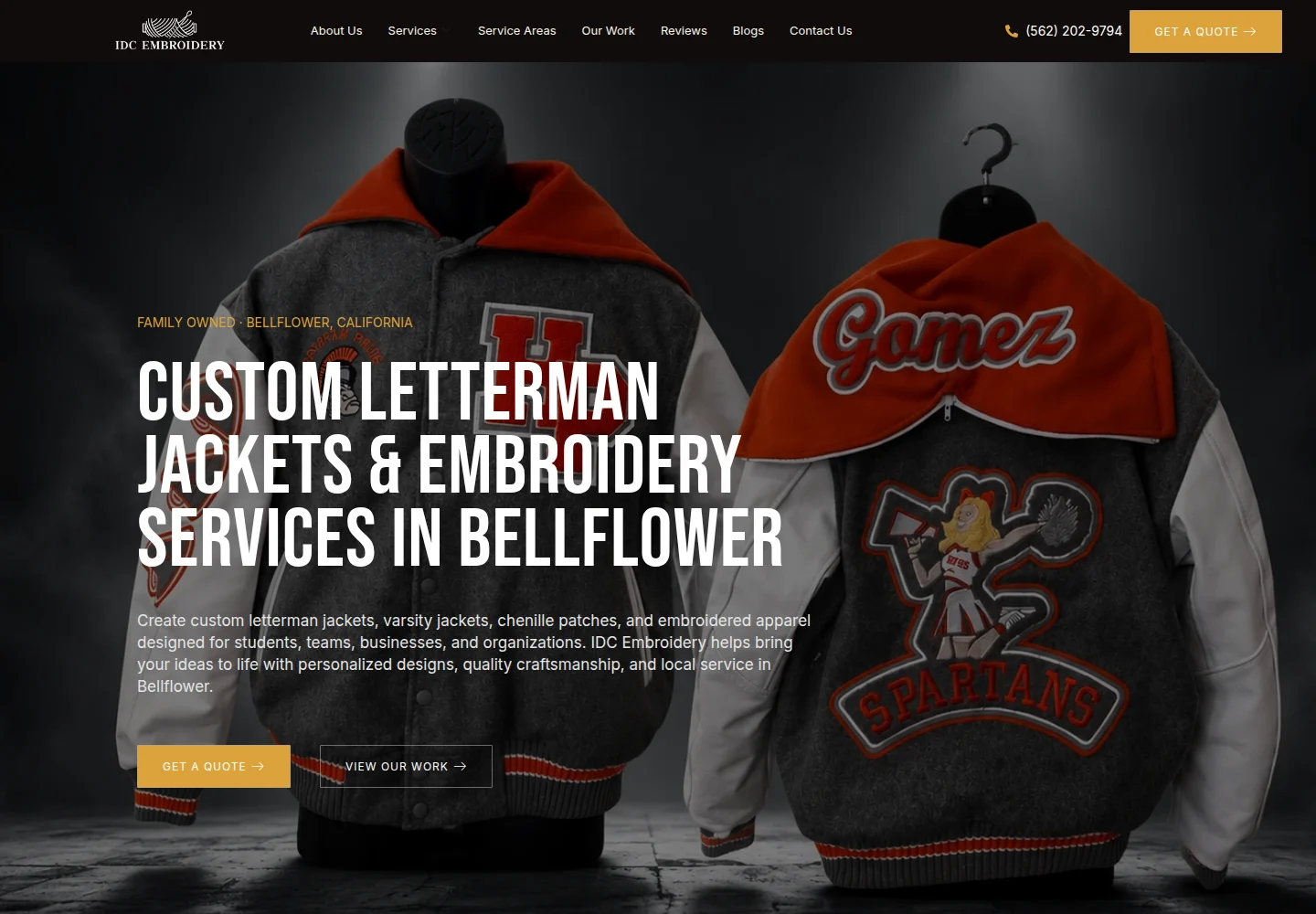
The current public page supplied for this engagement was captured on 2026-11-19. The browser page title was “Custom Letterman Jackets & Embroidery Shop in Bellflower CA”. Desktop and mobile views were captured separately so the visible layout could be reviewed at each screen width. The images show the site as it appeared during that capture, including any changes that may have been made after the original assignment.
The captured page includes these visible headings: “Family owned · Bellflower, California”; “Custom Letterman Jackets & Embroidery Services in Bellflower”; “FAMILY CRAFTSMANSHIP”. They provide context for the information a visitor encounters today. Their inclusion documents the present page; it does not expand the historical project scope or attribute later site changes to the original engagement.
The supplied URL is a broader reference for this engagement. The exact page path for the new or revised page still needs to be confirmed before a page-specific comparison is presented.


The delivered change and its practical purpose
The documented delivery gives IDC Embroidery a more specific website capability: New service page; Meta information; H1 and H2 structure; Image alt text; Clean slug; Existing-design match. These items are the supported outcome of the assignment. Their practical purpose was to improve the part of the experience concerned with one service page that belongs within the existing site, so buyers evaluating an embroidery service could follow an understandable route toward the intended next step.
The business outcome still depends on what happens beyond the visible page. The relevant handoff was the existing embroidery enquiry process. How that process is maintained, how enquiries are handled and how the visitor's underlying needs develop can all affect the eventual result. The website's contribution is best explained through the delivered change, then assessed using evidence from the stage it actually influences.
No verified before-and-after performance figures were included in the supplied project notes. This case study therefore does not claim a percentage increase in leads, a reduction in acquisition cost, a ranking improvement or a specific time saving. Functional delivery and measured business performance are kept separate so that the story remains useful without implying a result that has not been documented.
How the business can assess impact
A useful measurement plan starts with the action the page is intended to support: to understand the new service page and continue to the relevant enquiry. The business should define what counts as a completed event at that stage. Opening a destination, making an enquiry and completing the later business process may be related, but they answer different questions. A report becomes more useful when its event definition is clear enough for another person to understand and reproduce.
A comparison also needs an appropriate period and context. Changes in the audience, advertising activity, seasonality or the service offer can affect results alongside a website change. The purpose of comparison is to understand what happened under those conditions. A result should identify the period, the event measured and the source of the data, so it can be read as evidence rather than as an isolated promotional number.
For IDC Embroidery, a later update to this case study can add verified figures once the relevant records are available. The original brief, delivery scope and dated captures already provide a useful foundation. Adding a clearly defined measure would extend that foundation with evidence of actual use. Until then, the impact statement stays focused on the delivered capability and the visitor journey it was designed to support.
What a similar project should establish early
A similar engagement should begin with the intended audience and the specific task the website needs to support. In this case, those were buyers evaluating an embroidery service and the decision to understand the new service page and continue to the relevant enquiry. Making that relationship explicit helps the business explain what the page needs to achieve before individual layout or platform choices take over the conversation.
The next useful detail is the project boundary. The business should identify which pages, content, tools or integrations are included and which existing elements need to stay available. The constraint recorded here was straightforward: The new page needed to fit the existing visual design while giving the service a clear search-oriented structure. That kind of detail helps a team make proportionate decisions and creates a more reliable basis for checking whether the delivered work matches the original request.
The business should also identify who owns the next step after the page. A working enquiry route needs someone to respond, and a booking or registration destination needs its own responsible process. Knowing that handoff early makes the conversation more concrete. It helps connect the visible interface with a useful operational outcome while keeping responsibilities clear.
The lesson from IDC Embroidery is to judge the work through the actual task and documented scope. A full redesign, an advertising page, a responsive repair and an audit can each be useful in different circumstances. The appropriate choice depends on what is getting in the visitor's way and what the business needs to manage afterward. The project record gives that discussion a specific starting point: one service page that belongs within the existing site.
Your next project
Start with what your website needs to do.
Share your audience, your current website and the next step you want visitors to take.
Discuss your project