
Professional services / Project story
Cam Maynard: One-page content update
A one-page website has to explain its subject through a continuous reading sequence.
The client and the brief
Cam Maynard's assignment centred on one-page content update. The one-page website's copy and sections were updated to match a new reference design.
The intended audience was people evaluating Cam Maynard's professional profile. The website needed to help that audience understand the updated message and follow the relevant contact route. This gives the project a practical starting point: the experience should connect the information a person needs with a next step the business can handle. The brief is specific about the requested work, so this account follows that scope rather than treating every part of the current website as a deliverable.
The project can be understood through the relationship between the business request and the visitor's task. The business focus was the relationship between a revised message and the order of page sections. The visitor needed an understandable route through the relevant information. Those perspectives meet on the page, where the message, content and action have to make sense together. The resulting case study explains the documented intervention and the reasoning that makes that intervention useful.
The problem the work needed to address
A one-page website has to explain its subject through a continuous reading sequence.
For this audience, a website is a step inside a larger decision. Someone may be comparing options, looking for a specific answer or deciding whether to contact the business. The page needs to respect that intention. When information is difficult to interpret or the route forward is unclear, the visitor has to do more work before reaching a useful decision. In this engagement, that concern was tied to the relationship between a revised message and the order of page sections.
The scope matters when describing the starting problem. The supplied record identifies the particular task and any stated constraints. It does not provide a complete historical archive of every page or a baseline for every business measure. This case therefore keeps the problem connected to the documented assignment and treats the current public site as present-day context. That gives the reader a clearer picture of what the engagement was intended to change.
What Avenzo delivered
The project updated copy and sections on an existing one-page website to follow a new reference design.
The deliverables below describe the actual assignment. Their purpose was to help visitors understand the updated message and follow the relevant contact route. Each item belongs to the stated engagement, while surrounding services, platforms and business activities remain separate unless they are named in the brief. This distinction is useful when comparing the work with another project that may have a similar appearance but a different technical or operational scope.
- Updated copy
- Updated page sections
- Reference-design alignment
Making the message useful to the reader
For Cam Maynard, the relevant audience is people evaluating Cam Maynard's professional profile. That person needs an understandable explanation of the offer before deciding to understand the updated message and follow the relevant contact route. A useful opening establishes the subject and gives supporting information a clear relationship with it. The heading, introduction and next action should help the same decision, so the visitor can recognise a relevant route without interpreting several competing messages.
Content clarity depends on what follows the opening as well. Service names should use terms the intended audience understands. Explanations belong close to the questions they answer, especially when a first enquiry begins a longer conversation. The focus here was the relationship between a revised message and the order of page sections. That gives the wording a practical purpose across the experience and provides a way to judge whether a section helps the reader.
A clearer message can support a better informed decision. Someone who understands the offer can ask a more relevant question or recognise an appropriate next step. The visual arrangement matters because it determines which parts of that message are noticed first. Copy, hierarchy and the action should therefore be considered together. The documented scope establishes what was changed; any claim about a measured improvement in enquiries requires separate live performance evidence.
Giving the information a clear reading order
A website can contain useful information and still make it difficult to find. The structure should follow the task the visitor is trying to complete. Here, that task was to understand the updated message and follow the relevant contact route. The opening needs to connect with the supporting detail that makes this choice reasonable. A visitor should be able to move from an overview to a more specific question without losing the main subject of the page.
Different kinds of content have different roles. A service explanation helps someone understand the offer. A process section explains what working together may involve. A contact route provides the next step. Giving those roles recognisable places helps the reader use the site at their own level of readiness. For Cam Maynard, this is connected to the relationship between a revised message and the order of page sections, which is the practical concern behind the engagement.
The available scope determines how much of that structure can be changed. A new website offers room to establish the sequence from the beginning. An additional page or revised section has to fit into an existing sequence. Both can be useful when the new information has a clear purpose. The important distinction is between the part of the journey delivered in this engagement and the wider website in which it appears.
Working within the website's existing relationships
An established site contains paths that people may already use. A published URL may be linked from search, an advert, an email or another page. A form may connect to a follow-up process. Familiar wording or a brand pattern may help the visitor recognise that they are still dealing with the same business. A change enters this environment, even when the visible assignment is small.
For Cam Maynard, the relevant handoff was the existing contact route. The surrounding site still influences how a person reaches it. This is why a contained page update, a corrected destination or a refreshed section needs to be described in context. The delivered change should be credited for the part of the experience it affects, while other pages and systems retain their own responsibilities.
This approach also makes later maintenance more understandable. A future editor can distinguish a completed assignment from a possible follow-up improvement. A redesigned page can preserve a useful route, and a targeted fix can repair a break without replacing the entire site. The case study keeps that boundary visible. It gives a prospective client a concrete account of the intervention and avoids attaching wider ownership or performance claims to work that was never included.
Connecting the page with a meaningful next step
The intended next step was to understand the updated message and follow the relevant contact route. An action should describe a choice the visitor can understand before selecting it. That includes whether it opens more information, begins an enquiry or continues into a separate booking or registration process. The expectation created by the page is part of the experience, even when another platform handles the following step.
For Cam Maynard, the handoff involved the existing contact route. The page should give the visitor enough context to make that transition sensibly. A visible action can remove a navigation obstacle, while an explanation can reduce uncertainty about what the action means. These are different contributions to the journey, and a case study is more useful when it keeps them specific.
A button click, a completed form and a confirmed booking are separate events. The business needs to know which event a performance report represents. The website can support an appropriate handoff, but the response and decision after that point can depend on a separate team or system. The value of the page should therefore be assessed through the stage it actually changes, using evidence that matches the original scope rather than a broad assumption about every later outcome.
Keeping the experience understandable across devices
A wide screen and a phone place different constraints around the same information. A desktop layout can position related elements beside one another. A narrow screen usually needs a more deliberate sequence. The person using either view still needs to understand the offer and understand the updated message and follow the relevant contact route. The hierarchy should stay recognisable when columns stack, images change proportion or a heading wraps onto several lines.
For Cam Maynard, the connection between responsive presentation and the business task is the relationship between a revised message and the order of page sections. A smaller-screen view should preserve the relationship between the message, the explanation and the action. Text needs room to remain readable, and the relevant controls should be identifiable without depending on a precise pointer position. These considerations help distinguish a useful mobile sequence from a compressed desktop composition.
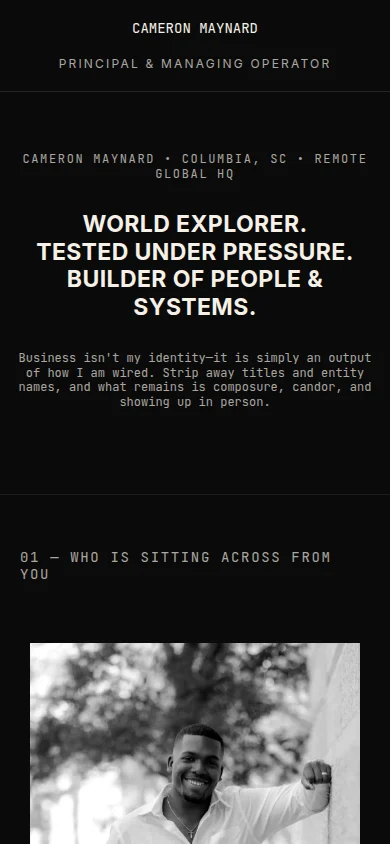
The current desktop and mobile captures show the visible public page at a particular time. They can document layout, text size, navigation and action placement. They cannot establish that every form submission, booking or external system works. Any device testing recorded in the brief is described as delivered work. The visual record is additional evidence of the present page, with its capture date kept visible so it is not confused with an undocumented historical before-and-after comparison.
Matching the evidence to the claim
The evidence for a website change should match the claim being made about it. A visible layout change can be supported by a capture of that layout. A current destination can be checked by following the relevant link. A completed form, an accepted referral and a confirmed booking require different checks. For Cam Maynard, the relevant business task was to understand the updated message and follow the relevant contact route, so the review needs to stay connected to that task.
Desktop and mobile screenshots are useful records of a public page. They show what a browser displayed at the time of capture, including the available information and visible actions. They are not a substitute for a project archive, a historical baseline or a private system test. The capture date and page URL therefore remain part of the visual evidence, particularly where the website may have changed since the engagement.
The supplied project record establishes which testing and release steps can be credited as completed work. Any further review points in this story explain how the business can assess the delivered experience. Keeping that distinction clear helps a reader understand both the actual scope and the evidence needed for a wider outcome. It also creates a more reliable basis for future changes, because a later team can ask a specific question instead of assuming that every surrounding system was covered.
A current look at the public website
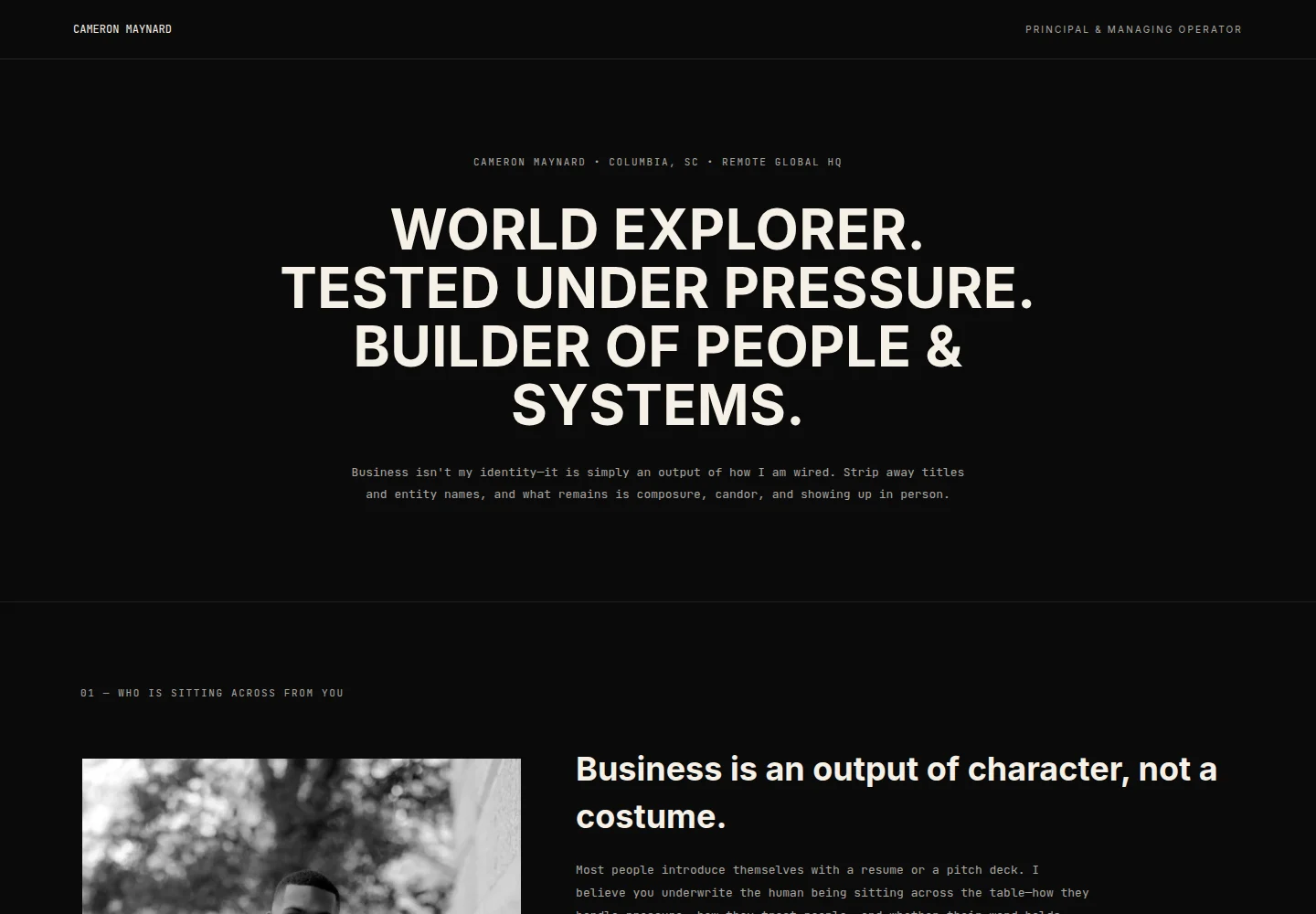
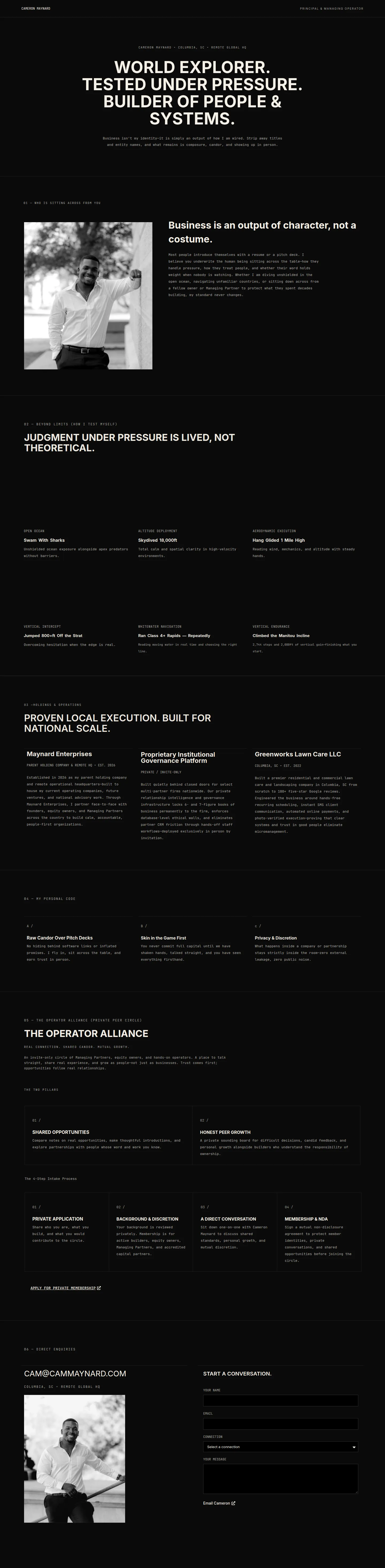
The current public page supplied for this engagement was captured on 2026-11-19. The browser page title was “Cam Maynard – Principal & Managing Operator”. Desktop and mobile views were captured separately so the visible layout could be reviewed at each screen width. The images show the site as it appeared during that capture, including any changes that may have been made after the original assignment.
The captured page includes these visible headings: “Cameron Maynard”; “Principal & Managing Operator”; “Cameron Maynard • Columbia, SC • Remote Global HQ”. They provide context for the information a visitor encounters today. Their inclusion documents the present page; it does not expand the historical project scope or attribute later site changes to the original engagement.
The source URL is retained beside the visual record so a reader can distinguish the page that was captured from the general description of the engagement.

The delivered change and its practical purpose
The documented delivery gives Cam Maynard a more specific website capability: Updated copy; Updated page sections; Reference-design alignment. These items are the supported outcome of the assignment. Their practical purpose was to improve the part of the experience concerned with the relationship between a revised message and the order of page sections, so people evaluating Cam Maynard's professional profile could follow an understandable route toward the intended next step.
The business outcome still depends on what happens beyond the visible page. The relevant handoff was the existing contact route. How that process is maintained, how enquiries are handled and how the visitor's underlying needs develop can all affect the eventual result. The website's contribution is best explained through the delivered change, then assessed using evidence from the stage it actually influences.
No verified before-and-after performance figures were included in the supplied project notes. This case study therefore does not claim a percentage increase in leads, a reduction in acquisition cost, a ranking improvement or a specific time saving. Functional delivery and measured business performance are kept separate so that the story remains useful without implying a result that has not been documented.
How the business can assess impact
A useful measurement plan starts with the action the page is intended to support: to understand the updated message and follow the relevant contact route. The business should define what counts as a completed event at that stage. Opening a destination, making an enquiry and completing the later business process may be related, but they answer different questions. A report becomes more useful when its event definition is clear enough for another person to understand and reproduce.
A comparison also needs an appropriate period and context. Changes in the audience, advertising activity, seasonality or the service offer can affect results alongside a website change. The purpose of comparison is to understand what happened under those conditions. A result should identify the period, the event measured and the source of the data, so it can be read as evidence rather than as an isolated promotional number.
For Cam Maynard, a later update to this case study can add verified figures once the relevant records are available. The original brief, delivery scope and dated captures already provide a useful foundation. Adding a clearly defined measure would extend that foundation with evidence of actual use. Until then, the impact statement stays focused on the delivered capability and the visitor journey it was designed to support.
What a similar project should establish early
A similar engagement should begin with the intended audience and the specific task the website needs to support. In this case, those were people evaluating Cam Maynard's professional profile and the decision to understand the updated message and follow the relevant contact route. Making that relationship explicit helps the business explain what the page needs to achieve before individual layout or platform choices take over the conversation.
The next useful detail is the project boundary. The business should identify which pages, content, tools or integrations are included and which existing elements need to stay available. The constraint recorded here was straightforward: A one-page website has to explain its subject through a continuous reading sequence. That kind of detail helps a team make proportionate decisions and creates a more reliable basis for checking whether the delivered work matches the original request.
The business should also identify who owns the next step after the page. A working enquiry route needs someone to respond, and a booking or registration destination needs its own responsible process. Knowing that handoff early makes the conversation more concrete. It helps connect the visible interface with a useful operational outcome while keeping responsibilities clear.
The lesson from Cam Maynard is to judge the work through the actual task and documented scope. A full redesign, an advertising page, a responsive repair and an audit can each be useful in different circumstances. The appropriate choice depends on what is getting in the visitor's way and what the business needs to manage afterward. The project record gives that discussion a specific starting point: the relationship between a revised message and the order of page sections.
Your next project
Start with what your website needs to do.
Share your audience, your current website and the next step you want visitors to take.
Discuss your project