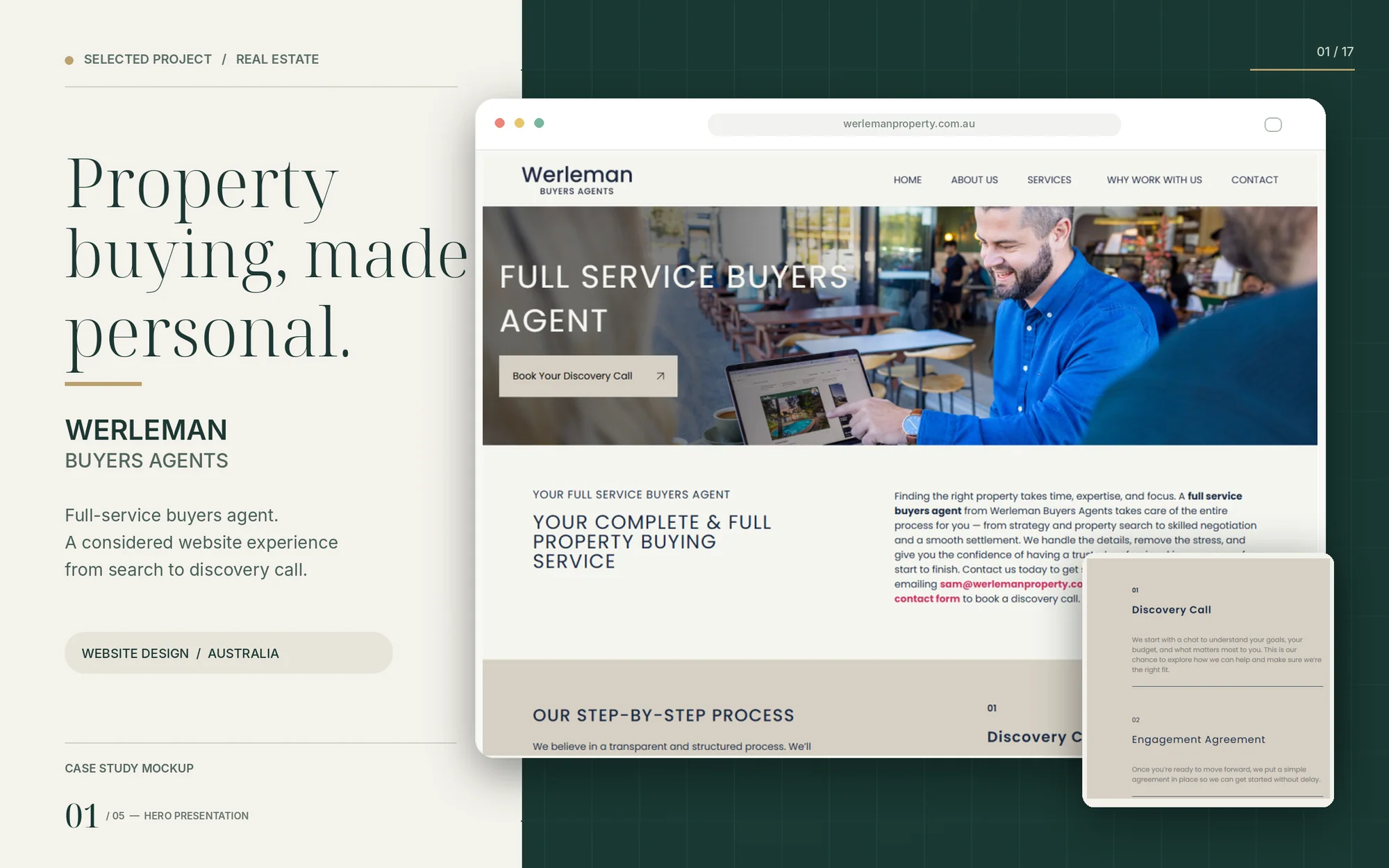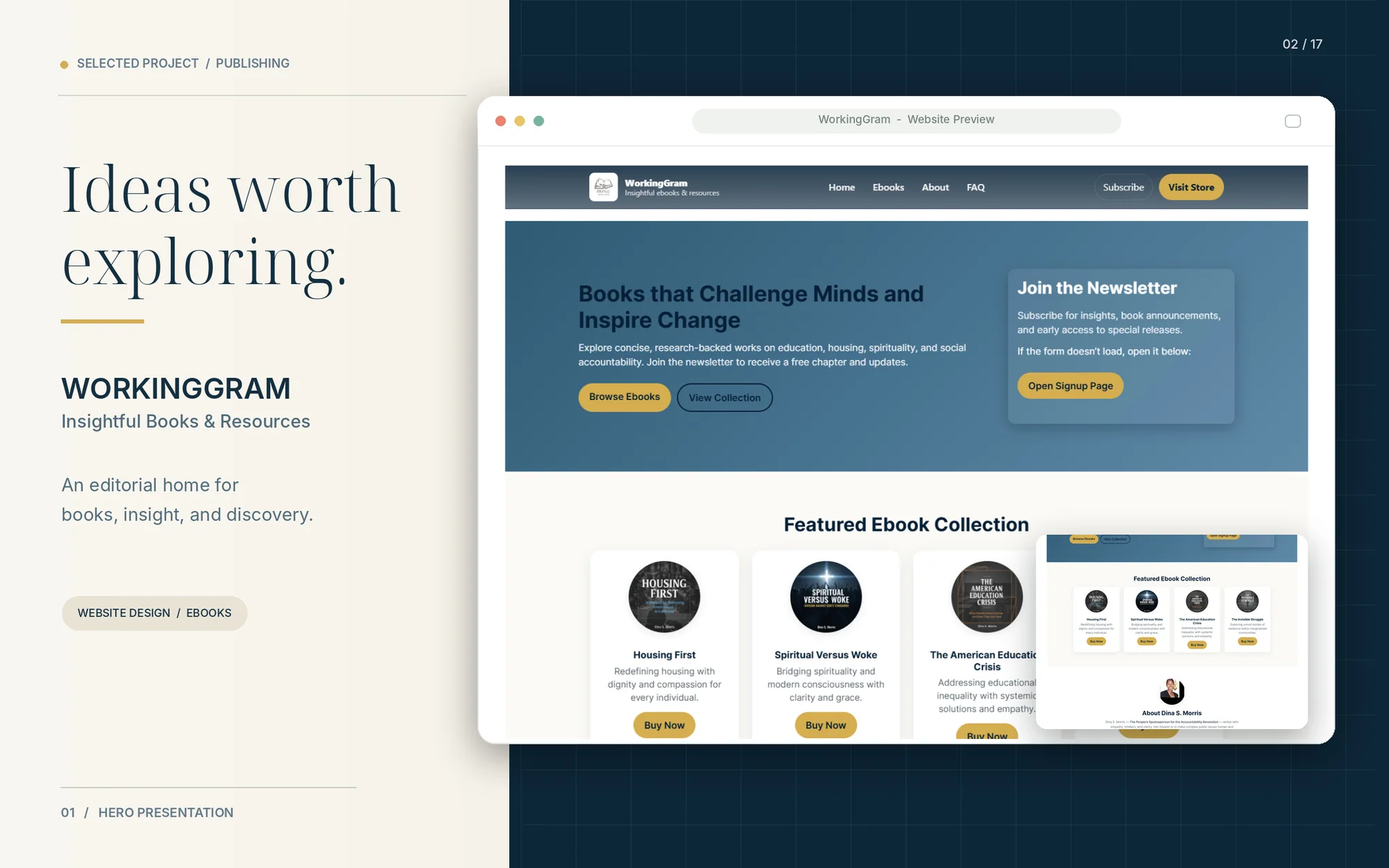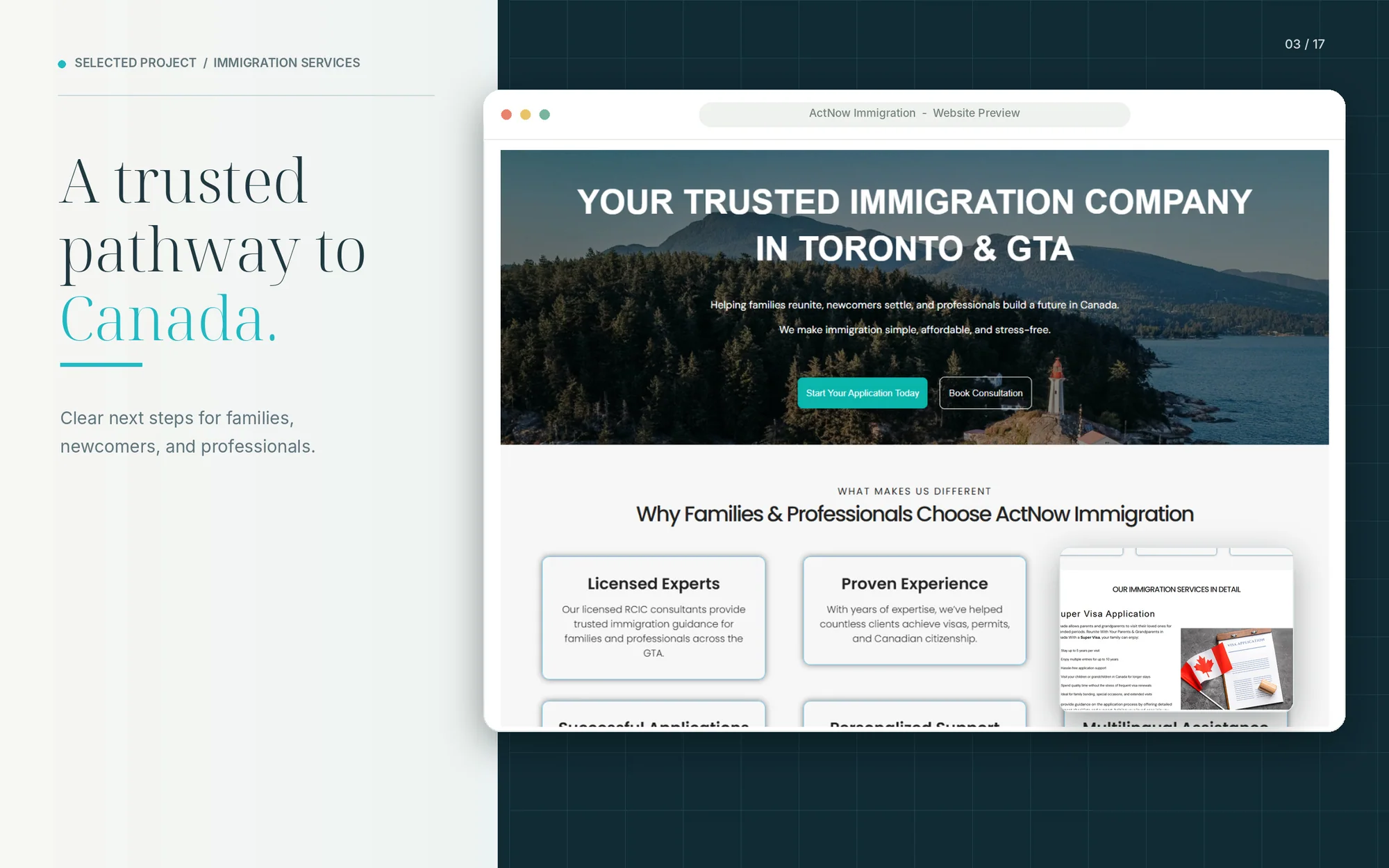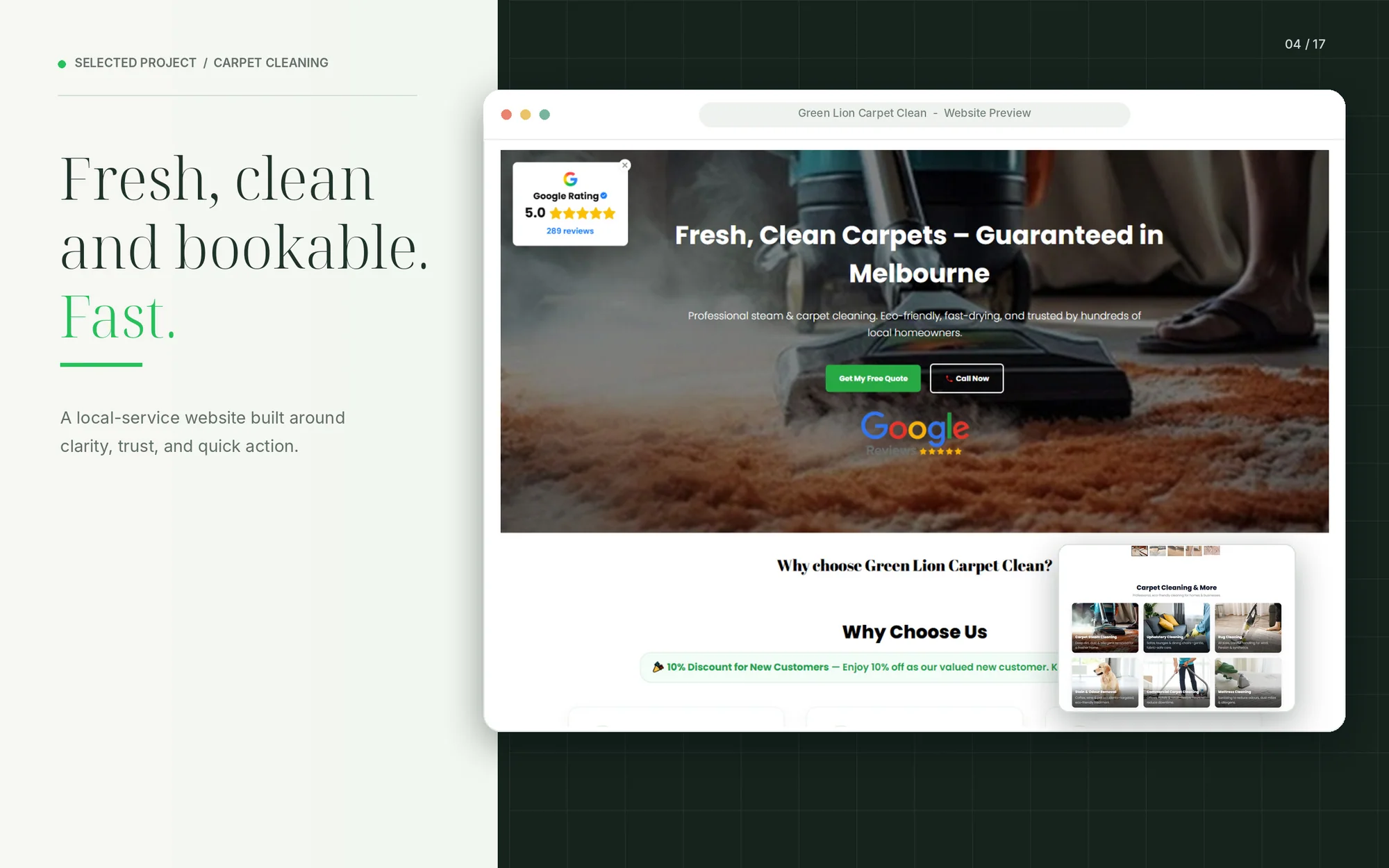
Figma to Webflow development for
responsive, scalable websites.
We convert Figma designs into production Webflow builds — with a defined class strategy, reusable components, CMS-ready collections, and interactions matched to what your file shows. Not a page cloned once and left to drift.
What we check in your file before we build anything.
A clean Webflow build starts with a clean file. We audit these six things before development starts, and flag anything missing.
DESIGN AUDIT
Named layers & components
Unlabeled layers and un-componentized repeated elements slow the build and increase the chance of something getting missed in translation.
01
Defined color & text styles
Whether colors and type are set up as Figma styles, or just applied ad hoc, determines how cleanly they map to Webflow's variables and style guide.
02
Auto-layout frames
Frames built with auto-layout translate far more predictably into Webflow's flexbox and grid than manually positioned elements.
03
Content structure for CMS pages
Where blog posts, team members, or a portfolio are involved, we map the fields your CMS Collections will need before building the template.
04
Mobile & tablet frames (or clear intent)
Where breakpoints aren't shown, we confirm how the layout should reflow before we build it, not after.
05
No Figma file yet, or need a different platform?
If the design work still needs to happen, see UI/UX Design or Website Prototyping & Wireframing. Moving an existing site instead? See Website Migration.
06
Built on a class strategy, not one-off styling.
Webflow gives you real class-based CSS control — but only if the class structure is planned before the first page is built. Every project starts with the system, not the pages.
WEBFLOW STYLE SYSTEM
01
Base & combo classes
A defined base-class system with combo classes for variations, instead of a new one-off class for every small change.
Structure
02
Variables & style guide
Colors, spacing, and typography set as Webflow variables, matched to your Figma styles, so updates apply globally.
Style
03
Components & symbols
Repeated sections built once as reusable components, so a header or card style update propagates everywhere it's used.
Reuse
04
Flexbox & grid layouts
Native flexbox and grid used to match your Figma auto-layout frames, instead of absolute positioning that breaks on resize.
Layout
05
CMS-ready structure
Sections built to pull from CMS Collections from the start, where the design calls for repeatable content.
Content
06
Clean, navigable Designer structure
Consistent naming and logical nesting in the Navigator, so your team can find and edit sections without guessing.
Reliability
Built breakpoint by breakpoint, not shrunk to fit.
Webflow gives you real control at every breakpoint — but only if each one is actually styled, not left to inherit desktop rules by default. Every project is built and checked at all three.
RESPONSIVE BUILD
Desktop & Laptop
Desktop Breakpoints
Base styles built first, matching your Figma desktop frame exactly, with a laptop breakpoint styled independently rather than left to auto-scale.
BEST FOR: Primary layout & grid structure
Tablet
Tablet Breakpoint
Column counts, spacing, and navigation adjusted for the in-between size, matching your tablet frame where one exists, or the design’s clear intent where it doesn’t.
BEST FOR: Reflow & navigation changes
Mobile
Mobile Breakpoint
Type scale, touch targets, and stacking order rebuilt for small screens, not just a scaled-down version of the desktop page.
BEST FOR: Touch usability & readability
Content that updates itself, not pages rebuilt by hand.
Where your file includes a blog, team page, portfolio, or any repeatable content, we build it on Webflow’s CMS instead of hardcoding it into static pages.
CMS
CMS Collections
Content types mapped to your Figma file's repeatable elements — blog posts, team members, case studies — as structured Collections.
Collection list & item templates
One template built per content type, populating automatically as entries are added, instead of a new page built for every post.
Reference & multi-reference fields
Related content connected — an author to their posts, a service to its case studies — matching how the design implies content relates.
Filtering & sorting
Collection lists filtered and sorted by category, date, or tag where the design calls for it, using Webflow's native CMS controls.
A template page builder vs. a page built for the goal.
The gap isn’t visual polish — it’s whether the page was built around a specific outcome from the start.
WHY PURPOSE-BUILT WINS
Performance Metrics Comparison
Select a benchmark to view live interactive score differences.
+178%
Faster Page Load
90% Less
Unused JavaScript
98/100
SEO Audit Score
A proven process, ending with a site your team can run.
Five stages keep the build organized and end with your team knowing exactly how to manage it.
CLIENT HANDOFF
Design Audit
We review your Figma file for readiness — named layers, defined styles, and auto-layout usage — flagged before development starts.
01
Style System & CMS Setup
Classes, variables, and CMS Collections configured first, so every page pulls from the same structure.
02
Build
Pages, templates, and interactions built section by section, reviewed against the Figma frames as we go.
03
QA & Responsive Testing
Cross-browser, cross-device, and design-comparison testing before anything goes live.
04
Editor Walkthrough & Launch
A recorded walkthrough of the class system, CMS Collections, and how to publish updates, plus a defined support window.
Common questions about Figma to Webflow development.
FAQs
How closely will the Webflow site match my Figma file?
We build to match spacing, typography, color, and interaction states directly from your file’s measurements and layers. Anything ambiguous or missing, like an undefined tablet breakpoint, is flagged and confirmed with you before we build it.
Will the classes be organized, or will it be a mess of one-off styles?
Organized. We build a defined class strategy using base classes, combo classes, and Webflow variables, so styles stay consistent and a design update in one place updates every instance.
Can you set up the Webflow CMS for blog posts, team members, or a portfolio?
Yes. We build CMS Collections matching your content types, with templates for collection list and item pages, so new entries populate automatically without rebuilding the page.
Do you build the interactions and animations shown in the design?
Yes, using Webflow’s native interactions panel — scroll-triggered animations, hover states, and page transitions — matched to what the file shows or implies.
Will my team be able to edit the site after handoff?
Yes. We include an editor or Designer walkthrough covering the class system, CMS collections, and how to add new pages without breaking the structure.
How long does a typical conversion take?
It depends on page count and CMS complexity, but most single-page conversions start within 48 hours of the design audit and are scoped individually based on your file.
Packages built around your scope.
Every project is scoped individually — these tiers give you a starting point for the conversation.
Share what you’re building, your current stack, and what it needs to connect to. Our team will review your requirements and recommend a suitable approach.