

Driving traffic to your website is only half the challenge. If visitors arrive on your landing page but leave without contacting your business, requesting a quote, or completing a form, your marketing investment produces very little return. Many businesses assume low conversions are caused by poor advertising or insufficient traffic. In reality, the problem often lies with the landing page itself.
Understanding what makes a landing page convert allows businesses to remove obstacles, build trust, and guide visitors toward taking action. A well-designed landing page focuses on one objective, presents a clear value proposition, and makes it easy for users to become leads.
Whether your traffic comes from Google Ads, organic search, social media, or email campaigns, improving your landing page can significantly increase conversion rates without increasing your advertising budget.
This guide explains the essential elements of a high-converting landing page, common mistakes that reduce conversions, and practical ways to improve lead generation through better landing page design and web development.
What Is a Landing Page?
A landing page is a standalone webpage created to encourage visitors to complete one specific action. Unlike a homepage, which introduces your business and offers multiple navigation paths, a landing page focuses on a single conversion goal such as requesting a quote, booking a consultation, downloading a guide, or submitting a contact form.
Every section of the page is designed to move visitors toward that one action with as little distraction as possible. A landing page is a focused webpage designed to encourage visitors to complete one specific action, such as submitting a form, requesting a quote, or scheduling a consultation.
Well-designed landing pages are built through a combination of strategic design and professional web development.
Why Landing Pages Convert Better Than Standard Web Pages
Traditional website pages often contain multiple menus, service links, blog articles, and navigation options. While this structure works well for general browsing, it can distract visitors who arrive with a specific intent.Landing pages remove unnecessary distractions and keep users focused on one clear objective.
Instead of encouraging visitors to explore the website, they guide users toward becoming leads.Businesses running paid advertising campaigns frequently achieve stronger results when each campaign directs traffic to a dedicated landing page instead of a general service page.
What Makes a Landing Page Convert?
Understanding what makes a landing page convert starts with recognizing that successful landing pages are built around customer intent rather than business preferences. Every element should answer one question:
“Why should this visitor take action right now?”
The highest-converting landing pages combine persuasive messaging, intuitive design, fast performance, trust signals, and a friction-free user experience.
Instead of overwhelming visitors with information, they provide exactly what users need to make a confident decision. A landing page converts by presenting a clear value proposition, reducing distractions, building trust, and making it easy for visitors to complete one desired action.
Businesses that generate consistent leads often invest in conversion-focused landing page design rather than relying on generic website pages.
A Clear Value Proposition Comes First
Visitors decide within seconds whether a page is relevant to their needs. Your headline should immediately explain what you offer and why it benefits the customer. Supporting text should reinforce the primary message without requiring visitors to scroll extensively before understanding your service.
Avoid vague marketing language. Instead, communicate clear outcomes that address customer problems. A strong value proposition gives visitors confidence that they have found the right solution.
Every Landing Page Should Focus on One Goal
One of the most common reasons landing pages fail is that they ask visitors to do too many different things. A page that encourages users to call, email, browse services, read blogs, follow social media, and request a quote creates unnecessary decision-making.
High-converting landing pages focus on one primary conversion action. Depending on your business, that goal may be generating phone calls, collecting contact forms, scheduling appointments, or requesting estimates.
The fewer distractions visitors encounter, the more likely they are to complete the intended action.
Build Trust Before Asking for a Conversion
Visitors rarely share their contact information with businesses they do not trust. Trust should be established before requesting any commitment. Effective trust signals include customer reviews, testimonials, business certifications, industry experience, awards, secure website indicators, and examples of completed projects.
Even small credibility elements can reduce hesitation and increase conversions. Businesses that clearly demonstrate expertise often outperform competitors offering similar services.
Businesses can strengthen credibility further by creating a professionally designed business website that reinforces trust at every stage of the customer journey.
Strong Headlines Keep Visitors Engaged
Your headline is usually the first piece of content visitors read. If it fails to communicate relevance, many users leave before exploring the rest of the page. Effective headlines are specific, benefit-focused, and directly connected to visitor intent.
Subheadings should expand on the primary message while maintaining consistency throughout the page. A confusing or overly clever headline often performs worse than one that communicates value clearly.
Keep Forms Short and Easy to Complete
Every additional form field introduces friction. If your landing page asks for unnecessary information, some visitors may abandon the process before submitting their details. Ask only for the information required to begin the conversation.
For many service-area businesses, requesting a name, email address, phone number, and brief project description is sufficient. Simplifying forms often increases completion rates without reducing lead quality.
Short contact forms generally convert better because they reduce effort for visitors while collecting enough information to begin meaningful conversations.
Calls to Action Must Be Clear
A visitor should never wonder what to do next. Calls to action should appear naturally throughout the landing page and clearly explain the next step. Generic buttons such as “Submit” provide little motivation. More descriptive actions help visitors understand the benefit they will receive after clicking.
Examples include requesting a free consultation, scheduling an estimate, or receiving a customized proposal. Consistency between the headline, supporting content, and call to action improves overall conversion performance.
Visual Design Should Support the Message
Good landing page design is about communication rather than decoration. Visual elements should reinforce your message instead of distracting visitors. Clean layouts, consistent spacing, readable typography, professional imagery, and clear visual hierarchy all contribute to a more effective user experience.
Whitespace also plays an important role by helping users focus on the most important information. When every design element supports the conversion goal, visitors move through the page more naturally.
Why Mobile Optimization Is Essential
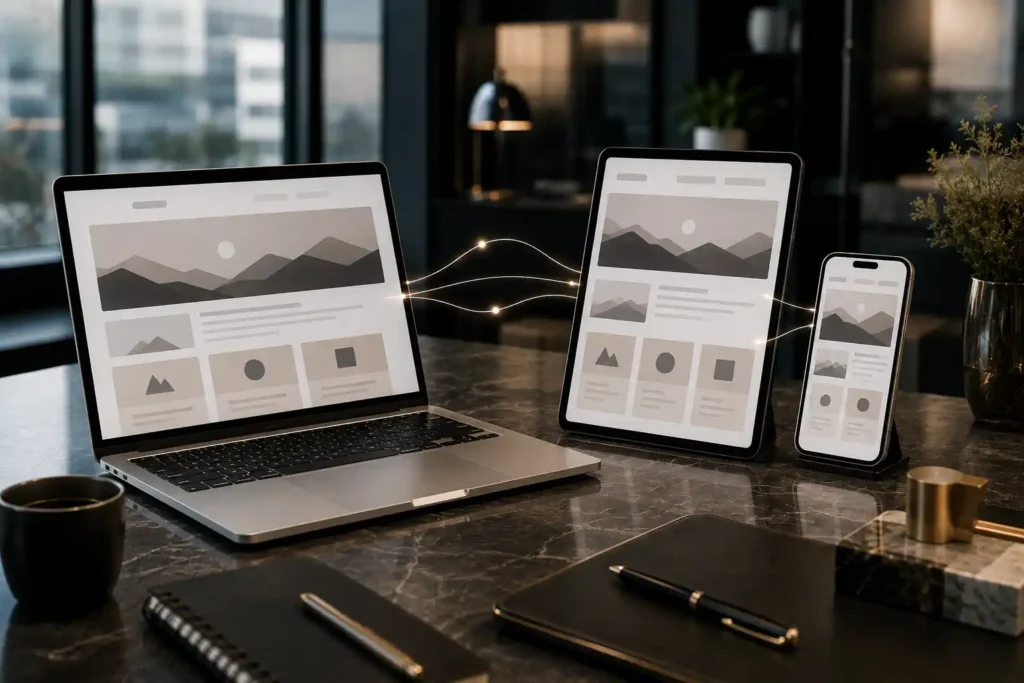
A significant percentage of landing page visitors now arrive using smartphones. If a page is difficult to navigate on smaller screens, potential leads may leave before taking action. Responsive landing pages automatically adjust to different devices while maintaining usability.
Buttons should be easy to tap, forms should be simple to complete, and content should remain readable without zooming. Mobile optimization improves both user experience and conversion potential. A mobile-friendly landing page improves conversions by making it easier for visitors to read content, complete forms, and take action from any device.
Website Speed Directly Influences Conversions
Visitors expect landing pages to load quickly. Even a slight delay can reduce engagement and increase abandonment. Fast-loading pages create a smoother browsing experience while supporting better technical performance and stronger user satisfaction.
Optimizing images, reducing unnecessary scripts, improving server response times, and maintaining efficient code all contribute to faster page loading. Website speed is not simply a technical metric—it directly affects how many visitors become customers.
Common Landing Page Mistakes That Reduce Conversions
Even businesses offering excellent services can lose potential customers because of avoidable landing page mistakes.
Some pages overwhelm visitors with too much information, while others fail to provide enough detail to build confidence. Inconsistent messaging, confusing layouts, slow loading times, and poorly placed calls to action all contribute to lower conversion rates.
Common mistakes include:
- Multiple calls to action competing for attention.
- Long or complicated contact forms.
- Slow page loading speeds.
- Generic headlines that lack a clear value proposition.
- Poor mobile responsiveness.
- Weak trust signals.
- Low-quality images.
- Too many navigation options.
Removing these obstacles creates a smoother experience and encourages more visitors to become leads.
Why User Experience Has a Direct Impact on Conversions
Visitors make decisions based on how easily they can interact with your landing page. If users struggle to find information, navigate the page, or complete a form, they are far less likely to convert. An intuitive user experience helps visitors stay focused on the conversion goal without unnecessary distractions.
Every design decision—from spacing and typography to button placement and page structure—should make it easier for visitors to move naturally through the page. A well-organized user experience not only improves conversions but also strengthens your brand’s credibility.
A better user experience increases landing page conversions by making it easier for visitors to understand your offer, navigate the page, and complete the desired action.
Why Fast Loading Pages Generate More Leads
Speed influences nearly every stage of the customer journey. When landing pages load slowly, visitors often leave before reading the headline or viewing the offer. Fast-loading pages improve user satisfaction, reduce bounce rates, and increase the likelihood of completing a form or contacting your business.
Performance optimization should include efficient image compression, streamlined code, browser caching, and reliable hosting infrastructure.
Improving page speed benefits both user experience and search engine performance.
Content Should Match Visitor Intent
Every visitor arrives with a specific expectation. Someone clicking a Google Ads campaign promoting emergency plumbing services expects to see content directly related to emergency plumbing—not a general homepage covering every service.
Message consistency between advertisements, search results, and landing page content improves trust and reduces confusion. The more closely your landing page aligns with visitor intent, the more likely users are to take action. Businesses targeting local customers should also align landing pages with an effective local SEO strategy.
Why Trust Signals Improve Lead Generation
Most visitors compare multiple businesses before making a decision. Landing pages that demonstrate credibility help reduce uncertainty during the decision-making process.
Trust can be established through customer testimonials, verified reviews, certifications, years of experience, guarantees, before-and-after project examples, and recognizable business affiliations. These elements reassure visitors that your business is reliable and capable of delivering the promised results.
A/B Testing Helps Improve Conversion Rates
High-converting landing pages rarely achieve their best performance on the first attempt. Continuous testing helps businesses identify which changes produce better results. Small adjustments to headlines, images, button placement, form length, or page layout can significantly influence conversion rates.
Instead of relying on assumptions, businesses should use real visitor behavior to guide optimization decisions.Testing allows you to improve performance over time while reducing wasted marketing spend.
A/B testing compares two versions of a landing page to determine which version generates more conversions based on real user behavior.
Why Professional Web Development Matters
Effective landing pages depend on more than attractive design. Behind every successful landing page is a strong technical foundation that supports performance, responsiveness, accessibility, and long-term scalability.
Professional web development ensures that landing pages load quickly, function correctly across devices, integrate with marketing tools, and provide a reliable experience for every visitor.
Businesses planning long-term lead generation should treat landing page development as an ongoing investment rather than a one-time project.

Landing Pages Should Continue Improving
Customer expectations change over time. Competitors update their websites, advertising strategies evolve, and user behavior shifts. Landing pages should be reviewed regularly to identify opportunities for improvement.
Monitoring conversion rates, user engagement, form submissions, and visitor behavior helps businesses make informed optimization decisions. Continuous improvement keeps landing pages competitive while supporting long-term business growth. Regular website maintenance helps ensure landing pages continue performing as your business grows.
Request a Free Website Audit
If your landing page attracts visitors but generates fewer leads than expected, the issue may not be your marketing campaign—it may be the page itself.
At Avenzo Digital, we help service-area businesses create high-performing landing pages that combine strategic messaging, modern web development, user-focused design, and conversion optimization.
Whether you need a new landing page or want to improve an existing one, our team can identify technical issues, usability problems, and missed conversion opportunities. We can also integrate your landing page with a CRM system to automatically capture, organize, and manage new leads more efficiently.
Request a Free Website Audit to discover practical improvements that can help your landing page generate more qualified leads.
Our audit can help you:
- Identify conversion barriers.
- Improve landing page performance.
- Increase lead generation opportunities.
- Strengthen user experience.
- Optimize page speed and usability.
Conclusion
Businesses often invest heavily in advertising while overlooking the page responsible for converting visitors into leads. Understanding what makes a landing page convert allows you to remove friction, build trust, improve user experience, and guide visitors toward taking meaningful action.
From compelling headlines and clear calls to action to responsive design, fast performance, and continuous optimization, every element contributes to higher conversion rates.
Whether you are launching a new marketing campaign or improving an existing website, investing in a professionally developed landing page can produce lasting improvements in lead generation and business growth.
Frequently Asked Questions
What makes a landing page convert more visitors into leads?
A high-converting landing page combines a clear value proposition, compelling calls to action, trust signals, fast loading speeds, responsive design, and a simple user experience that encourages visitors to complete one specific action.
Why is a landing page better than a homepage for lead generation?
Landing pages focus on a single conversion goal, while homepages provide multiple navigation options that can distract visitors from taking action.
How many calls to action should a landing page have?
Most landing pages perform best when they focus on one primary conversion goal, supported by consistent calls to action throughout the page.
Does website speed affect landing page conversions?
Yes. Faster pages reduce bounce rates, improve user experience, and increase the likelihood that visitors will complete forms or contact your business.
How long should a landing page be?
The ideal length depends on the complexity of the offer. The page should provide enough information to answer visitor questions without overwhelming them.
What role does web development play in landing page performance?
Professional web development improves page speed, responsiveness, functionality, security, and overall user experience, all of which contribute to stronger conversion rates.
Should every marketing campaign have its own landing page?
In many cases, yes. Dedicated landing pages provide better message consistency and usually generate higher conversion rates than sending traffic to a general website page.
How often should landing pages be updated?
Landing pages should be reviewed regularly based on analytics, conversion data, and changing customer behavior to ensure they continue performing effectively.
Can SEO improve landing page performance?
Yes. Well-optimized landing pages can attract qualified organic traffic while also supporting paid advertising campaigns and improving overall lead generation.
Is understanding what makes a landing page convert important for every business?
Absolutely. Businesses that understand what makes a landing page convert can create more effective marketing campaigns, generate higher-quality leads, and improve the return on their marketing investment.